
DOTD For Friday, August 7, 2026
Don't Tempt The Wrath From High Atop The Thing
Today’s DOTD - Drink Of The Day - is the Scottish Play Cocktail, inspired by THAT Scottish play, Macbeth - and the Scottish Curse! Shhh, unless you are in said play, do not say “Macbeth” inside a theater. Bad mojo.
The Curse of the Scottish Play
The Scottish Play. The Bard’s Play. Macbeth is surrounded by superstition and fear of the ‘curse’ – uttering the play’s name aloud in a theatre causes bad luck. But where did this superstition come from?
Macbeth, Act 4 Scene 1
‘Double, double toil and trouble;
Fire burn, and cauldron bubble…’
Sixteenth century Scotland was notorious for its witch-hunts, mainly due to King James VI of Scotland’s obsession with witchcraft. The violent death of his mother, Mary, Queen of Scots by execution in 1587 was said to have inspired James’ dark fascination with magic.
Later, in 1589 when James was sailing back to Scotland from Denmark with his new wife, Anne, their ship encountered violent storms at sea, and they were nearly drowned. The Scottish King blamed the evil spells of witches for conjuring the storm, and following his return to Scotland ordered a witch-hunt in the coastal town of North Berwick. He later wrote Daemonologie, a treatise on witchcraft to further inspire persecution against witches.
Witchcraft To Please The King
James became King James I of England in 1603, and his new subjects were keen to appease him and his views on demons & witches. Christopher Marlowe’s Doctor Faustus was published in 1604, and its shocking portrayal of witchcraft and association with the devil intensified England’s fear of sorcery.
Shakespeare’s Macbeth followed in 1606 with direct references to James’ earlier misfortune at sea tucked into the play, with lines like this: ‘Though his bark cannot be lost, Yet it shall be tempest-tost’. Shakespeare was also said to have researched the weird sisters in depth; their chants in Macbeth, and ingredients of fenny snake, eye of newt and toe of frog, are supposedly real spells.
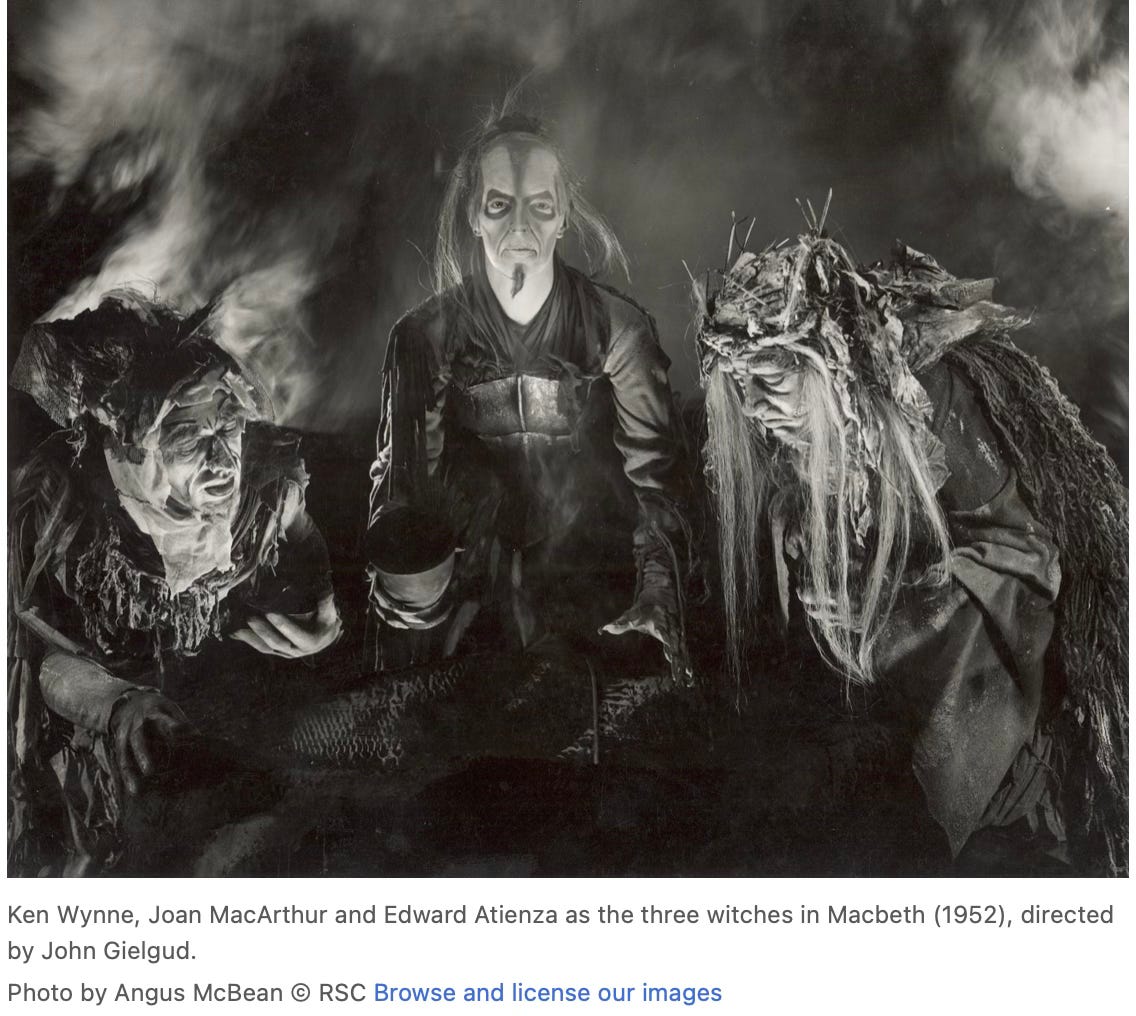
Accidents, Injuries & Deaths - The Curse of Macbeth
According to folklore, the play Macbeth was cursed from the beginning. Supposedly, a coven of witches objected to Shakespeare using real incantations, so they put a curse on the play.
Legend has it the play’s first performance (around 1606) was riddled with disaster. The actor playing Lady Macbeth died suddenly, so Shakespeare himself had to take on the part. Other rumored mishaps included real daggers being used in place of stage props for the murder of King Duncan (resulting in the actor’s death).
The play hasn’t had much luck since. The famous Astor Place Riot in New York in 1849, caused by a rivalry between American actor Edwin Forrest and English actor William Charles Macready, resulted in at least 20 deaths and over 100 injuries. Both Forrest and Macready were playing Macbeth in opposing productions at the time.
Other productions have been plagued with accidents, including actors falling off the stage, mysterious deaths, and even narrow misses by falling stage weights, which happened to legendary actor Laurence Olivier when he performed this show at the Old Vic theatre in 1937.
The Cause Of The Curse?
Macbeth has also been seen historically as unlucky by theatre companies, for the reasons already mentioned and more. For example, Macbeth was (and still is) a popular play, popular enough that it’s almost always guaranteed an income. So if a venue suddenly announces they’re performing this play, some believe it means the theatre is in financial trouble. Further, the high production costs to stage the play have also risked bankrupting many theatres, as noted in Martin Harrison’s 1998 book, The Language of Theatre.
Breaking The Curse
So how can you avoid catastrophe if you utter the name of the play that shall not be named? Exit the theatre, spin around three times, spit, curse, and then knock on the theatre door to be allowed back in. This superstitious solution is so well-known, it’s become a joke, as it did in Season 4, episode 7 of The West Wing, as shown above.
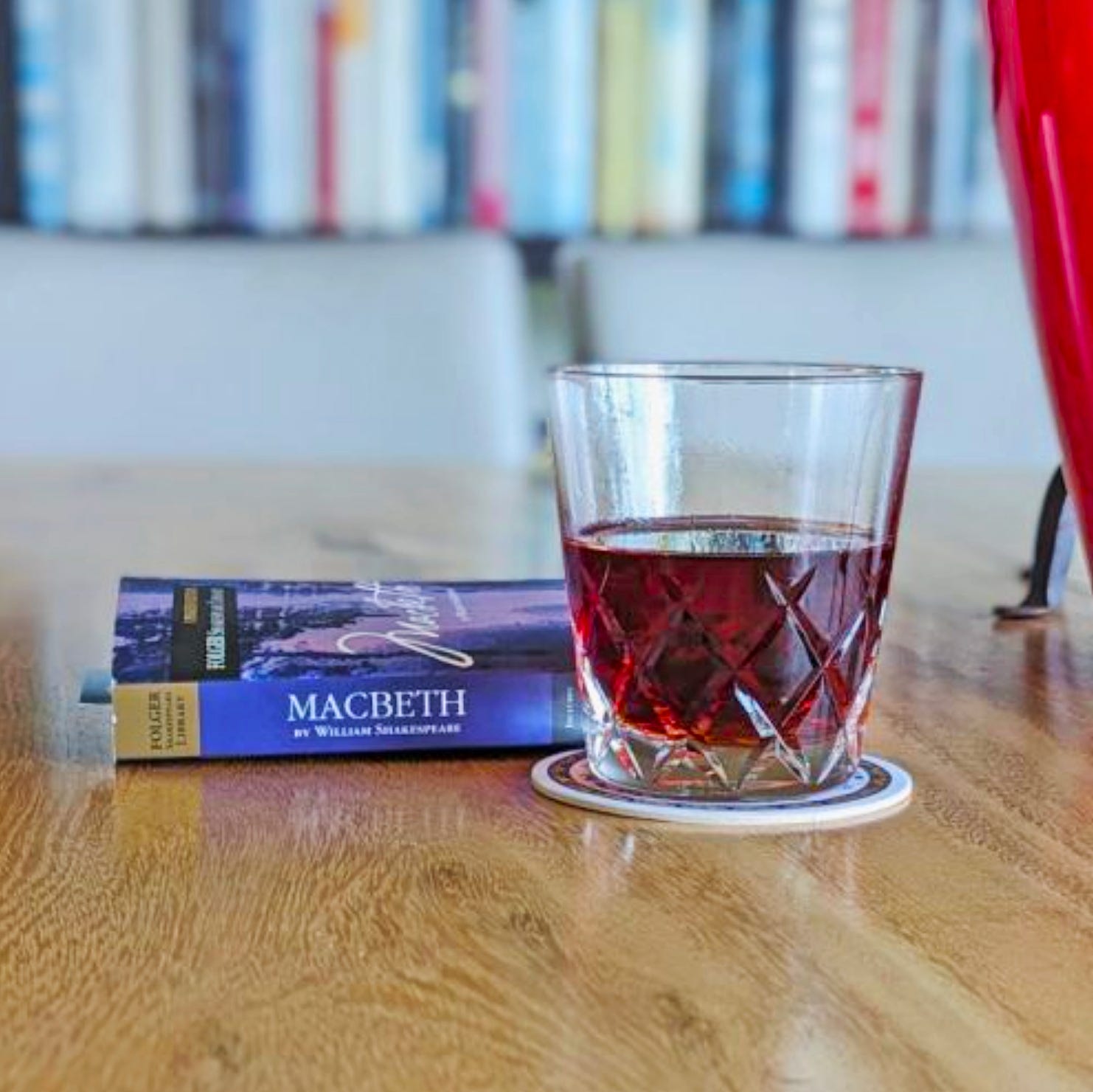
Thankfully, we’re not in a theatre here at the bar, so we can mention the name of the play - though we recommend you don’t say it too much. After all, no need to tempt the wrath from high atop the thing.
Instead, we recommend you make yourself today’s Drink Of The Day, a Scottish Play Cocktail, a very serious drink. No, really - this one’s no laughing matter.
Ingredients
Here’s what you’re going to need for this drink:
