
Today’s DOTD - Drink Of The Day - is a Radio Wave Cocktail inspired by World Radio Day!
In 2011, the member states of UNESCO - the United Nations Educational, Scientific and Cultural Organization, founded in 1945 - declared February 13 to be World Radio Day. The purposes of World Radio Day, like radio itself, are multi-channel.
First, World Radio Day is meant to raise awareness about radio’s continuing importance as an essential, trusted, low-cost medium that connects diverse audiences across large regions, worldwide, even in the era of the internet.
Secondly, World Radio Day is meant to promote independent broadcasting - like what we do here at The Politics Bar - and highlight radio’s unique ability to provide an easily accessible platform for entertainment, education, & dialogue; And as a tool for democracy and positive social change, especially for economically vulnerable & geographically estranged communities.
Third, World Radio Day is meant to remind people of all kinds that in emergencies, radio still serves as one of the most reliable platforms for broadcasting information & communication to a large number of people over long distances.
Finally, World Radio Day is meant as a day to thank broadcasters for the news they deliver, the voices they amplify, and the stories they share. You can thank us here by subscribing for just $6 a month!
Who Invented Radio?
This topic is still fought over, after more than 130 years, and while most honest historians will admit radio was invented by multiple people, including the British scientist Oliver Lodge, the Indian physicist Jagdish Chandra Bose, the Russian physicist Aleksandr Popov, the German scientist Heinrich Hertz, and the Italian businessman & scientist Guglielmo Marconi, core credit for the existence of what we now know as radio belongs to Nikola Tesla.
For the record, Nikola Tesla likely would hate the guy most associated with his name today.
Nikola Tesla was a Serbian-American engineer, futurist, and inventor, born on July 10, 1856, in Smiljan, Croatia, where his father was an Eastern Orthodox Priest. Born with an eidetic memory (also known as photographic memory or total recall), which he credited to his mother, he grew to have an insatiable appetite for engineering & physics, specifically anything related to electricity. In his mid-20s, Tesla got a job in Paris with the Continental Edison Company in the then-new and growing field of electrification. Management soon took notice of his advanced knowledge in engineering & physics, and promoted him to research & design in DC (Direct Current) electrical engineering, Edison’s preferred mode of electrical power.
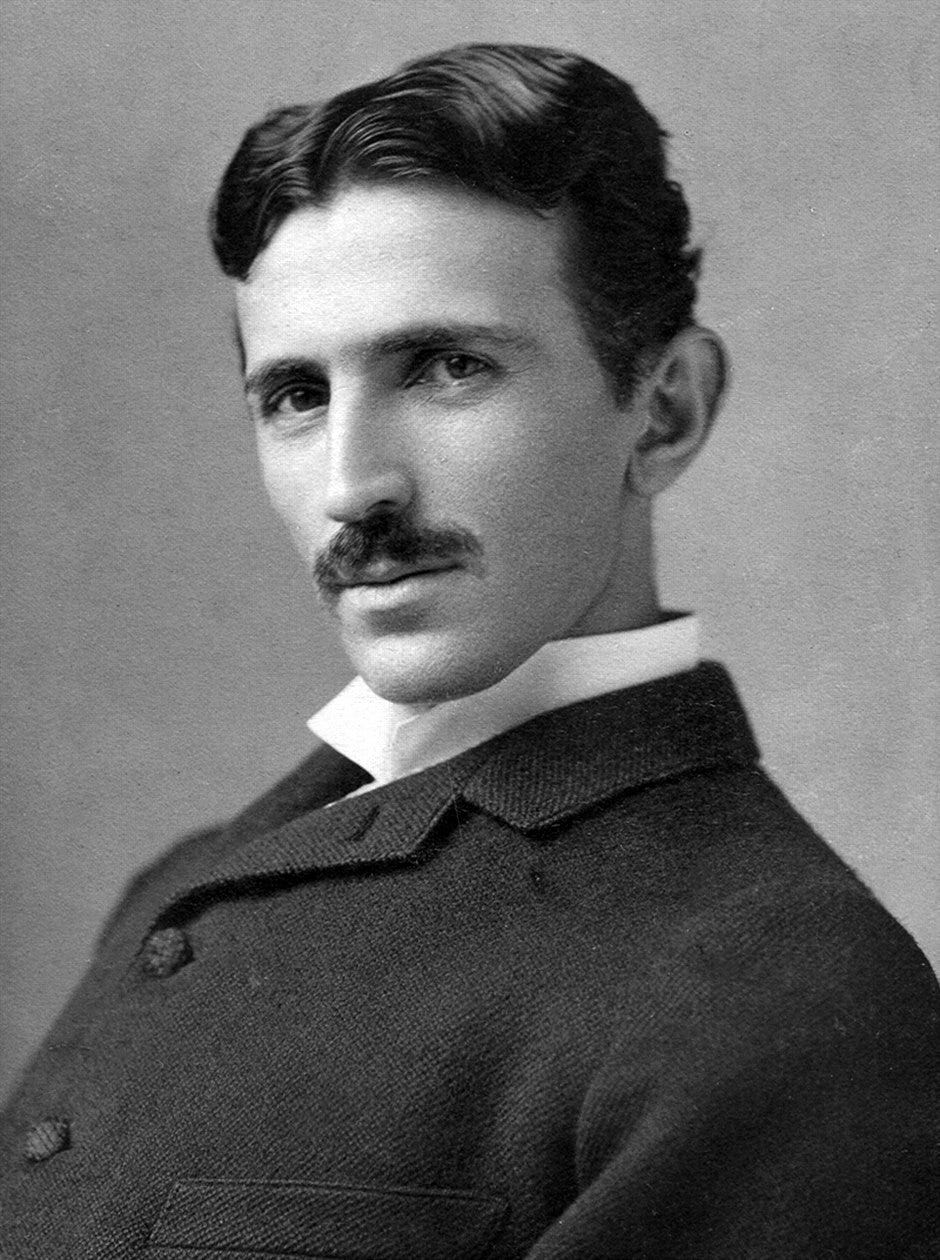
In June 1884, the Edison Company had Tesla immigrate to the United States, to join the Edison Machine Works in Manhattan. After just six months, where apparently his managers at the Edison Company had been stiffing him on pay & bonuses, Tesla quit to start his own lighting and electrical company. Tesla began to file & be awarded patents for his ideas, but he was moving towards AC power, and investors at that time were focused on DC, in large part because of Edison.
By 1887 though, Tesla had secured new investors, and his Tesla Electric Company began to grow. By 1888, Tesla & his inventions had caught the eye of George Westinghouse, the main competitor to Edison. Westinghouse’s company hired & worked with Tesla for a number of years after that, as Tesla effectively helped Westinghouse win the battle for electrical power distribution in the United States. Tesla also began to be independently wealthy about this time, as Westinghouse & others licensed his growing stable of patents for their own uses.
In the summer of 1889, Tesla traveled to the Exposition Universelle in Paris and learned of Heinrich Hertz’s experiments that proved the existence of electromagnetic radiation, including radio waves. Upon learning of Hertz’ discovery, Tesla initially thought radio waves could be used to transmit electricity wirelessly, so that homes & businesses everywhere could have electric power, available for free.
In the course of his experiments on wireless electricity, he soon created what’s known as a Tesla coil, a resonant power transformer that produces high-voltage, low-current, high-frequency alternating current (AC) electricity. If you watch the video above, you’ll get a better understanding of how a Tesla coil works.
Understand that Tesla coils don’t just generate electricity you can see. They also generate energy waves you can’t see, but that can be used to carry wireless power - and also audio & video signals. When a Tesla coil is tuned to a signal of a particular frequency, it literally magnifies the incoming electrical energy through resonant amplification.
This is what we know today as radio.
So Why Does Marconi Get So Much Credit?
In short? Marconi was an oligarch, and the son of oligarchs. No, we’re not kidding.
Guglielmo Marconi was born in Bologna, Italy, on April 25, 1874. Born into Italian nobility, he was the second son of Italian aristocrat Giuseppe Marconi & Irish aristocrat Annie Jameson, who was the daughter of Irish aristocrat Andrew Jameson of Daphne Castle in County Wexford, Ireland.
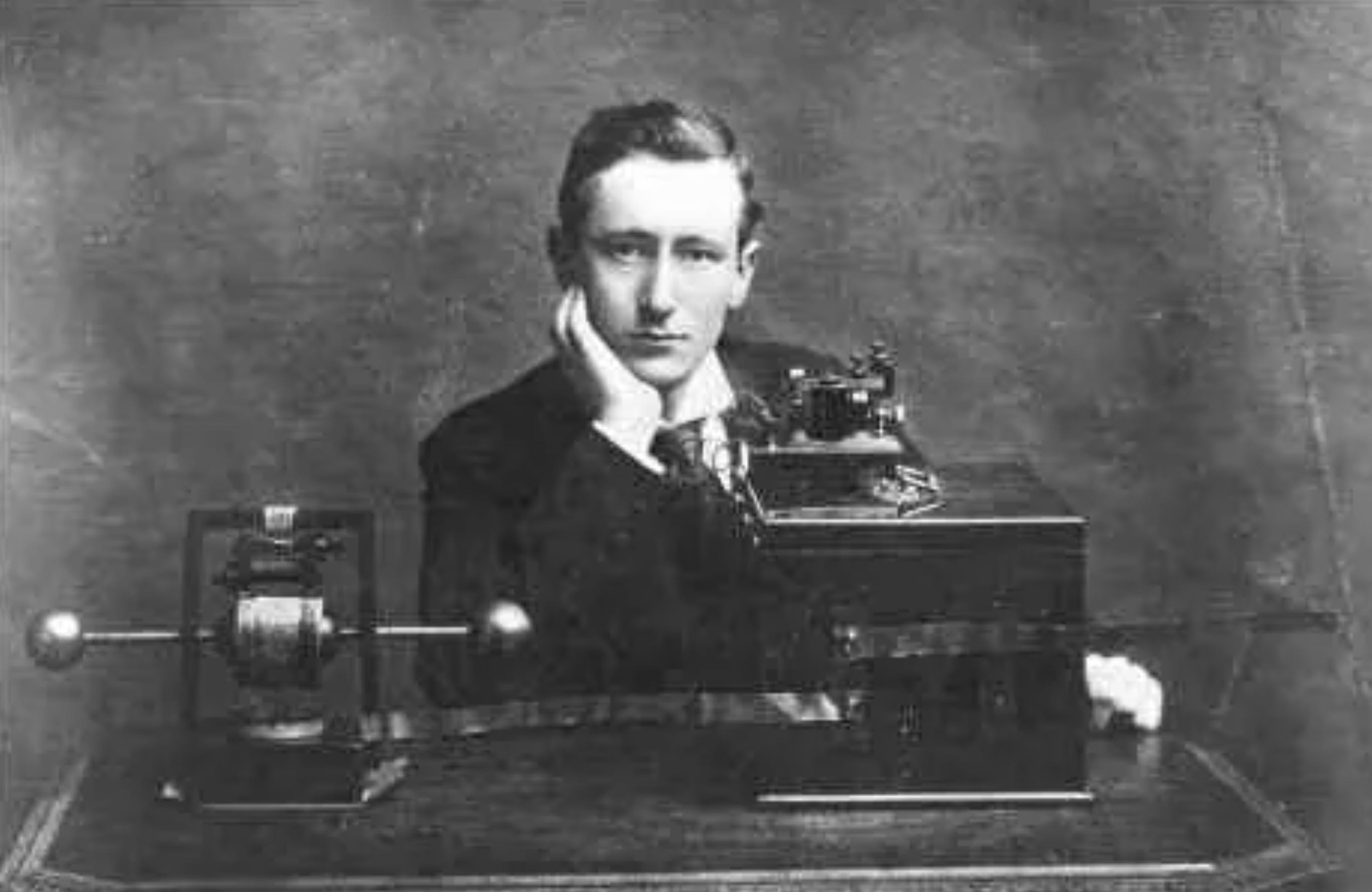
Marconi, like Tesla, had an interest in science and electricity. Marconi returned to Italy at age 18, where he was invited by his neighbor Augusto Righi - professor of physics at the University of Bologna and expert on the electromagnetic wave research of Heinrich Hertz - to attend lectures at the university and use its library and laboratories.
Contesting Power
In the early 1890s, both Tesla & Marconi were experimenting with radio waves, though Tesla’s first experiments were in 1892, while Marconi didn’t have his first successful experiments until 1895. In fact, in Madison Square Garden, at the Electrical Exhibition of 1898, Tesla demonstrated his wireless remote controlled boat, which of course used radio waves.
While Tesla continued to file patents, his goals were still mostly based around wireless electric power. Marconi, however, was focused on using radio waves for communications, and how that technology might be monetized.
By 1896, when neither the Italian government or his father’s wealthy friends saw any purpose to radio, Marconi went back to England, where he knew he could get some investors, rapidly. Over the next four years, Marconi’s well-funded experiments continued, and he became well-known for radio technologies in Europe.
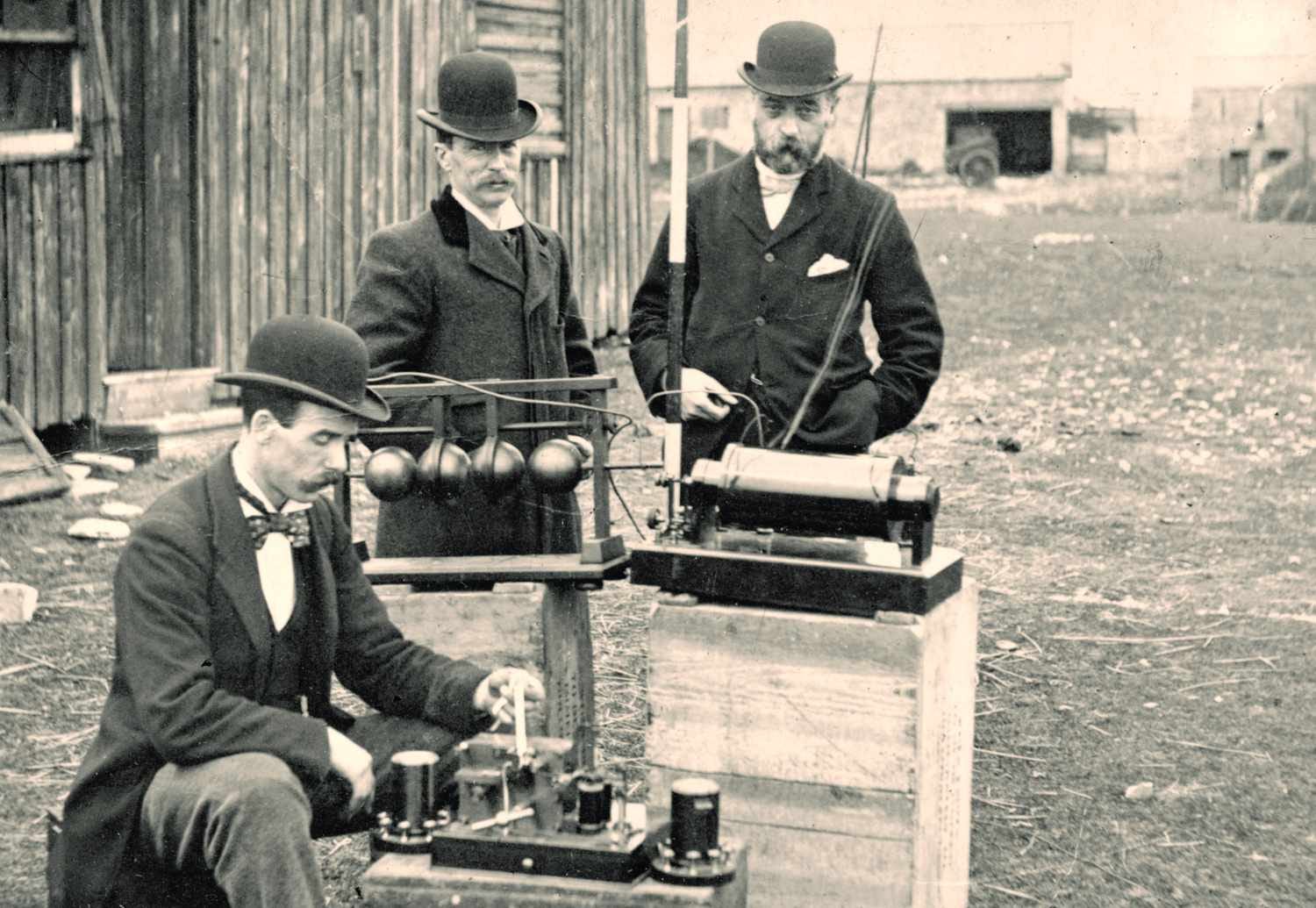
Tesla had filed his initial, key radio patent applications in 1897, and the U.S. government finally got around to granting his applications in March & May of 1900. That’s when Tesla received patents for his basic radio technology, including his work on tuned resonant circuits.
Marconi filed his first American patent application on November 10, 1900 for devices similar to what Tesla had already filed. But because Tesla got to the patent office first, Marconi’s applications were rejected. Over the next three years, Marconi’s American radio patent applications were repeatedly rejected because Tesla’s applications had been filed & awarded first - but also because Marconi had begun to use Tesla’s invention of Tesla coils in his own work.
While Marconi may have been struggling at the patent office, his oligarch ties were helping him surpass Tesla in the marketplace. The Marconi Wireless Telegraph Company began thriving in the stock markets, as he picked up investors on both sides of the Atlantic Ocean, including the English aristocracy, along with Americans Thomas Edison & Andrew Carnegie.
Still, Tesla wasn’t worried about Marconi in 1901. In a legendary tale about Tesla & Marconi, Otis Pond, an engineer then working for Tesla, reportedly said, “Looks as if Marconi got the jump on you,” referring to Marconi’s growing business. Tesla reportedly replied, “Marconi is a good fellow. Let him continue - after all, he’s using seventeen of my patents.”
Marconi continued to do what oligarch businessmen and showmen do, publicly showing off and taking credit for work that others are actually responsible for. He was also a scientist in his own right, and he kept refining & improving radio technologies as his business continued to grow.
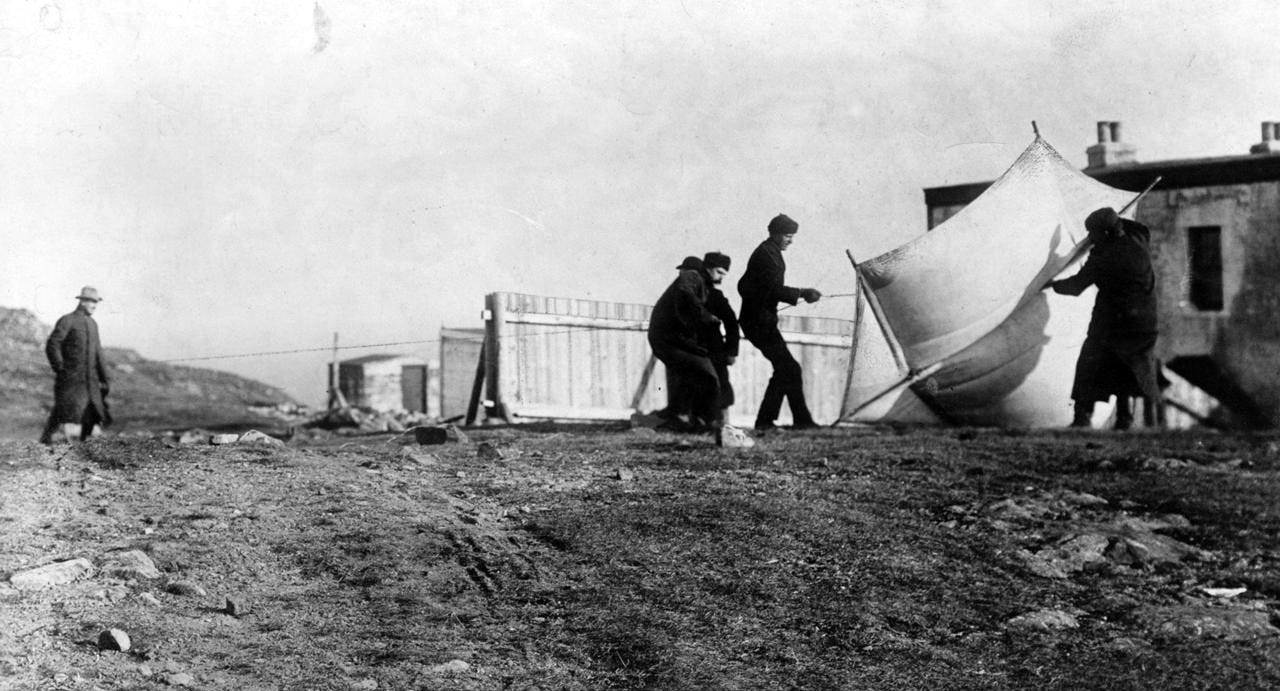
But it was his public displays, to the public & especially to those people from his own class, the rich & powerful, that helped burnish Marconi’s name in the public’s eye as the man who was responsible for radio. It helps to be an oligarch when one wants to play games with the public’s perception.
Of course, the key thing that’s the same about all oligarchs is that they can’t be trusted.
As PBS noted in their series ‘Tesla: Life & Legacy,” Tesla’s calm confidence was shattered in 1904, when the U.S. Patent Office suddenly and surprisingly reversed its previous decisions and gave Marconi a patent for the invention of radio. The reasons for this have never been fully explained, but the powerful financial backing behind Marconi in the United States seems like a clear answer to many.
Tesla’s business ventures had already begun to fail, so he didn’t fight Marconi right away. In 1915, a still furious Tesla sued the Marconi Wireless Telegraph Company for patent infringement. The suit didn’t go far, though, as the Marconi Corporation had deep pockets to withstand long-term lawsuits. Tesla also sued the U.S. military for infringing on multiple patents of his during World War I, though as usual, the courts moved at glacially slow speed.
It wasn't until 1943 —a few months after Tesla's death— that the U.S. Supreme Court upheld Tesla's radio patent number 645,576, and ruled that Nikola Tesla, not Guglielmo Marconi, was the true inventor of radio technology.
Today’s Drink Of The Day
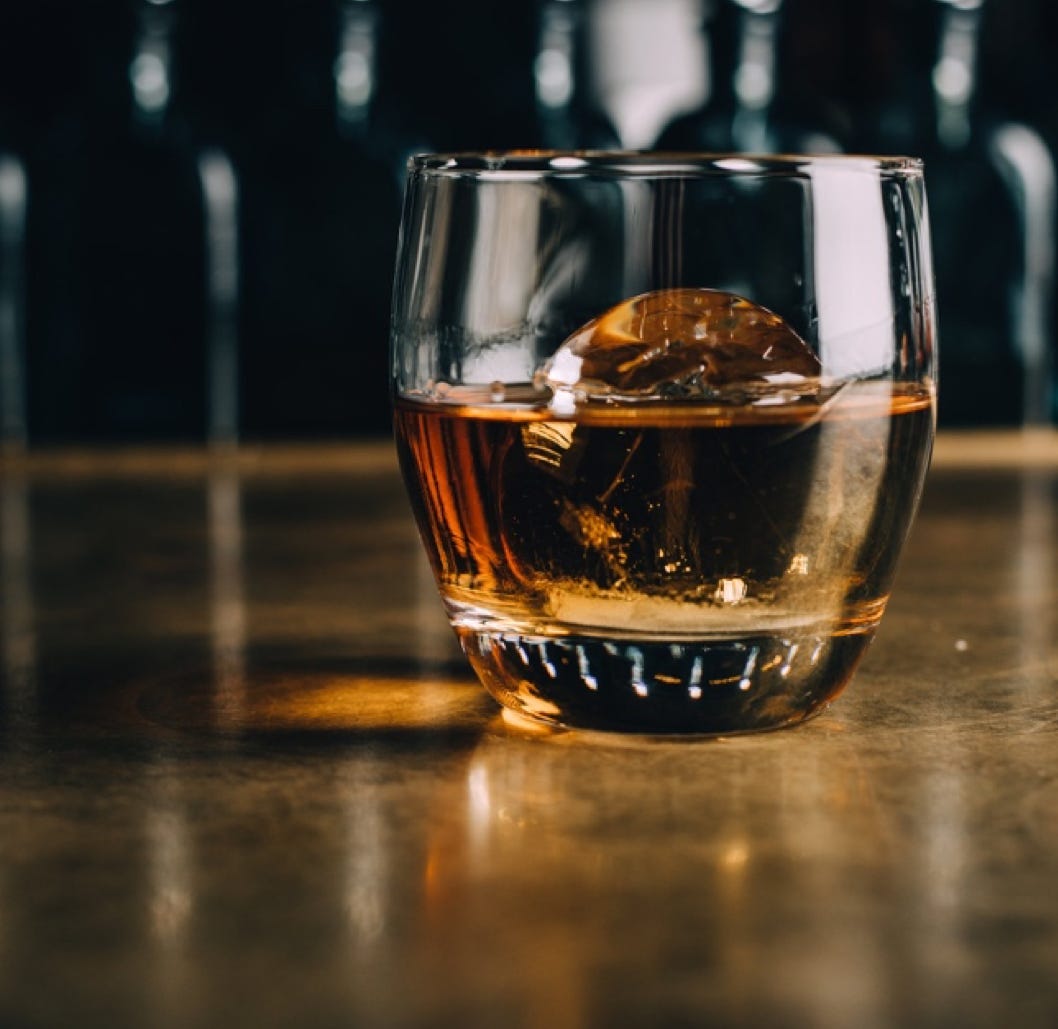
In the spirit of Nikola Tesla, and the spirit of World Radio Day, today’s DOTD is the Radio Wave Cocktail, a signature cocktail featured at Patent Pending in NYC, a speakeasy located literally in the building that was the former home of Nikola Tesla. It’s a bright, savory-sweet blend of tequila, mezcal, rhum agricole (rum), basil, Thai chile, & lime. It honors Nikola Tesla's innovation with a complex, spicy, and refreshing flavor profile.
As Tesla himself once said, “Alcohol is not a poison, nor is it a drug… in small quantities, it cleans and sterilizes the alimentary channels; thereby preventing infections, and proves a beneficial stimulant to thought, speech, and physical exertion.”
It’s also a way many of your favorite radio personalities relax at the end of a day.
Ingredients
Here’s what you’re going to need for this drink:
