
Today’s DOTD - Drink Of The Day - is a Singapore Sling inspired by signing of The Treaty of Singapore, on February 6, 1819, which is considered the founding of modern Singapore, and which - like a Singapore Sling - includes way more drama than any sling drink should. We’re also celebrating the ingenuity of both the men who signed the treaty, but also the bartender who created the drink.
Sir Thomas Stamford Bingley Raffles was born in 1781 aboard a ship off the coast of Jamaica. He started his career as a clerk for the East India Company while he was still a teenager, and continued his employment with them for most of his life. ‘The Company’ as it was known, sent him to Malaysia when he was about 24 years old, which began his long association with the peoples of many nations in Southeast Asia.
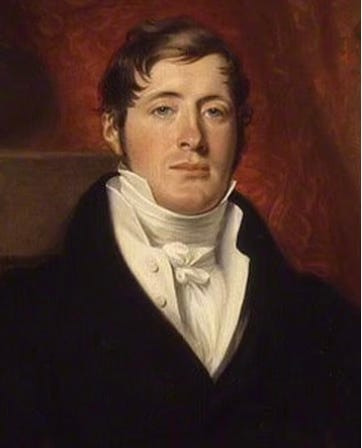
Raffles held a variety of posts throughout the region, primarily in Malacca and Java. During his time in those posts, he acted as an ambassador negotiating trade & peace treaties with local and regional tribes & nations. He also was assigned to be commander of military operations, with the goal of establishing British territorial rule there. He was also assigned to take on other European nations who were also trying to claim territory in the area, like the Dutch, who controlled most of the colonies in the region at the time.
In January 1819, a fleet of eight ships led by Raffles was scouting locations for a British trading post in the area we call today the Singapore Straits. On the advice of his team & his contacts in the region, Raffles landed on the island of Singapore and reached out to the island’s chief, Temenggong Tun Daeng, who quickly became interested in Raffles’ idea for a British trading post. However, while Temenggong was the island’s chief, Singapore was part of the Johor Sultanate, and Temenggong didn’t have the sole authority to make that kind of a deal with Raffles. To secure the trading post, Raffles would also need the approval of the Sultan of Johor.
This is where it gets complicated.
The Sultan of Johor at that time was a man named Abdul Rahman. Rahman had usurped the position of Sultan, and once he took power, refused to give it up.
The rightful Sultan of Johor was Hussein Shah, the older half brother of Abdul Rahman. Sultan Mahmud Shah III, their father, had died in 1811 after reigning for more than forty years. Unwisely, Mahmud Shah formally named no heir – and left behind his two sons by two different mothers. Everyone had expected Hussein Shah to take his father’s place as sultan, but when Hussein Shah left Singapore to get married in the nearby state of Pahang, Abdul Rahman and his cronies took the throne of Jahor, & refused to give up power, forcing Hussein Shah into exile in the nearby Riau Islands.
So now, in 1819, Sir Thomas Raffles and Chief Temenggong needed a partner. And Chief Temenggong still supported Hussein Shah, not the current sultan, Abdul Rahman. So, with Temenggong's help, Raffles smuggled Hussein Shah to Singapore, where Raffles offered to recognize Hussein as the rightful Sultan of Johor, and provide him with a yearly payment. In return, Hussein would grant the British East India Company the right to establish a trading post on Singapore. Hussein Shah happily agreed.
On February 6, 1819, The Treaty of Singapore was signed by Sir Thomas Stamford Raffles, Sultan Hussein Shah of Johor, and Chief Temenggong Abdul Rahman, establishing the island as a British trading post. The agreement, which marked the birth of modern Singapore, granted the British East India Company the right to establish a settlement on the southern part of the island, which they did to great success.
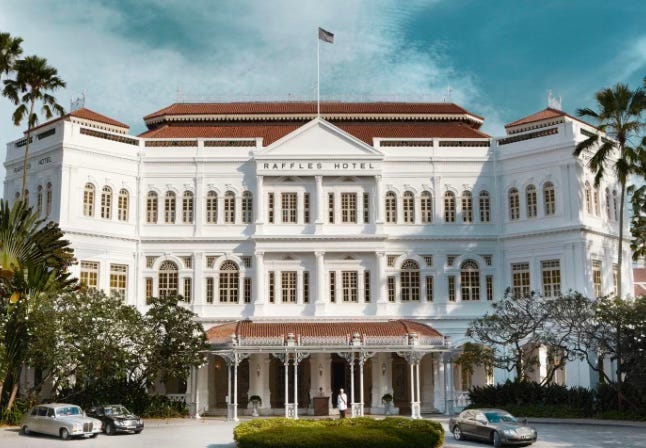
Sixty eight years later, in 1887, Armenian hoteliers the Sarkies Brothers established the Raffles Hotel in Singapore, an island nation that had grown explosively since that trading deal had been signed nearly seventy years before. The Raffles Hotel was originally just a ten-room hotel when it opened, but it expanded over many years by adding new wings and remodeling old structures.
The hotel built its bar, known as The Long Bar, as part of one of these expansions. The name is appropriate, as the bar consumes an entire side of a large room filled with tables. When the bar was built in the early 1900s, men could sip whisky or gin at the bar, but etiquette forbade women from drinking alcohol in public. They were served teas or fruit juices instead, which cost much less than the alcoholic drinks the men would order.
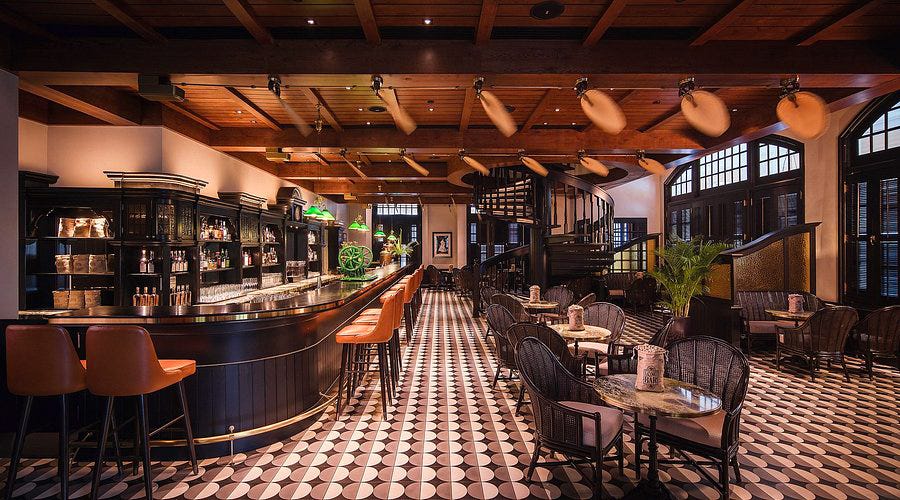
In 1915, a resourceful Raffles bartender named Ngiam Tong Boon decided to tackle this misogynistic business problem - and he began with a sling.
Slings are a class of drinks that start with a very simple cocktail formula: spirit, water, and sugar. Beyond that point, they can stay simple, or get wildly complicated with the addition of all kinds of juices and modifying liqueurs.
Mr. Ngiam crafted a cocktail that resembled fruit juice but was cleverly laced with many kinds of alcohol. It blended gin, pineapple juice, lime juice, curaçao, and Bénédictine, with grenadine and cherry liqueur, which lends the drink its now-famous rosy hue. The elegant disguise made it socially acceptable for women to drink at the bar, and it became an instant social and business success.
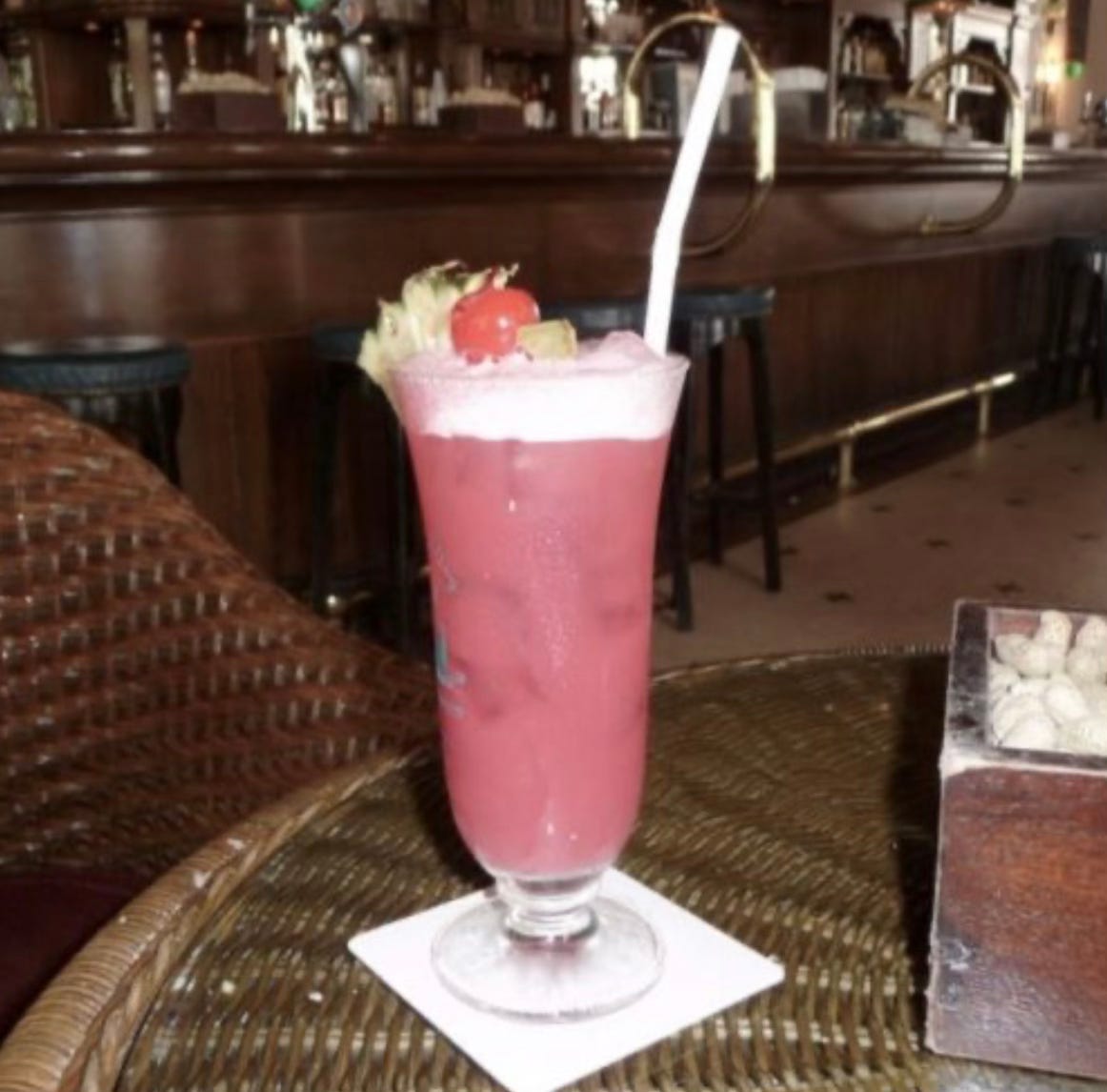
With that, the Singapore Sling was born, and over a century later, the drink remains one of the world’s most iconic cocktails, still savored in the very bar where it first began.
And so, with a bit of drama, and a salute to ingenuity, we give you today’s Drink Of The Day, a Singapore Sling.
Ingredients
Here’s what you’re going to need for this drink:
