
Today’s DOTD - Drink Of The Day - is a Roosevelt Martini inspired by the birthday of one of America’s greatest presidents, Franklin Delano Roosevelt, also known as FDR, who was born on this date, January 30, 1882, in Hyde Park, New York.
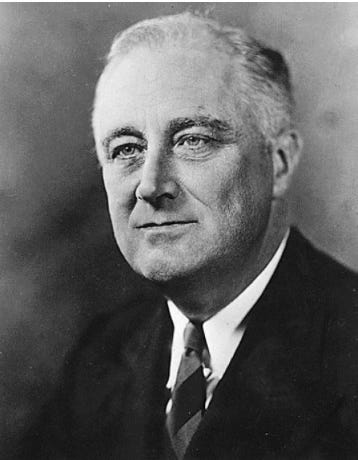
Born into the prominent Delano and Roosevelt families in Hyde Park, New York, a town that’s about halfway between New York City & Albany, on the banks of the Hudson River, Roosevelt was very active as a child, learning to ride horses, shoot, sail, and play polo, tennis, and golf. Frequent family trips to Europe – beginning at age two and from age seven to fifteen– also helped Roosevelt become conversant in German and French.
Roosevelt attended Harvard University where he was a cheerleader, a member of the Alpha Delta Phi fraternity, a member of the Explorer’s Club, and became editor-in-chief of The Harvard Crimson newspaper. Roosevelt's father died in 1900, distressing him greatly. The following year, Roosevelt's fifth cousin Theodore Roosevelt became President of the United States. Theodore's vigorous leadership style and reforming zeal made him Franklin's role model.
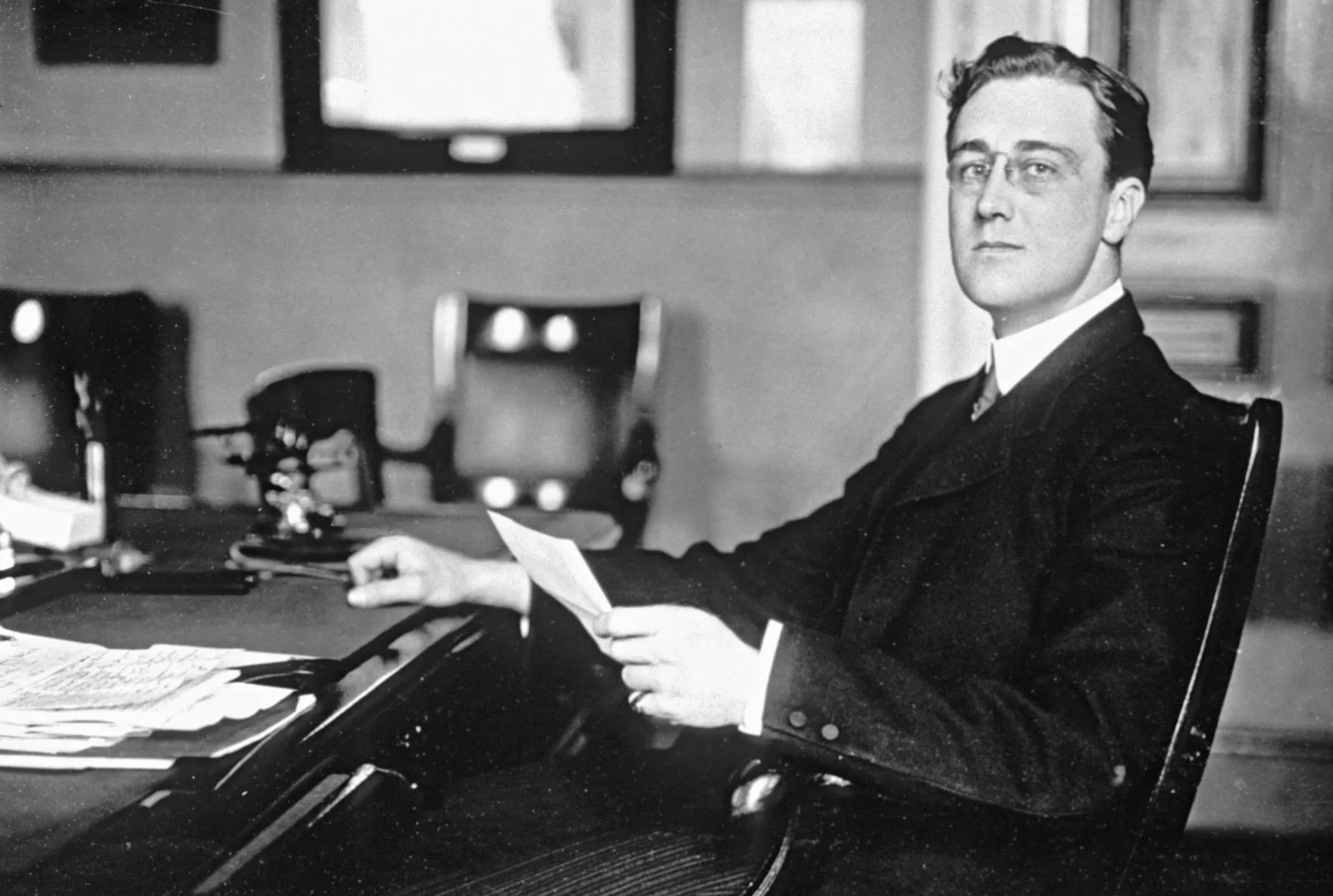
After graduating Harvard in only three years, Roosevelt went on to Columbia Law School in 1904. On St. Patrick’s Day, 1905, he married his distant cousin Eleanor, and in 1907 dropped out of Columbia Law School before getting his law degree, after he’d passed the New York bar examination, to get a job at prestigious law firm. Clearly, FDR was both intelligent and ambitious. Historians also describe him as self-assured and charming, so it should not be surprising Roosevelt also had several extramarital affairs.
Following the example of his fifth cousin Pres. Theodore “Teddy” Roosevelt, whom he greatly admired, Franklin Roosevelt entered public service through politics, but unlike Teddy, Franklin came at politics as a Democrat, like his father. FDR first won election to the New York state Senate in 1910. Despite short legislative sessions, Roosevelt took his position seriously, treating his new position as a full-time career. He became popular and powerful, standing up to the Tammany Hall machine that dominated the New York state Democratic Party at the time.
In 1912, FDR supported New Jersey Governor Woodrow Wilson’s bid for the 1912 Democratic nomination. The election became a rare three-way contest when Theodore Roosevelt left the Republican Party and formed the Progressive Party - nicknamed the “Bull Moose Party” - launching a third-party campaign against Wilson and the then-sitting Republican president William Howard Taft. Franklin’s decision to back Wilson over his cousin in the general election alienated some of his family, though Theodore and Franklin remained friendly.
Roosevelt's support of Wilson in the 1912 election led to his appointment by then-President Wilson in March 1913 to be the Assistant Secretary of the Navy, In 1914, Roosevelt ran for the seat of retiring Republican Senator Elihu Root of New York, and was soundly defeated in the primary. However, he began making more allies in politics, and his political career began climbing, even as World War I took over most of U.S. and international politics.
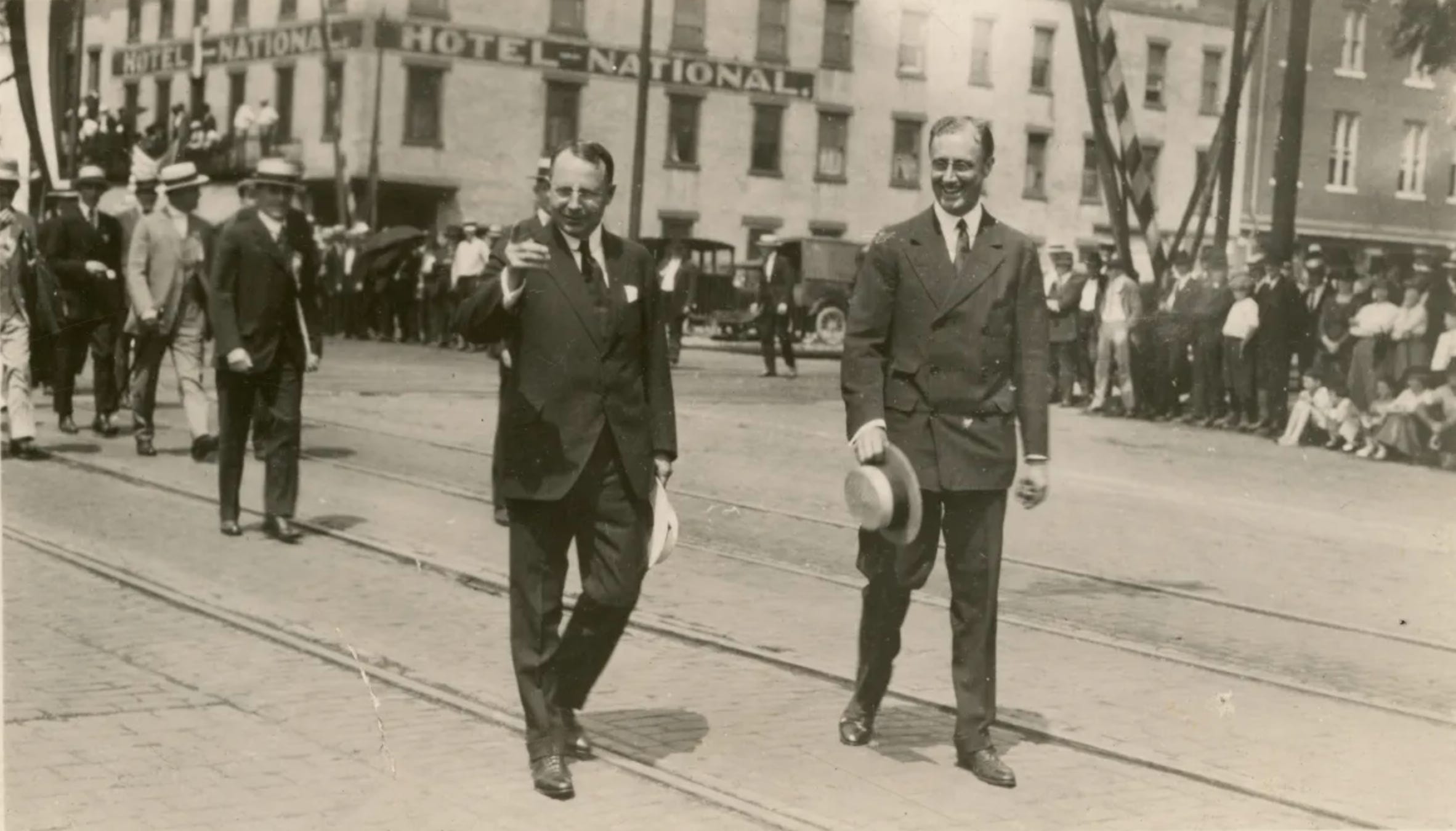
Through shrewd decision making, by 1920, FDR had become the Democratic nominee for vice president. Roosevelt & Ohio Governor James Cox lost, by a wide margin, in the 1920 campaign to Republicans Warren G. Harding and Calvin Coolidge. After the election, Roosevelt returned to New York City, where he practiced law and served as a vice president of the Fidelity and Deposit (Insurance) Company.
In the summer of 1921, when he was just 39, FDR was stricken with a paralytic illness in the lower half of his body. He was diagnosed with poliomyelitis - polio - and underwent years of therapy. Some modern doctors & scientists now think Roosevelt may not have had polio, but instead believe he contracted Guillain–Barré syndrome, a rapid-onset muscle weakness caused by the immune system damaging the peripheral nervous system .
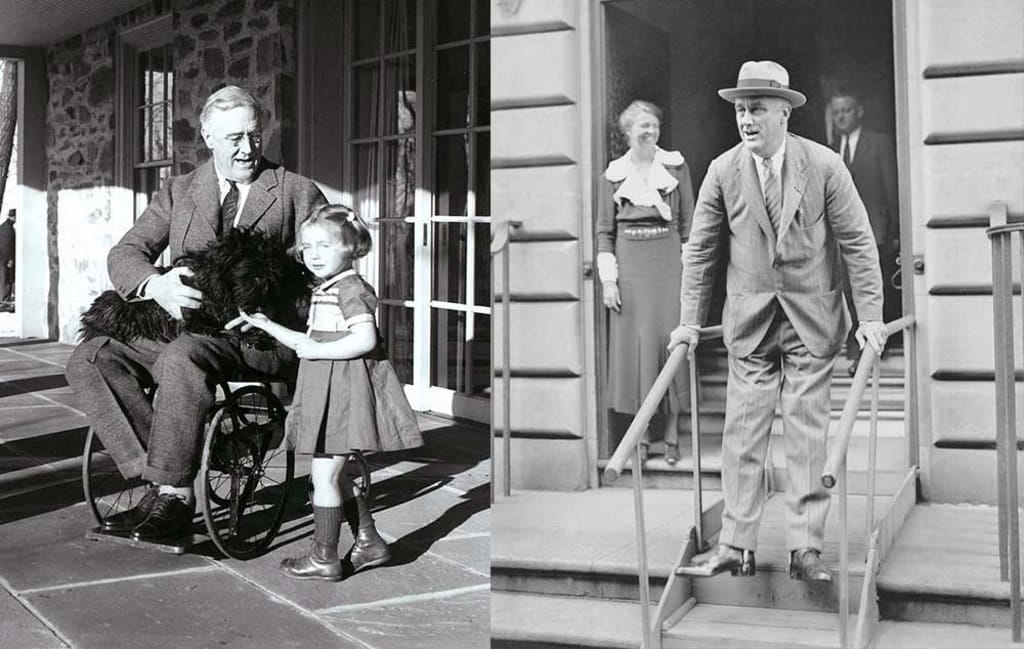
Whatever his illness. FDR displayed undeniable courage, fighting back to regain the limited use of his legs, particularly through swimming. He convinced many people that he had improved significantly, which he believed to be essential prior to running for office. He laboriously taught himself to walk short distances while wearing iron braces on his hips and legs, by swiveling his torso while supporting himself with a cane. He was careful to rarely be seen using his wheelchair in public, and great care was taken by those who worked with him on his campaigns, and throughout his future career in politics, to prevent any portrayal of FDR in the press that would highlight his disability. Still, thanks to some intrepid journalists, we still have proof of our first president with a visible disability.
Roosevelt remained active in New York politics, even as he pushed himself through rehab in the Southern United States, and at the 1924 Democratic National Convention, he dramatically appeared on crutches to nominate Al Smith as “the Happy Warrior.” In turn, Al Smith - who was also the Democratic presidential nominee in the 1928 election - asked Roosevelt to run for governor of New York in the 1928 state election. While Smith lost the presidency in a landslide, even being defeated in his home state, Roosevelt was elected governor of New York by a one-percent margin.
One of Roosevelt’s key focuses was the the ongoing farm crisis of the 1920s, as well as major public works projects, like the construction of hydroelectric power plants. In 1928, FDR also began his legendary “fireside chats” where he directly addressed his constituents via radio, often pressuring the New York State Legislature to advance his agenda. All of these skills would come in handy for the next step he was about to take.
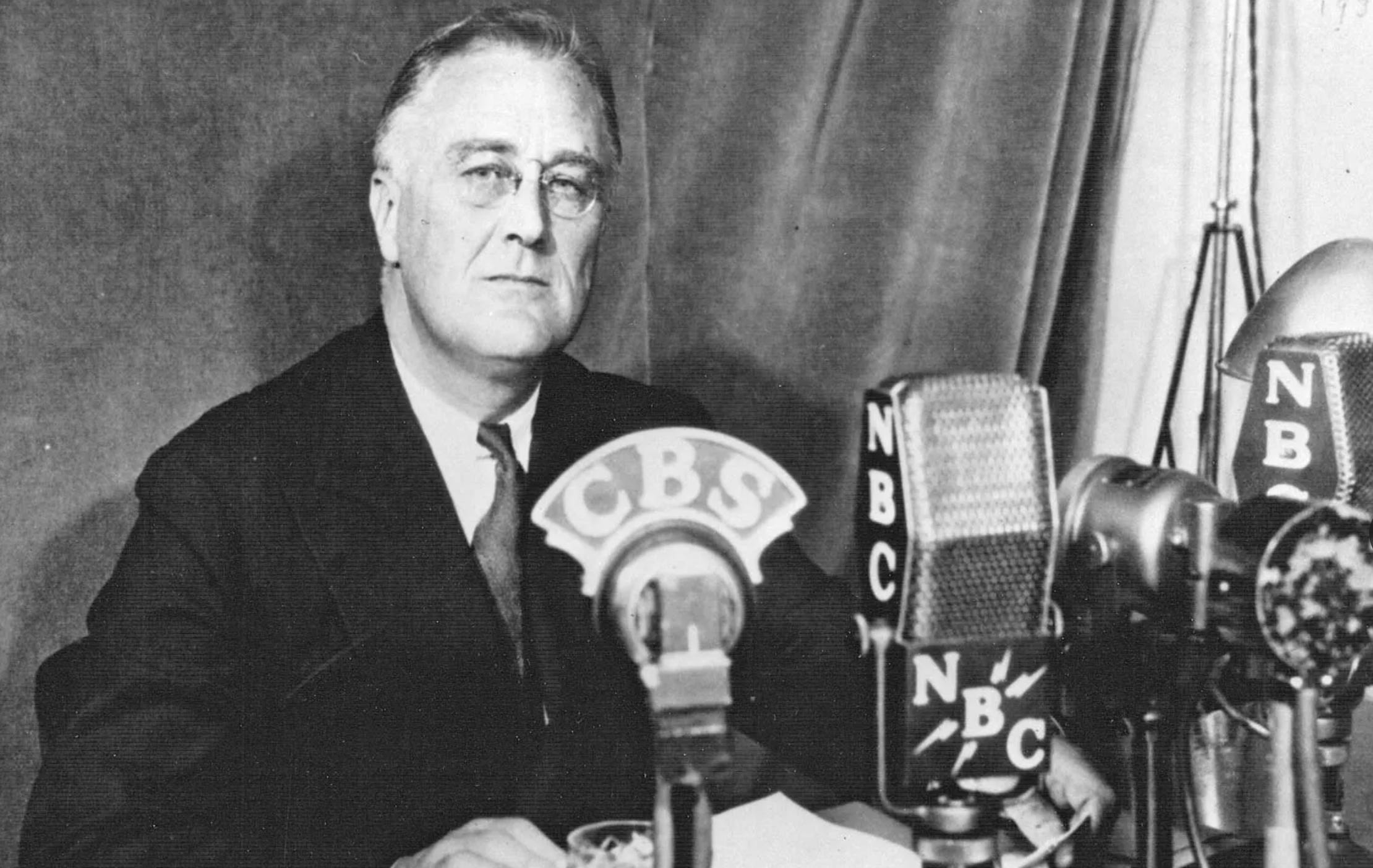
In October 1929, the Great Wall Street Crash occurred, and the Great Depression in the United States began. Roosevelt fully understood the depth & seriousness of the situation, and immediately established a state employment commission. He also became the first governor to publicly endorse the idea of unemployment insurance.
When Roosevelt began his run for a second term for governor of New York in May 1930, he reiterated his doctrine from the campaign two years before: “That progressive government by its very terms must be a living and growing thing, that the battle for it is never-ending and that if we let up for one single moment or one single year, not merely do we stand still but we fall back in the march of civilization.” He was re-elected to a second term 56% to 33%.
In 1930, Roosevelt passed through the New York state legislature a bill creating old-age insurance for New Yorkers over 70 years of age. He also supported reforestation with the Hewitt Amendment in 1931, which gave birth to New York’s State Forest system. Roosevelt also began an investigation into corruption in New York City among the judiciary, the police force, and organized crime, which eventually yielded the arrests of dozens of corrupt officials.
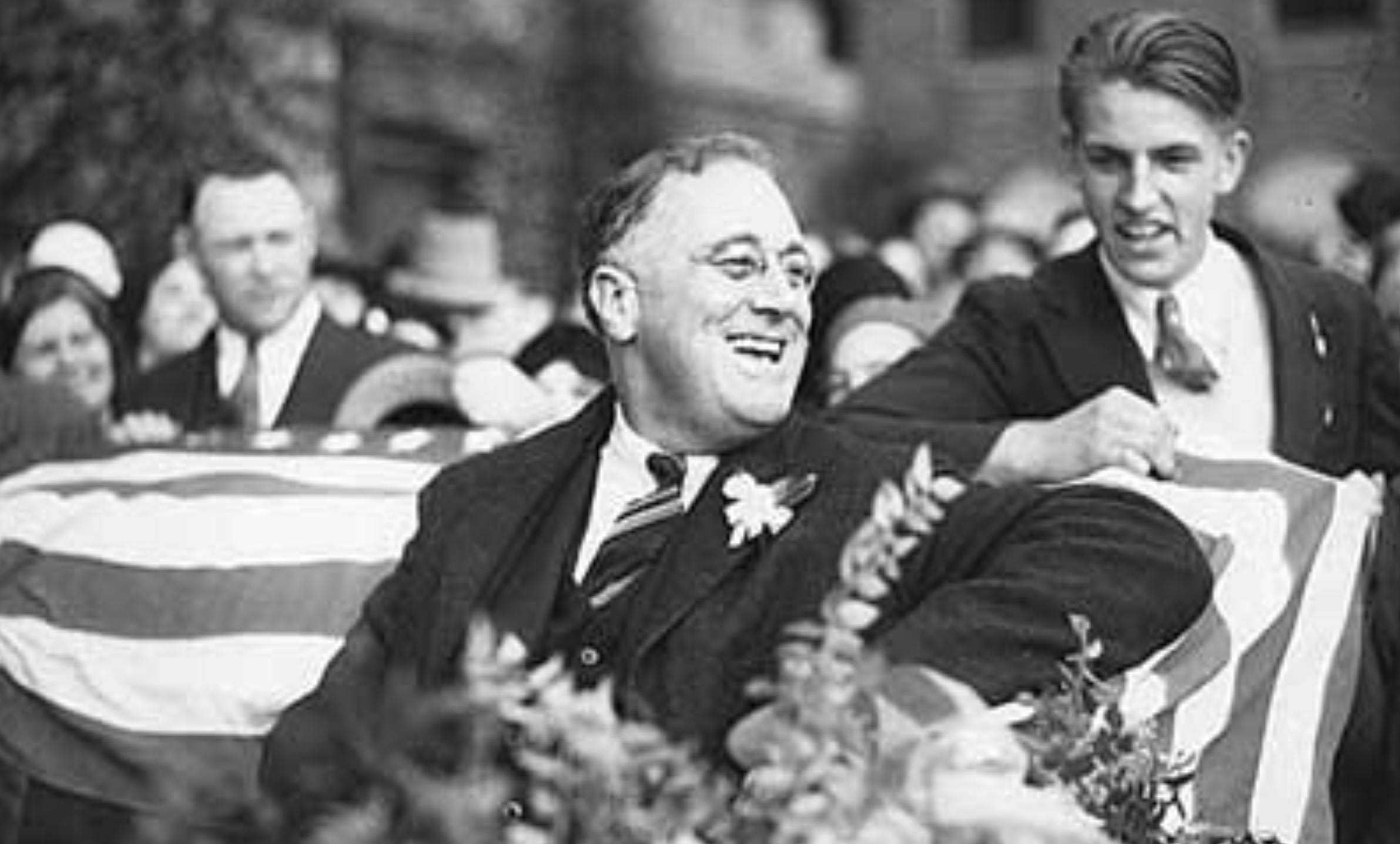
As the 1932 presidential election approached, Roosevelt’s efforts as governor, addressing the effects of the Great Depression in his own state, established him as the front-runner for the 1932 Democratic presidential nomination. In his acceptance speech at the 1932 Democratic National Convention, Roosevelt declared, “I pledge you, I pledge myself to a new deal for the American people... This is more than a political campaign. It is a call to arms.” Roosevelt promised securities regulation, tariff reduction, farm relief, government-funded public works, and other government actions to address the massive problems of the Great Depression.
FDR also fundamentally opposed Prohibition, campaigning in 1932 to end what he termed a “stupendous blunder”. Upon taking office in 1933, he acted quickly to legalize beer and wine with the Beer-Wine Revenue Act (March 22, 1933) to generate tax revenue for the Great Depression and eventually signed the 21st Amendment, repealing the 18th Amendment.
Roosevelt won 57% of the popular vote in 1932 and carried all but six states - Maine, New Hampshire, Vermont, Connecticut, Pennsylvania, and Delaware. Historians and political scientists consider the 1932–36 elections to be one of the major political realignments in U.S. history. Roosevelt’s victory happened because of the diverse groups he’d been able to bring together, which became known as The New Deal coalition. From small farmers, & Southern whites, to Catholics, big-city political machines, & labor unions; from northern black Americans (southern ones were still disfranchised), to Jews, intellectuals, and political liberals, FDR’s New Deal coalition was massive, and its positive effects would end up dominating U.S. politics for the next nearly 50 years.
Roosevelt was elected president in November 1932, to the first of four terms, the only U.S. president to ever serve more than two terms. By March 1932, there were 13 million people unemployed, and almost every bank was closed. In his first “hundred days,” he proposed, and Congress enacted, sweeping programs to bring recovery to business and agriculture, relief to the unemployed, help to those in danger of losing farms and homes, and infrastructure reform, especially through the establishment of the Tennessee Valley Authority.
By 1935, the United States had already achieved a surprising measure of recovery, but businessmen and bankers were turning against Roosevelt’s New Deal program. They feared his experiments, scorned his decisions to take the nation off the gold standard and allow deficits in the budget, and disliked the concessions to labor. Roosevelt responded with another new program of reform: Social Security, heavier taxes on the wealthy, new controls over banks and public utilities, and an enormous work relief program for the unemployed.
By 1936, although the nation was still mired in depression, Roosevelt was reelected over Kansas Governor Alfred Landon by a huge margin. Bolstered by a popular mandate, and a huge margin in Congress, FDR sought legislation to enlarge the Supreme Court, which had invalidated many New Deal programs. However, Roosevelt’s “court packing” proposal failed and never received a vote in Congress.
Throughout the late 1930s, Roosevelt sought to keep the United States out of the growing crisis in Europe, as Adolf Hitler’s Germany began marching through neighboring nations. After France fell and England came under siege in 1940, Roosevelt began to send Great Britain all possible aid he could, legally, short of actual military involvement.

When the Japanese attacked Pearl Harbor on December 7, 1941, Roosevelt organized the nation’s manpower and resources for a global war that, he hoped, would culminate in a victory for democracy. Mindful of the mistakes made after World War I, FDR devoted much thought to the planning of a United Nations organization that he hoped would help keep the peace after the war was won. Not all of FDR’s decisions were wise, or in hindsight, were honorable. Roosevelt signed an executive order in 1942 which ordered the relocation and containment of all Japanese Americans in the U.S. into military internment camps. The Supreme Court heard two challenges to the existence of the camps, but the executive order was upheld both times.
As World War II drew to a close, Roosevelt was elected to a fourth term in November 1944; the only president to serve more than two terms. His health deteriorated as his final term started, and on April 12, 1945, while at his “Little White House” retreat in Warm Springs, Georgia, he died of a cerebral hemorrhage.
Today, we give a salute to one of the best presidents in U.S. history, Franklin Delano Roosevelt, with the Drink Of The Day - a Roosevelt Martini.
Ingredients
Here’s what you’re going to need for this drink:
