
Today’s DOTD - Drink Of The Day - is a Sweetie Pie Cocktail inspired by the desire for people to kiss their loved ones - and of course, the invention of the toothbrush, which makes it decent, even pleasurable, to kiss one’s loved ones, and is celebrated as National Teeth Brushing Day today! History notes the invention of that wonderful teeth-cleaning tool first happened on this date, June 26, 1498, 528 years ago, at the hand of Chinese Ming dynasty Emperor Hongzhi.
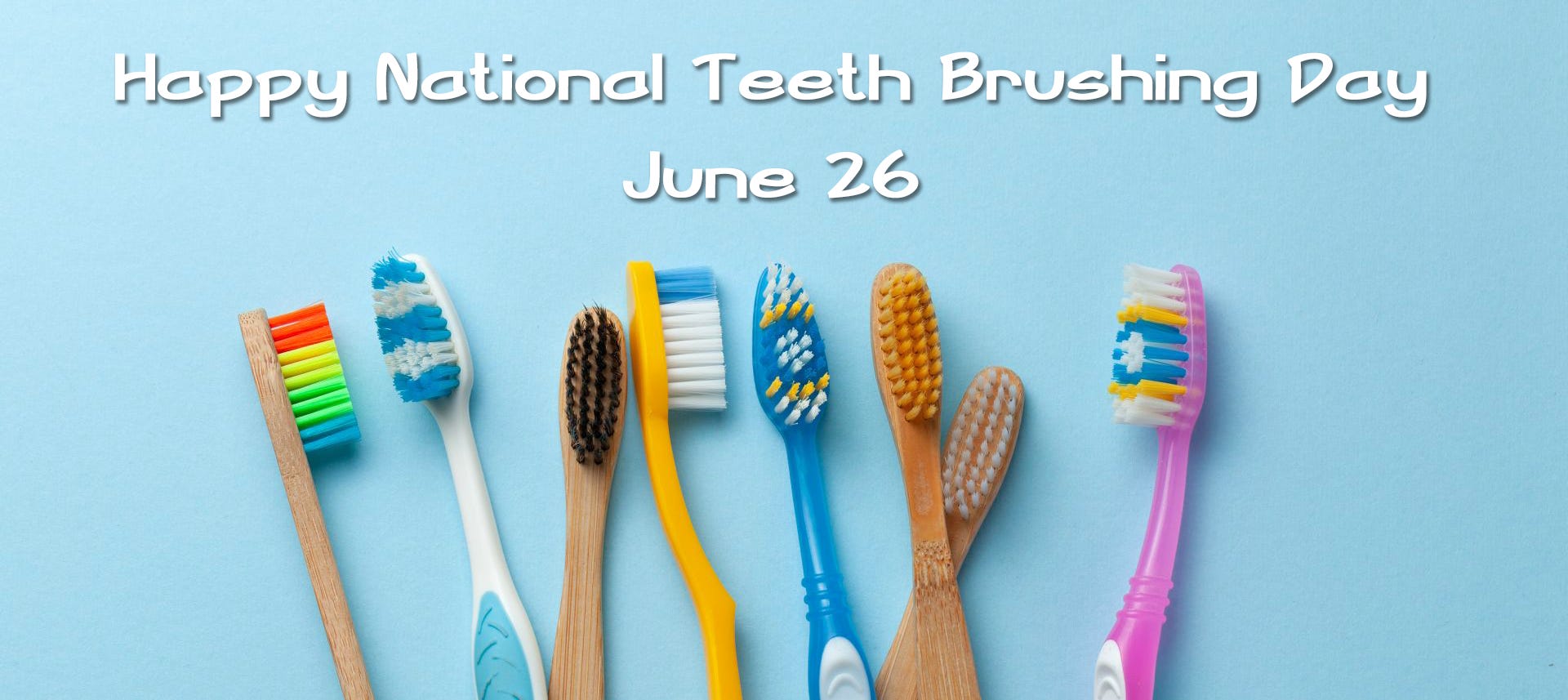
A Brush With History
By the time Emperor Hongzhi, the tenth emperor of the Ming Dynasty in China, had invented the toothbrush, most societies around the world had already worked out some way of cleaning their teeth. Methods across various societies included toothpicks, frayed sticks, cloths and rags, knives, and substances including bicarbonate of soda rubbed straight into the teeth with a finger.
However, the Emperor’s invention, a combination of bristles and handle, was completely new. His invention used bristles from a pig affixed to a handle made of bone or bamboo, enabling him to reach the parts of his mouth that other cleaning devices could not reach. One of the other key notes in history about Emperor Hongzhi - whose personal name was Zhu Youcheng - was that he was the only Chinese Emperor known to be monogamous. His impeccable dental health may have had something to do with that.
The idea of teeth brushing took a good couple of centuries to catch on in the West, not least because European societies were generally not big on washing of any kind during the 1500s. Also, as the joke goes, if the tool invented by Emperor Hongzhi had instead been invented by a European hillbilly with questionable hygiene, it would have originally been called a “tooth brush” and not a “teeth brush,” for obvious reasons.
Still, consider this little brush and the habit that goes with it —so important for health and happiness—and how it came into our lives. From ancient China, through the trade routes of the Middle East, the tool & habit of brushing one’s teeth traveled with traders along the Silk Road, and eventually arrived in the West, specifically in France.
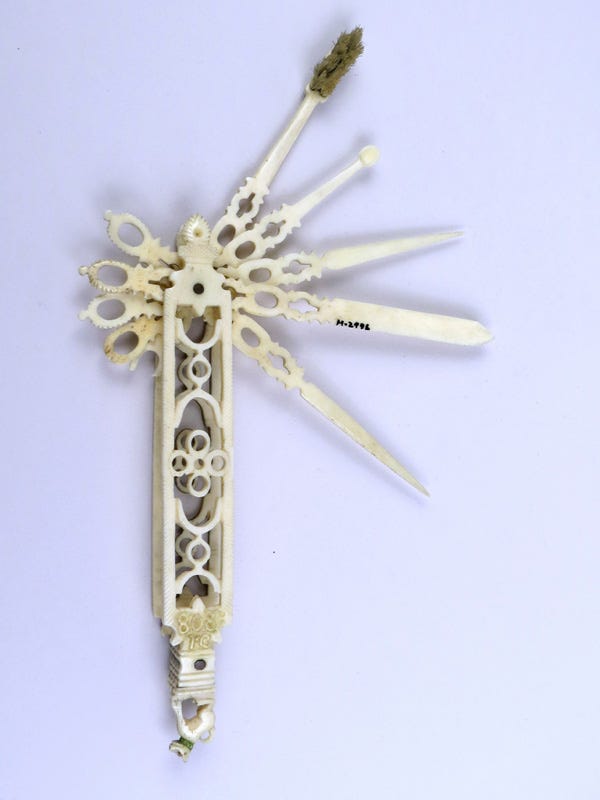
Although French men and women were likely no more fastidious than other Europeans, France was the first country to have a dedicated dentist - rather than just a simple tooth puller - who cared for teeth and promoted dental hygiene. In 1649, a wealthy Englishman living in Paris, Sir Ralph Verney, wrote in his diary that members of the French aristocracy had “little brushes for making cleane of the teeth, most covered with sylver and some few with gold and sylver Twiste.”
Nicholas Lemery, a French chemist who served as apothecary to the French King in the late 1600s. was one of the first to recommend rubbing one’s teeth with dentifrice - a powder used for cleaning - along with a brush for the teeth, and then a rinse with claret.
Thomas Hearne, an English historian & antiquary in the early 1700s. was one of the first Europeans to popularize the “innovation” of teeth brushing to the masses. noting in his work detailing Islamic traditions that “making clean their teeth with a brush” had been a ritual part of Muslim post-prayer ablutions for average people for hundreds of years.
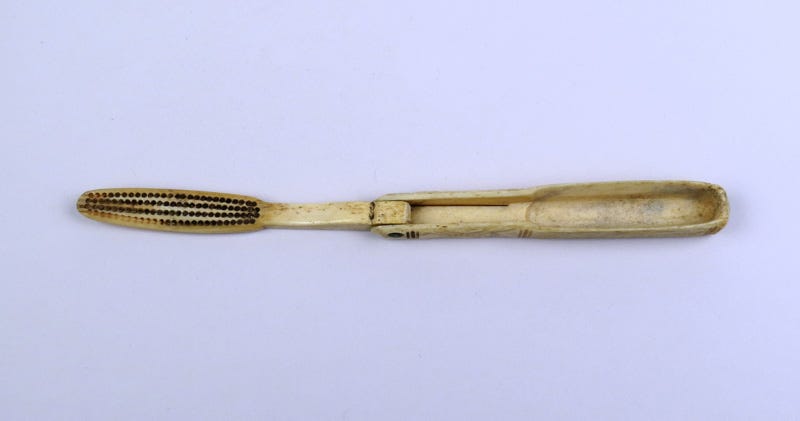
The Compleat Housewife, a popular book first published in London in 1741, included a recipe for an “admirable Powder for the Teeth.” It also advised using a cloth on the finger, as “The too frequent use of the tooth-brush makes the teeth become long and deformed, altho’ it be a good instrument, and the moderate use of it proper enough.” A similar recipe for teeth cleaning powder can be found in Martha Washington’s manuscript Cookery Book, though as we all can guess, George apparently never read that tome.
Advertisements for dentists and dental products began appearing in several newspapers published in the British colonies of North America during the 1750s. One such ad in The South Carolina Gazette (Aug. 26, 1756) offered toothbrushes, “galenical medicines,” surgical instruments, and Greenough’s tincture for the teeth—for which Thomas Greenough, of London, had obtained a British patent in 1743. Another advertisement in The Pennsylvania Gazette (Nov. 27, 1760) was posted by John Wilkins, a Philadelphia craftsman who made toothbrushes, scrubbing brushes, and such, and who offered ready money for hog bristles.
There are even records of our American forefathers using toothbrushes. George Washington (who eventually lost all his teeth) bought toothbrushes in Williamsburg and in Philadelphia when he was younger. Thomas Jefferson once asked a colleague in London to purchase “½ doz. tooth brushes, the hair neither too strong nor too weak, without spunges. ½ doz. do. with the strongest hair, such as hog’s bristle, without spunges also. A silver tooth pick case, the smallest possible, such as you may have seen me use, if you should happen to have noticed mine. They cost about a dollar.” Archaeologists digging in Williamsburg in 1988 found a bone handle, perhaps for a toothbrush, inscribed “th. Jefferson.”)
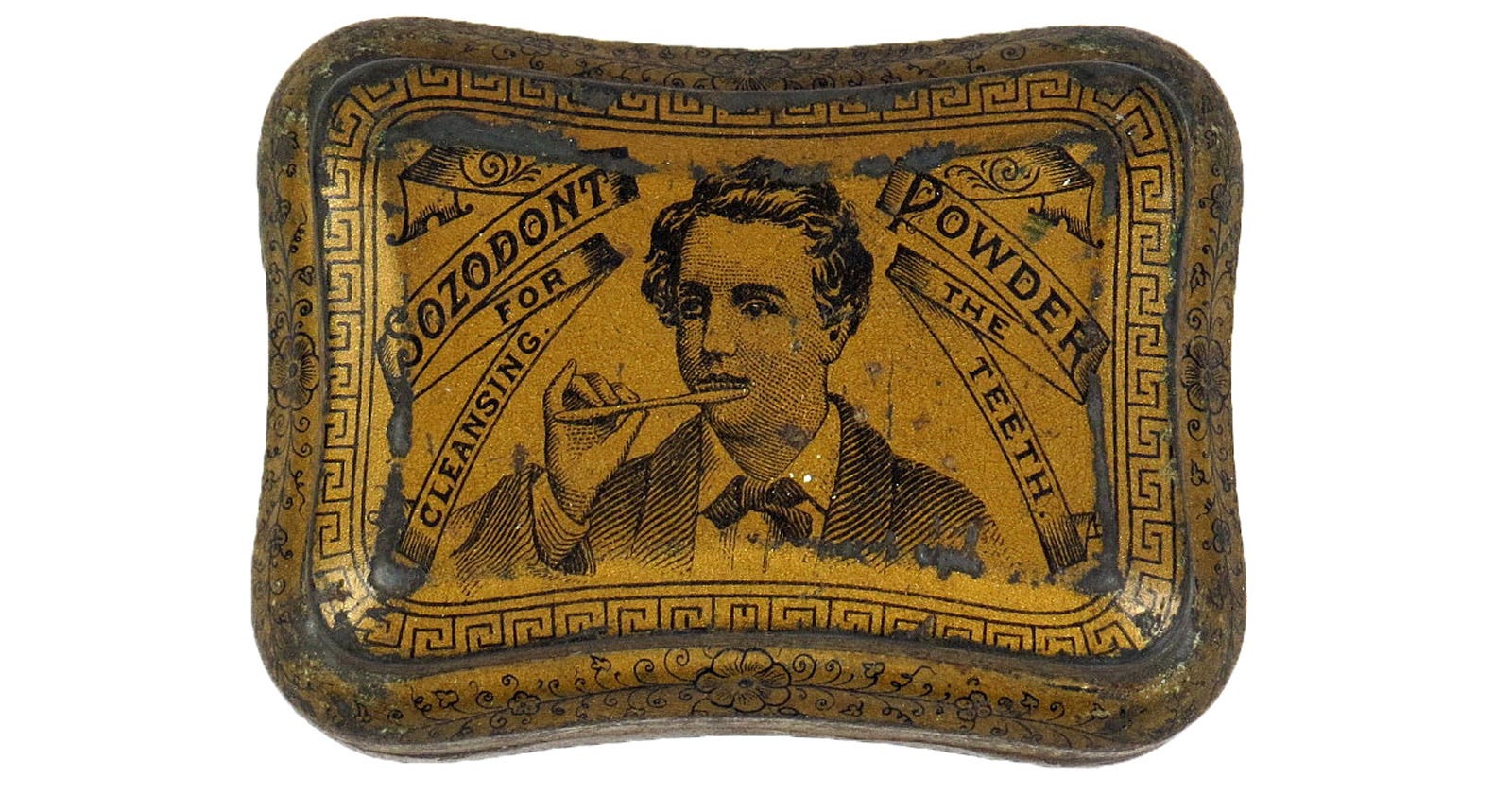
The use of dental products exploded around the world in the 1800s, especially in the United States. One key factor for that growth here was a growing middle class with disposable income. Another was a growing dental profession. A third was a growing commercial culture that brought toothbrushes, pastes, and powders to shops in communities across the country.

Today, the U.S. oral hygiene industry is a multi-billion dollar sector, valued at approximately $12 to $15 billion annually, and heavily driven by preventive care, including the act of brushing one’s teeth. And all of it began with Chinese Ming dynasty Emperor Hongzhi, who just wanted to have a clean mouth to kiss his one & only sweetheart.
With that in mind, let’s celebrate National Teeth Brushing Day with today’s Drink Of The Day, a Sweetie Pie Cocktail.
Ingredients
Here’s what you’re going to need for this drink:
