
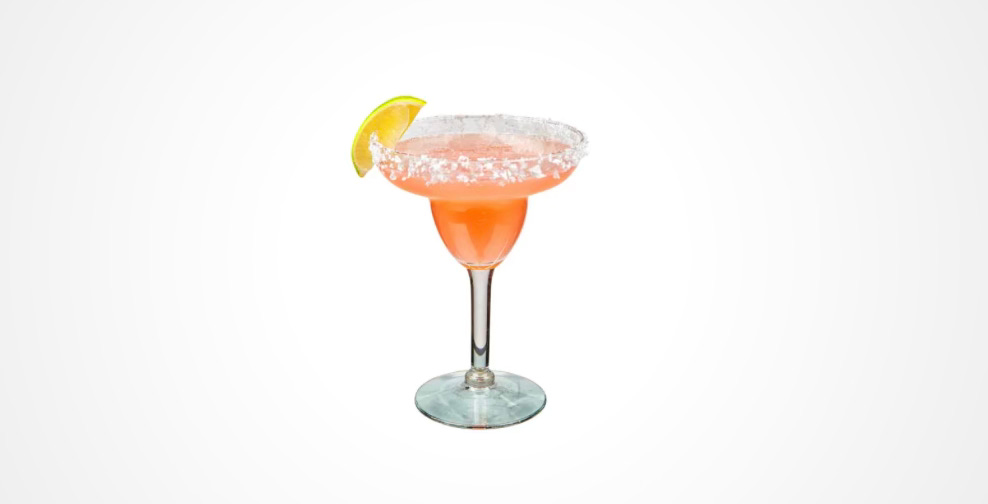
Today’s DOTD - Drink Of The Day - is a Rosarita Margarita inspired by the anniversary of Rosa Parks’ decision to sit down for her rights on a city bus in Montgomery, Alabama, which began putting the efforts to end racial segregation in the United States on a fast track.

Ms. Parks was arrested on this date, December 1, in 1955, seventy years ago today, after she rejected a bus driver’s order to leave a row of four seats in the “colored” section and move to the back of the bus, to make room for a White man, after the White section of the bus had filled up.
While often portrayed as a tired seamstress acting on a whim, the real story is much deeper.
Rosa Parks was a lifelong civil rights activist - and a long time NAACP secretary with extensive training in civil rights activism. She was a respected member of her community, and at the time of her action, Ms. Parks led the youth division at the Montgomery branch of NAACP. In short, she was beyond reproach, someone that others also respected - and so others would be outraged at the indignity of the actions taken towards her.
The local chapter of the NAACP had been looking for someone like Ms. Parks to have her rights violated in this way, in order to protest the illegality of the Montgomery Bus Company’s racist actions. In fact, in the year before Rosa Parks made her stand, four other Black women had been arrested for the same reason: Aurelia Browder, Claudette Colvin, Susie McDonald, and Mary Louise Smith. Unlike Rosa Parks, those women, for various reasons, were not seen as ideal figures to spark a large-scale protest. But it would not be the last time we heard from that quartet.
Still, on December 1, 1955, when Rosa Parks stood up for her rights, she was well aware of what she was doing. Ms. Parks was removed from the bus, arrested, and soon after, found guilty of disorderly conduct. The NAACP joined her appeal, almost immediately, in hopes of taking it further.
While the wheels of justice would move slowly, and in ways that couldn’t be seen at the time, the efforts to spark a large-scale protest were swift and very visible.
The Women’s Political Council, a local Montgomery civil rights group, was already circulating a flyer about Ms. Parks’ wrongful arrest the night she was pulled off the bus. The following day, December 2, local civil rights leaders, lead by a new local civil rights group, the Montgomery Improvement Association (MIA), began working on a one-day bus boycott.
The plan for the boycott began to grow rapidly, and the MIA felt they needed a public spokesman with leadership qualities to make their fight into a wider-ranging cause. Their choice was a little-known pastor who had recently arrived in Montgomery: the young and charismatic Dr. Martin Luther King, Jr., who was also the pastor of the church they were meeting in.
In her later years, Rosa Parks confirmed what others said about the choice of King to lead the Montgomery Bus Boycott - that he was chosen in part because he was a newcomer to the city, and the city fathers had not yet had the time to intimidate him.
The combination of the MIA, Dr. King, Rosa Parks, the NAACP, and a united local African-American community made the one-day bus boycott on December 3 a rousing success. It was so successful that on Dec. 4, they met again for less than an hour, and after a 20 minutes speech from Dr. King. decided to continue the boycott indefinitely, starting on December 5.
For the next 381 days, they upheld the bus boycott, uniting the Black community in and around Montgomery. Meanwhile, Ms. Parks lost her job and Dr. King’s home was attacked - but the movement kept the boycott going. Since roughly 75 percent of the public transportation customers in Montgomery were Black, the boycott crippled revenues for the bus line.
At the same time the boycott was going on, other similar fights against segregation were making their way to the U.S. Supreme Court.
The legal team that was working on Ms. Parks’ case included Thurgood Marshall, a future Supreme Court justice. They knew both the Alabama state legal system, and the U.S. federal system. And while Ms. Parks’ case made for a great spark for the boycott, it was languishing in the Alabama court system.
However, that same legal team had kept pursuing the cases of the other four women who had also stood their ground on buses in Montgomery: Aurelia Browder, Claudette Colvin, Susie McDonald, and Mary Louise Smith, in a case known as Browder (et al) vs Gayle, that latter being William Gayle, the then-mayor of Montgomery.
On June 5, 1956, the U.S. District Court for the Middle District of Alabama ruled 2–1 that bus segregation is unconstitutional under the Equal Protection Clause of the 14th Amendment to the U.S. Constitution. Unsurprisingly, Alabama appealed immediately.
On November 13, 1956, the U.S. Supreme Court ruled in the case of Browder v. Gayle, agreeing with that lower district court that segregation on buses operating within Alabama’s boundaries was illegal, because it deprived people of equal protection under the 14th Amendment.
After the boycott ended, Parks moved to Virginia, and then later to Michigan. She eventually worked in the office of Representative John Conyers until her retirement.
When she passed away at the age of 92 in 2005, Congress voted to have Ms. Parks honored by having her lie in honor at the Capitol Rotunda for two days, making her the first woman and the second African American to receive this rare tribute.
At the time she lay in honor Rosa Parks was the 31st person, the first American who had not been a U.S. government official, and the second private person - after the French city planner of Washington DC, Pierre L’Enfant - to be honored in this fashion. It marked a unique recognition of her role in advancing civil and human rights. During those two days, her coffin sat on the catafalque (decorative wooden framework) originally built for the coffin of Abraham Lincoln.
In honor of Rosa Parks, and all the women who helped break the back of the racist segregationists, we raise a glass of today’s Drink Of The Day, the Rosarita Margarita.
Ingredients
Here’s what you’re going to need for this drink:
