
Today’s DOTD - Drink Of The Day - is a Rhett Butler Cocktail inspired by the premier of the film Gone With The Wind, on December 15, 1939, in Atlanta.
The movie Gone With The Wind is the legendary Oscar-winning 1939 adaptation of Margaret Mitchell’s best-selling novel novel of the same name, and according to the American Film Institute, it’s the sixth-greatest American movie of all time. However, the film has rarely been without controversy, even from the beginning. To better understand why, it helps to know the basic plot of the film.
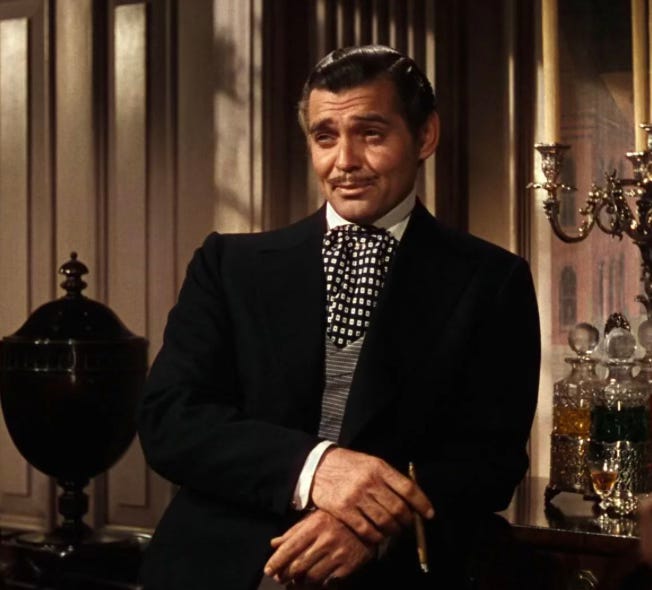
For those unfamiliar with Gone With The Wind, the setting for both Mitchell’s novel & the movie is a Georgia plantation during and after the Civil War. The plot focuses on Mitchell’s protagonist, Scarlett O’Hara, played by Viven Leigh, a headstrong daughter of the plantation owner. The primary focus of the film revolves around O’Hara’s romantic exploits, although a fair amount of the film’s lengthy 221-minute running time is also spent on the struggle to keep the plantation afloat.
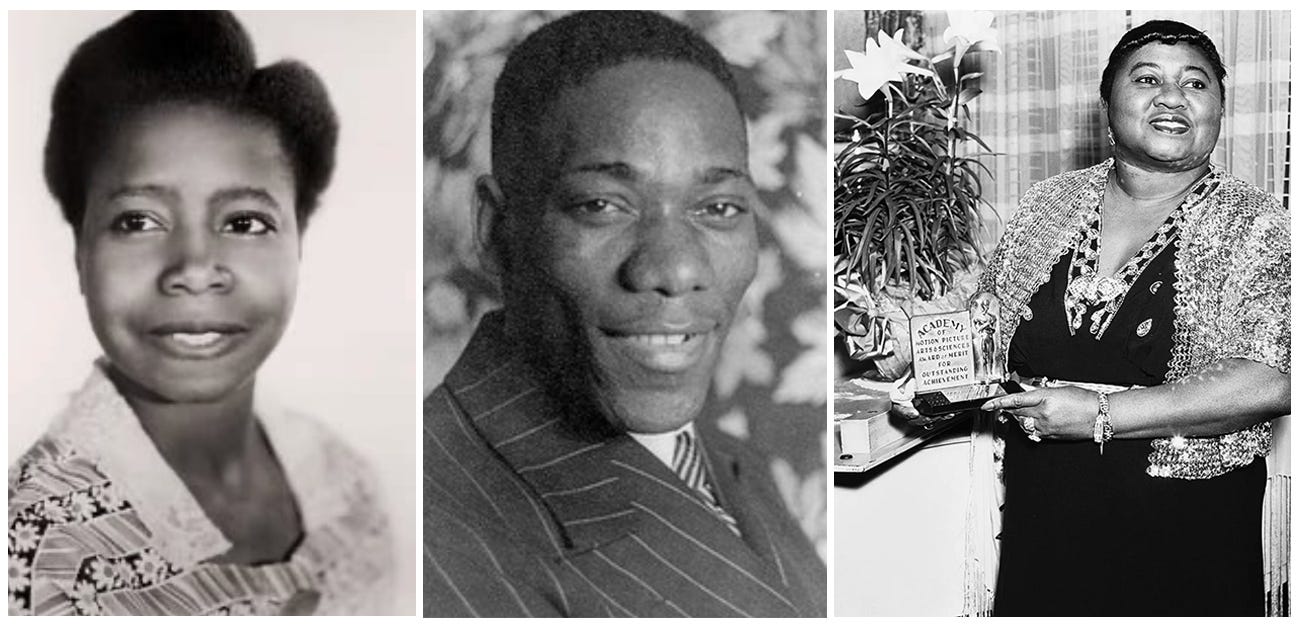
The film also focuses on Scarlett’s relationships with the family’s slaves, including Prissy, played by Butterfly McQueen, Pork, played by Oscar Polk, and Mammy, played by Hattie McDaniel, who won an Oscar for her performance — the first African-American to do so. The somewhat feminist themes & racial issues alone were enough to drive some controversy, for both the novel and the film.
As noted above, and as detailed by Leonard J. Leff in The Atlantic in December of 1999, “Gone With the Wind” has been the object of controversy since its inception.
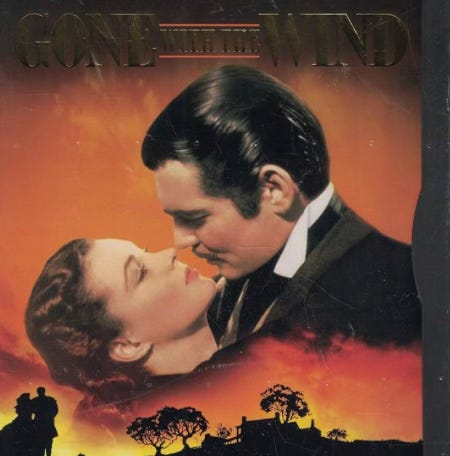
One of the largest points of controversy, even when the film came out, wasn’t just Scarlett O’Hara’s particular brand of feminism. It was the film’s romanticizing of the antebellum South, and its whitewashing of the horrors of slavery. The film presents the pre-Civil War era in the South as a utopia of tranquil living, while depicting the Northern forces as interlopers, trying to disrupt the Southerner’s way of life. What’s more, the servant characters are written and played as docile and content, more dedicated to their white masters than to the struggle of their fellow enslaved people, and uninterested in leaving the plantation after the war. And, much like D.W. Griffith’s horrifyingly racist hit “The Birth of a Nation,” the film casts the freed slaves of the Reconstruction era as morally dangerous and politically naïve.
Several groups sent letters to the producer, David O. Selznick, while the film was in preproduction, flagging their concerns with Mitchell’s novel, including its frequent use of racist slurs and characterization of the Ku Klux Klan as a “tragic necessity.” The Los Angeles Sentinel even called for a boycott of “every other Selznick picture, present and future.”
Under that pressure, Selznick and his screenwriter, Sidney Howard, ultimately softened some of the elements of the film, and agreed to the NAACP’s suggestion of hiring a technical adviser “to watch the entire treatment of the Negroes.” Selznick did, in fact, he hire two advisers for just that purpose — though both of them were white.
When the film was released, the dramatist Carlton Moss wrote in The Daily Worker that the film “offered up a motley collection of flat black characters that insulted the black audience,” singling out McDaniel’s Mammy as “especially loathsome.” The Chicago Defender put an even finer point on it, calling the film “a weapon of terror against black America.”
What’s more, according to Leff, demonstrations and protests were held at theaters in several major markets, including Washington, D.C., Chicago, and Brooklyn. To some extent, the protests have never stopped; despite the film’s canonization as an American classic, prominent voices from Malcolm X to Spike Lee have spoken out through the decades about its troubling themes, characterizations, and imagery.
Jody’s mom did an iconic take-off of the film on her show, The Carol Burnett Show, where Carol wore the legendary green curtain dress, that mimicked and mocked one of Scarlett O’Hara’s dresses in Gone With The Wind.
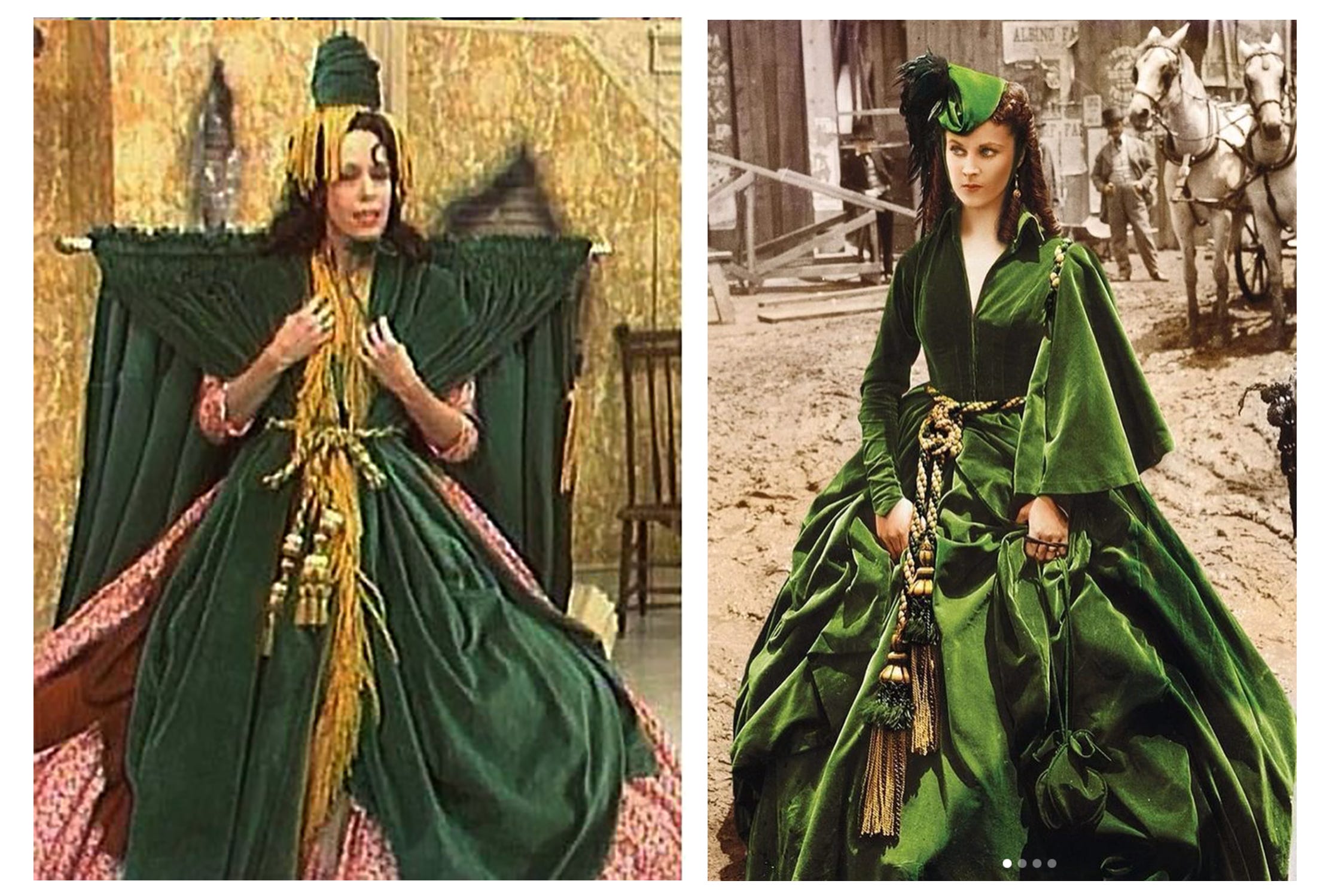
According to Jody, her mom’s hilarious take on Gone With The Wind ruined the scene where Scarlett makes a beautiful dress out of the curtains. That scene got a laugh from the audience when Jody saw Gone With The Wind about 30 years ago in a movie theater.
If you haven’t seen Carol Burnett in that legendary scene from her parody “Went With The Wind, we highly recommend watching it now.

No matter how you look at it, Gone Wth The Wind was a unique event in Hollywood filmmaking, and Hattie McDonald’s Oscar winning performance did begin to open up some Americans to the idea that Black actors could be just as good if not better than White actors.
Given all the racist White Nationalists in Trump’s MAGA government, and how that idea of equality really sets them on fire, it’s worth raising our glasses with the Drink Of The Day today, the Rhett Butler Cocktail:
Ingredients
Here’s what you’re going to need for this drink:
