
Today’s DOTD - Drink Of The Day - is a Hot Gin Toddy inspired by TWO holidays - Groundhog Day, and Black History Month.
We’ll start with the ridiculous holiday, which of course is Groundhog Day. If you’re going out to watch a rodent see his shadow - or not - you’re going to need a hot strong drink. But first, a little history.
According to Groundhog.org, Groundhog Day didn’t start with a groundhog - it started with a candle, or more accurately, a baby & the Catholic church (Bet you didn’t see that comin’).

February 2nd was originally known in the Catholic church as the Feast of the Presentation of Jesus Christ. According to ancient Christian lore, Joseph & Mary brought Jesus to the temple 40 days after his birth to be blessed. Forty days after Dec. 25th is Feb. 2nd, which became the conclusion of the Christmas–Epiphany season. (Ask John Fugelsang, if you doubt our scholarship).
In many regions of Europe, February 2nd was the day when members of the Catholic faith would take down their candles from their holiday decorations, and then take the candles to the church to have them blessed at a service - a mass. Thus, February 2nd became known as Candlemas Day, a slightly easier name for people to remember than the Feast of… whatever. European Catholics believed having their candles blessed by the church would bring blessings to their homes for the remainder of winter.
As Catholicism so often did, Candlemas Day also absorbed the beliefs of non-Christians & Pagans, which traditionally focused on the change of seasons, beginning around February 2nd. As you can see in the lyrics from an old English folk song about Candlemas, the light, dark, and timing theme was clear.
If Candlemas be fair and bright,
Come Winter, have another flight;
If Candlemas brings clouds and rain,
Go Winter, and come not again.
This interpretation of Candlemas Day became the norm for most of Europe, as early Christians began believing that a sunny Candlemas meant another 40 days of cold and snow.
The non-Christian & Pagan part of the holiday was tied to animals, most of whom have different behavior during the winter time. The original weather-predicting animal on Candlemas Day in much of Europe was the badger, although the original weather-predicting animal in Germany had been the bear, another hibernating mammal. But when bears grew scarce in Germany, the German lore shifted to a hedgehog, an animal many thought to be related to the badger.
Germans even went one step further, combining the Catholic candle theme with the animal lore, as they appointed the hedgehog as a way to determine if the day was fair & bright. The German tradition became if the hedgehog spotted its own shadow, the day was deemed to be sunny, and of course, if the day was cloudy, the hedgehog couldn’t see his shadow.
When German settlers came to America, and landed in Pennsylvania, the area was a bit short on hedgehogs, so they switched their myth to the plentiful groundhogs in the region.
Groundhogs are technically the largest member of the squirrel family (Sciuridae), and are specifically called a marmot. They’re also called woodchucks, or another great nickname, whistle pigs, due to their habit of whistling when frightened. They hibernate in burrows during the winter, and after the long rest, males leave the burrow in February to look for a mate. That February jaunt is more the result of some serious morning wood than to check the weather though, and after mating (or failing to mate), they soon return to their burrow, and hit the snooze alarm until March.
The first reported news of a Groundhog Day observance was arguably made by the Punxsutawney Spirit newspaper of Punxsutawney, Pennsylvania, in 1886, when it was printed in the February 2nd edition that “up to the time of going to press, the beast has not seen its shadow.”
The following year, on February 2, 1887, the newspaper decided to make an event of it, taking a group of people to Gobbler’s Knob in Punxsutawney, Pennsylvania (stop chuckling at the name - it’s a real place) to see their resident rodent meteorologist at work.
That event remains an annual tradition, often shown on mainstream national TV morning shows, and pointed to by meteorologists across the U.S., despite the sketchy work on the part of Punxsutawney Phil. To explain how bad Phil is at predicting, if he were a political pundit, he’d be Chuck Todd or Chris Cillizza.
There’s been a long lineage of Phils, but he has competition from Staten Island Chuck, Milltown Mel, Unadilla Bill, and many others across the U.S. & Canada. Of course, there’s also a surprising number of TV shows & movies that reference the holiday, including everyone’s favorite Groundhog Day movie, “Groundhog Day” from 1993, starring Bill Murray.
For what it’s worth, Phil supposedly “predicted” six more weeks of winter this morning, though we think he just read USA Today this weekend. Plus, as anyone who watches The Weather Channel knows, it’s only going to stay cold in the Northeast of the U.S. If you’re in Jody’s corner of the bar, enjoy the spring-like weather - this week, with a touch of summer. 😎
On a more important note, February is also Black History Month - and that’s also important for us today when it comes to the Drink Of The Day.
Today’s drink was a specialty of legendary bartender Cato Alexander, one of America’s first black bartenders and likely the first one with his own tavern.
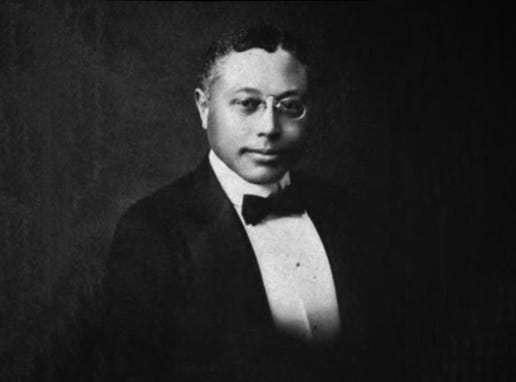
Cato Alexander was born a slave in New York City in 1780. He worked at an inn during his youth, where — as he was fond of recalling later in life — he waited on George Washington, helping the future president on and off his horse. In 1799, Alexander was one of the first to gain his freedom under New York State’s then-new law, the Act for the Gradual Abolition of Slavery. Alexander continued to work in hotels and inns for about ten years, gaining an impressive reputation as an outstanding chef and bartender.
Around 1810, Alexander leased a two-story house and some land located at the four-mile marker on Harlem Road, which today is located on 54th Street and East Second Avenue in Manhattan. His business, Cato’s Tavern, flourished for some 35 years and was an integral part of the city’s social life. In 1835, one newspaper wrote “Not to know Cato’s is not to know the world.”
Cato was even more celebrated as a bartender than as a chef. He earned real respect from both white & Black Americans, at a time when very few African Americans did. He was not only known for the punch drinks that were common at the time but also for his dexterity with the newly emerging cocktail concept.
Cato’s Tavern came to an unfortunate end in the mid-1840s. He had loaned money to some number of customers and met financial ruin when too many didn’t pay him back. He did a stint as a farmer out on Long Island, and then returned to the city in 1852 to open an oyster house on Broadway. That business only lasted a year and he died in poverty in 1858.
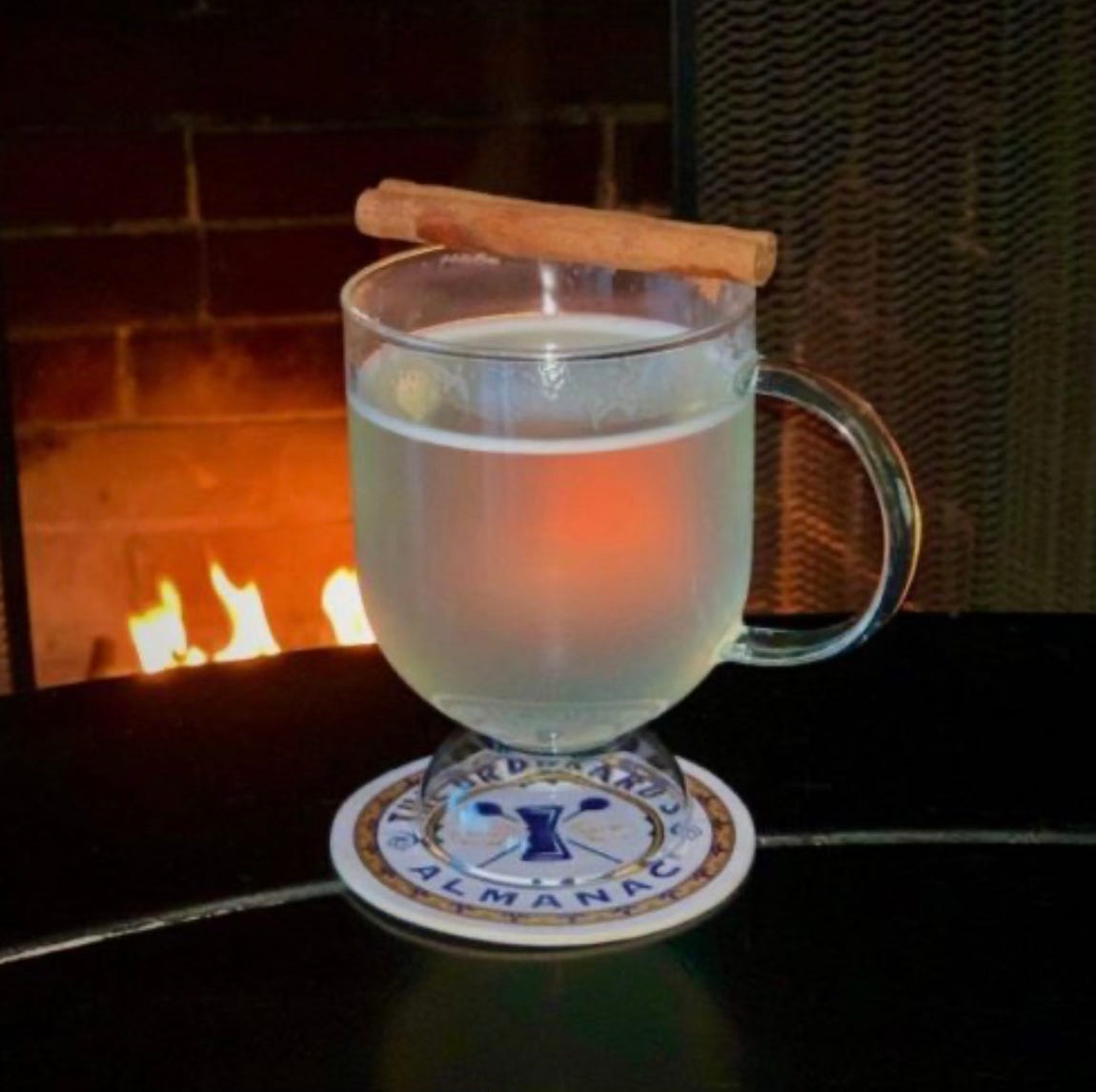
While his ending isn’t how we wished it would have been, Cato Alexander is still remembered as one of the Five Unheralded Pioneers of the American Bar & Drink Scene, and of course, the first legendary Black American bartender. And unlike Punxsutawney Phil, Cato Alexander was dependable and made delicious drinks, that were perfect for the occasion, including today’s Drink Of The Day, a Hot Gin Toddy.
Ingredients
Here’s what you’re going to need for this drink:
