
Today’s DOTD - Drink Of The Day - is a Tasmanian Twister Cocktail inspired by Australia Day – and The Rum Rebellion.
While the indigenous people of Australia would correctly say their continent couldn’t be “discovered” because they’d lived there for thousands of years, British explorer Captain James Cook would (& did) claim that he’d discovered Botany Bay and the rest of Australia in 1770. From the British perspective, it was a convenient “discovery,” as the prisons of England were overflowing, and in 1776 the pesky Americans decided to revolt, so the kingdom could no longer send their prisoners there.
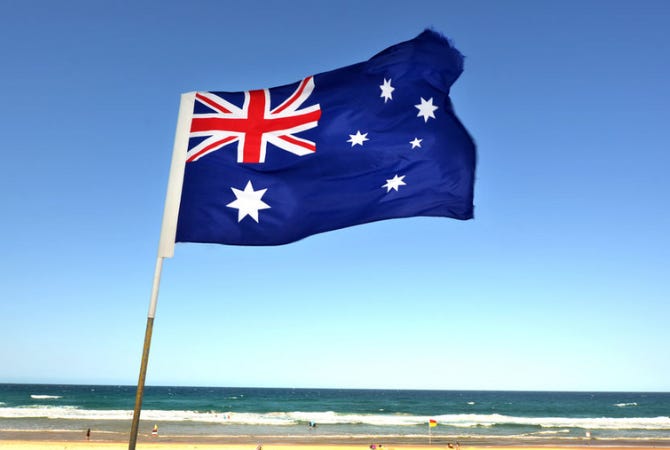
So in 1787, the British government sent Captain Arthur Phillip on the HMS Sirius leading the First Fleet to Australia, to create a big work camp for British convicts. Phillip and his team had a hard time recruiting experienced farmers to join the project. After all, Australia was a mysterious, faraway land, and nobody knew what to expect.
Nonetheless, Capt. Phillip managed to lead a party of about 1,000 people, of which more than 700 were convicts, on an eight-month voyage. The First Fleet landed in Australia on January 26, 1788, when Capt. Phillip raised the Union Flag of Great Britain for the first time ever in Sydney Cove, a small bay on the southern shore of Sydney Harbour. This is why January 26 became Australia Day, Australia’s biggest national holiday.
Things weren’t so easy at the Botany Bay Colony. An unfamiliar climate and ignorance of farming led to near starvation, at first. Still the colony struggled on, and eventually grew.
The Colony Grows
The British government set up Capt. Phillips as a Governor to rule the penal colony of New South Wales from his official residence, the Government House in Sydney. He took instruction from the government in London and was responsible for implementing government policy and maintaining order in the Colony. The officers and men of the New South Wales Corps were stationed in the Colony to support the Governor. Many of the men in the New South Wales Corps were recruited from the unemployed in Britain, though some were also skilled craftsman, displaced victims of the Industrial Revolution. New South Wales was a long way from home, but quick promotion, good wages, and the opportunity to engage in trade outside their military duties induced ambitious men to sign up.
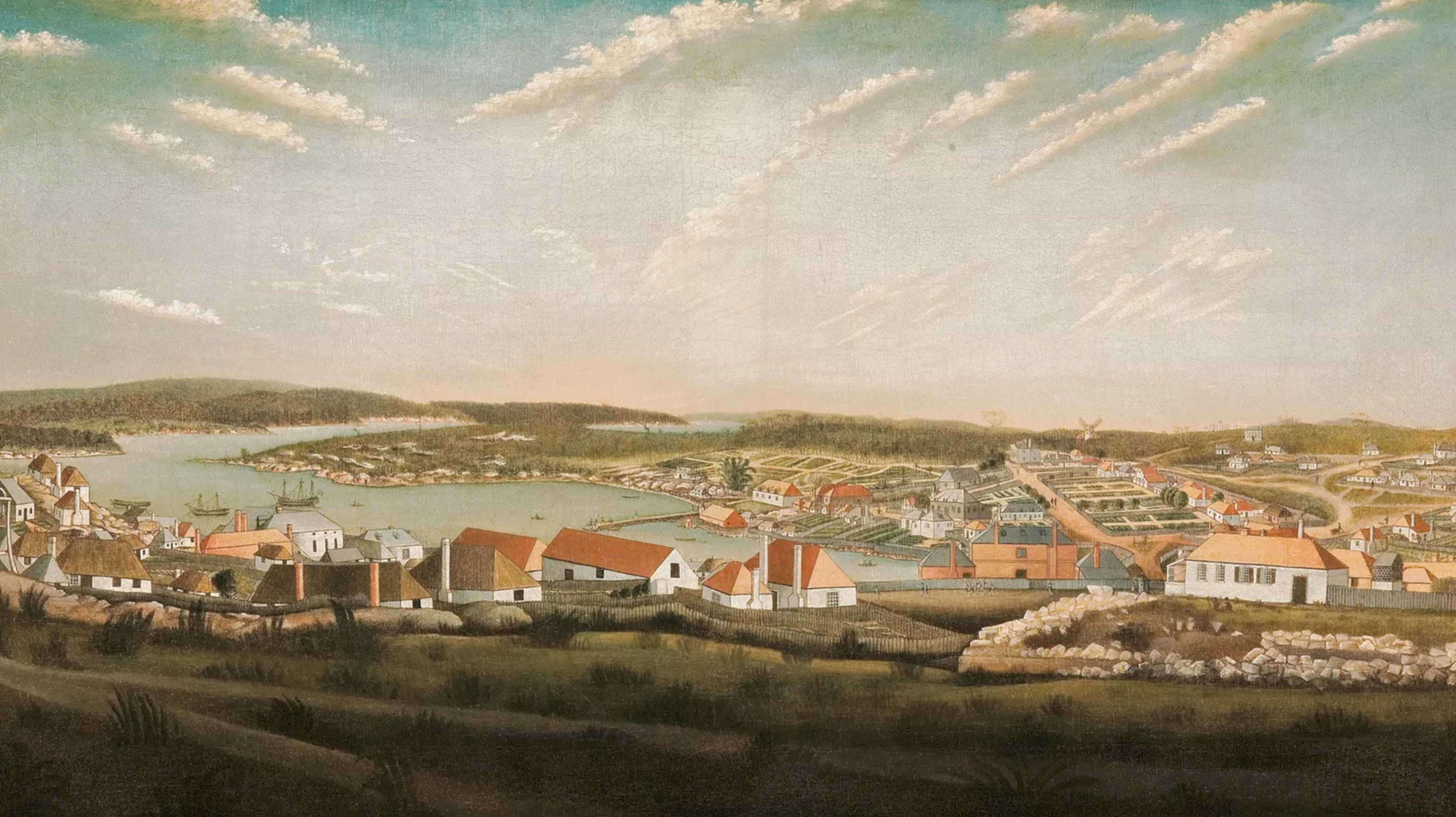
Officers were also rewarded by early governors of the colony with large land grants and were assigned convict labor. That allowed them to build comfortable homes and cultivate farm produce, which they could sell at a profit. Before the end of the 18th Century, trading ships were already calling in at Sydney Cove, knowing that the remoteness of the colony meant good business. The early governors bought some of the goods to replenish the government stores, and allowed the military to purchase and market the rest, effectively allowing them to monopolize trade within the town.
Paper and coin money was in short supply, so a complex barter system developed which was controlled by those who had access to goods – particularly food, clothing and alcohol. Convicts and lower ranking military were regularly paid in goods, rather than money, and the most popular form of payment was rum. The NSW Corps involvement in this system led to its nickname in the 1790s – the Rum Corps.
Some of the officers in the Corps, like John Macarthur, became powerful and wealthy citizens in the small Colony. Macarthur was favored with large land grants and other privileges under Lieutenant-Governor Francis Grose. As Officer-In-Charge of the NSW Corps, Grose had temporary charge of the Colony after Governor Phillip left and appointed Macarthur to several official positions of influence.
The power wielded by Macarthur and others lead to clashes with the second and third governors, John Hunter and Philip Gidley King, who tried to eradicate the military’s monopoly on trade and crack down on drunkenness, but too much money and power was at stake and both governors failed. The next governor the king sent was William Bligh, who arrived in the Colony in 1806. William ‘Bounty’ Bligh had a reputation for tough leadership and the British Government hoped that he could exert some control over the rum trade, and the local elites in Sydney.
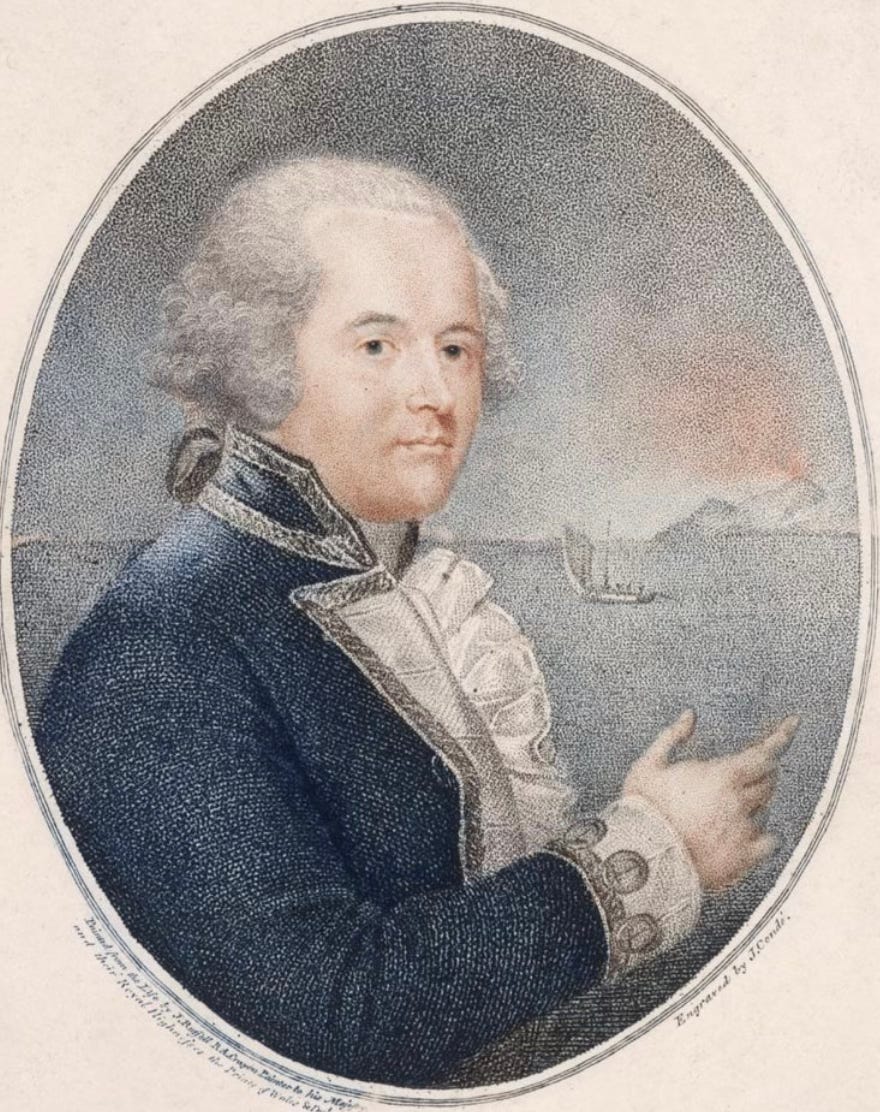
Bligh came into conflict almost immediately with John Macarthur (who by this time was no longer a Corps officer) over Macarthur’s provisional land grant of cow pastures. Macarthur’s arrogant and belligerent manner and the new Governor’s quick temper and rigid adherence to his instructions led to lasting animosity between the two men.
Bligh was determined to carry out his duties to the letter. He issued laws banning all forms of barter using spirits and outlawed illegal stills. He tightened port regulations to control the flow of rum into the colony. He also questioned the validity of property leases of several prominent citizens, including Macarthur. They were angered by his interference and became more and more hostile towards Bligh. Bligh’s new port restrictions also affected Macarthur who was by now part owner of several trading ships.
When an escaped convict was discovered on one of Macarthur’s ships, the crew was detained on board ship as punishment. Macarthur reacted by disowning the ship, rather than supporting his crew, forcing them to come ashore illegally to seek food and other necessities. Bligh took Macarthur to trial over the incident. Macarthur was enraged and claimed that Bligh was depriving him and his fellow investors of their right to liberty and property. On January 25th, 1808, the trial began before Judge-Advocate Richard Atkins and a jury of six NSW Corps officers. After a rallying speech from Macarthur, the officers on the jury refused to recognise Atkins’ authority and would not serve with him. The next day, Bligh indicated he intended to charge the officers with treason, a capital criminal offense. Their commanding officer, Major George Johnston, defended his men and claimed that removing them from duties would compromise the safety of the Colony. He claimed that Bligh needed to be removed from office for everyone’s good.
The 1808 ‘Rum’ Rebellion
On the evening of January 26, 1808, the men of the New South Wales Corps marched from the parade ground on High Street (now George Street) up Bridge Street to Government House. They marched to the tune of ‘British Grenadiers’ and were followed by hundreds of spectators. When they arrived at Government House, the soldiers searched the property, before finally locating Governor Bligh, who, according to legend, was hiding under the bed. He was arrested and deposed and the Corps’ commanding officer George Johnston took control of the Colony. in what was an act of rebellion.
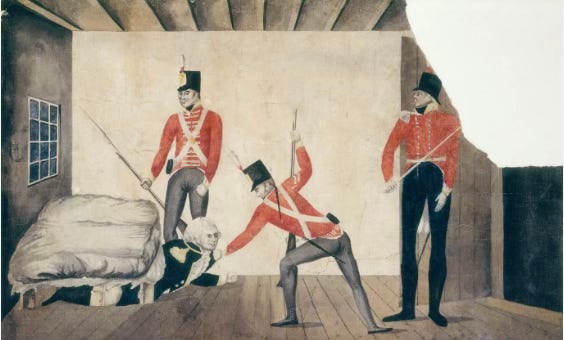
Bligh was arrested and the colony was placed under military rule. This was the only time in Australian history that a government was overthrown by a military coup. The military stayed in power for two years until Lachlan Macquarie, the fifth Governor of NSW, assumed office at the beginning of 1810.

While the overthrow of Bligh much later became known as the ‘Rum Rebellion’ because, as we noted earlier, the NSW Corps was nicknamed the ‘Rum Corps’, the factors leading up to Bligh’s arrest clearly had little to do with the rum trade and much more to do with a battle for power between the military and civil elites of the colony and the Governor.
Which is one reason why today’s Drink Of The Day, the Tasmanian Twister Cocktail, doesn’t have rum. But it is the perfect drink to help celebrate Australia.
Ingredients
Here’s what you’re going to need for this drink:
