
Today’s DOTD - Drink Of The Day - is a Moonwalk Cocktail inspired by not who you may think… Nope, it’s not Michael - well not that one. Today’s drink inspiration is… National Moon Day!
Every July 20, National Moon Day commemorates the historic Apollo 11 lunar landing. This day honors the courage, ingenuity, and teamwork that allowed humanity the chance to step onto another celestial body.
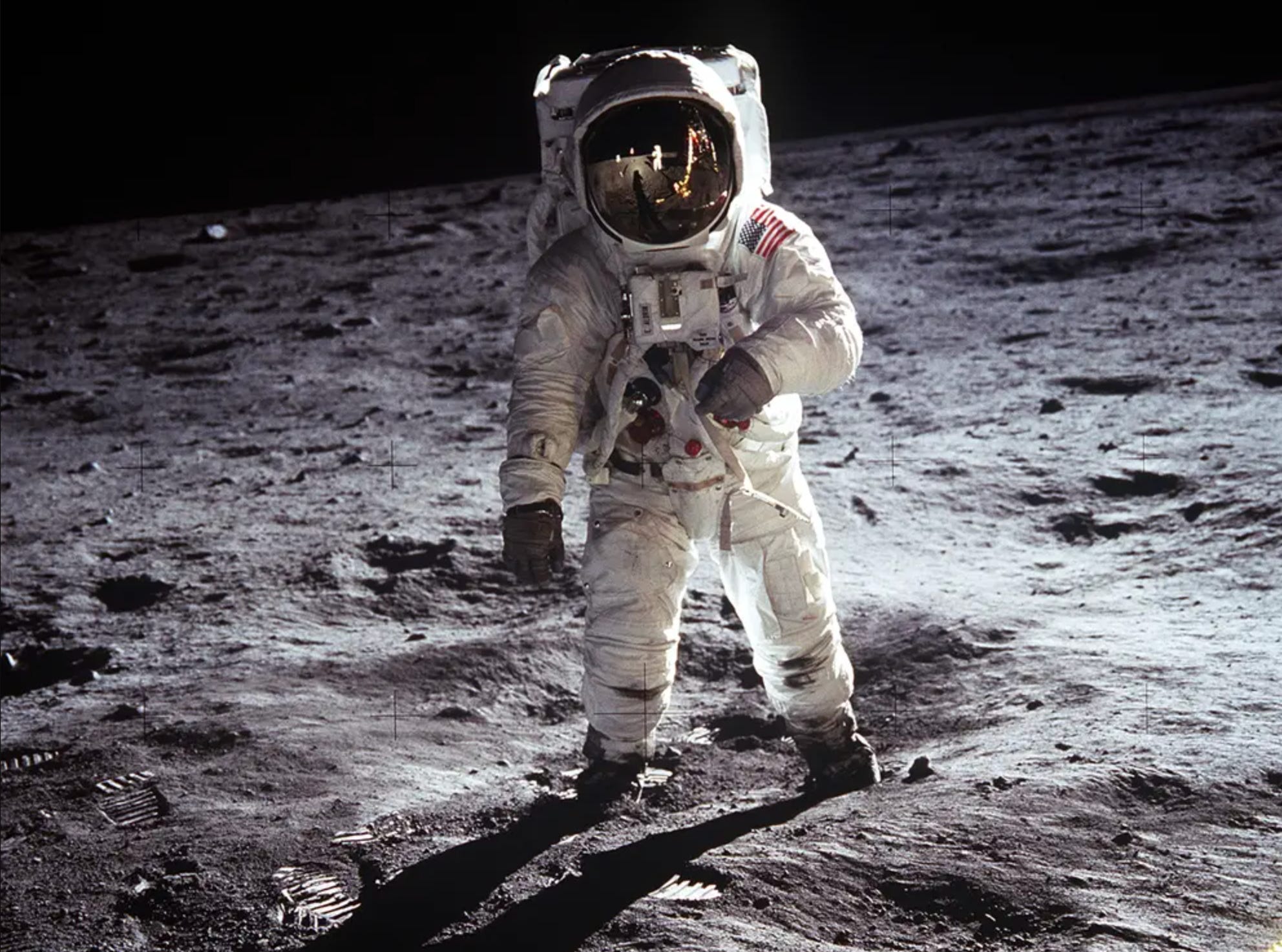
History of National Moon Day
American astronauts Neil Armstrong, Edwin ‘Buzz’ Aldrin became the first humans in history to land on the Moon on July 20, 1969, while Michael Collins remained in the Columbia command module in lunar orbit. The Apollo 11 mission took place eight years after the major national goal announcement by President John F. Kennedy to send a man to the moon by the end of the 1960s.
The effort for the mission to send astronauts to the moon started when President Kennedy appealed to a special joint session of Congress in 1961, stating “I believe this nation should commit itself to achieving the goal, before this decade is out, of landing a man on the moon, and returning him safely to Earth.”
At the time of Kennedy’s proposal, the United States was still head-to-head with the Soviet Union in advancements in space exploration and, since it was during the time of the Cold War, the proposal was welcomed. The first unmanned Apollo mission was initiated by the National Aeronautics and Space Administration, NASA, after five years of effort and hard work by their international team of engineers and scientists. The first mission served as a testing phase for the structural resilience of the launch spacecraft vehicle.
At 9:32 AM Eastern time on July 16, 1969, the whole world witnessed Apollo 11 take off from Kennedy Space Center in Florida with three astronauts on board. Neil Armstrong was the commander of the mission. The spacecraft entered the lunar orbit after three days, on July 19. The lunar module, Eagle, disengaged from the main command module Columbia the next day, manned by Armstrong and Aldrin. When Eagle touched the lunar surface, Armstrong radioed his historical message to Mission Control in Houston, Texas: “The Eagle has landed.”
At 10:39 PM Eastern, Armstrong exited the lunar module and made his way down its ladder. His progress was being recorded by a television camera attached to the module, transmitting signals back to Earth, where the world was watching with bated breath.
At 10:56 PM, Armstrong stepped on the moon’s powdery surface, and spoke his iconic words: “That’s one small step for man, one giant leap for mankind.”
Moon Interaction Timeline
1961: A Manned Lunar Landing Announced
In a historic speech on May 25, President John F. Kennedy signals the start of NASA’s Apollo space program as well as his plan to see an American on the Moon by the end of the decade.
1964: First Images of the Moon’s Surface
For the first time, American TV viewers get to view the Moon’s cratered surface from images transmitted by NASA’s unmanned probe, Ranger 7.
1968: 10 Times Around the Moon
NASA’s Apollo 8 orbits the Moon 10 times as the first manned flight while Americans watch on television.
1969: Apollo 11 Lands on the Moon
The world breathlessly watches as Apollo 11’s three-man team becomes the first humans to step onto the Moon’s surface.
1972: The Apollo Program Comes to an End
NASA shuts down its Apollo program with a final manned landing — Apollo 17, which landed on the moon on December 11, 1972.
2022: The Artemis Program Returns Humans To The Moon
After 50 years, NASA finally began returning to the Moon with the Artemis program. The first Artemis mission sent the Orio module to the Moon, unmanned, as a test flight of the systems.
Then, in April of this year (2026), four astronauts flew the Orion capsule successfully on a 10-day lunar flyby mission, marking the first crewed deep-space mission in over 50 years. The crew, which included NASA astronauts Reid Wiseman, Victor Glover, and Christina Koch, alongside Canadian Space Agency astronaut Jeremy Hansen, traveled further into space than any human in history. At least three more missions are scheduled between now and late 2028.
National Moon Day Traditions
No matter how many years pass, we will always be in awe of the first moon landing in 1969. Landing on the moon was a huge step for humankind and our understanding of the universe we exist in. Traditions for National Moon Day include watching documentaries about space, reading books on the Apollo 11 mission, and moon watching while marveling at its glorious luminescence at night.
On this holiday, space enthusiasts often bring out their telescopes to gaze at the moon as they read up on NASA’s upcoming projects and missions. National Moon Day is also prominently celebrated in schools, with the moon being the main topic in classes to educate children on the historical event.
National Moon Day is also especially important for those interested in astrology and astronomy. The positioning of the moon, its effect on Earth, and the planetary moons are greatly discussed and delved into today.

1969: Jody, Jody’s mom, and her sister, Carrie as the astronauts landed on the moon.
Joe Hamilton took this picture. He was a great photographer.
National Moon Day, By The Numbers
5th – the ranking of our Moon’s size compared to other moons in our solar system.
14.6 million – the number of square miles of the surface area of the Moon.
30 – the number of Earth-sized planets that could fit between the distance of the Earth and the Moon.
2300 mph – the traveling speed of the Moon orbiting the Earth.
1 inch – the distance the Moon drifts farther from Earth every year.
16.5% – the percentage decrease in a human’s weight on the Moon.
12 – the number of humans who have walked on the Moon.
1950s – the period when the U.S. proposed detonating a nuclear bomb on the Moon.
30 seconds – the amount of time in terms of fuel that was left when Neil Armstrong landed on the Moon.
73,476,730,924,573,500,000,000 kg – the mass of the Moon.
Four More Facts About The First Lunar Landing
Three African-American women got us there
Mathematician Katherine Johnson, along with two other black women, were instrumental in calculating NASA’s routes to the moon for its first lunar landing. Director Theodore Melfi and writer Allison Schroeder finally told their story in the 2016 film Hidden Figures.
The Wright Brothers were along for the ride
Armstrong felt it was important to show how aviation had progressed which is why he carried a small piece of wood from one of the Wright Brothers’ planes.
High ratings
Over 600 million people around the world watched the live lunar landing, eclipsing all previous TV ratings records.
Washington DC prepared for the worst
President Nixon had an alternate speech ready in case the mission failed.
One More Thing… It Wasn’t Faked!
While some folks still believe it - hell, some folks still think Donald Trump is smart - the claim that humans didn’t land on the moon is widely considered a debunked conspiracy theory.
Over 400,000 scientists, engineers, and technicians collaborated across six successful Apollo lunar missions, leaving behind tangible physical evidence you can see from Earth, using standard telescopes. We’ve also brought back nearly 842 pounds of lunar rocks, and left reflectors on the Moon, which are used to bounce lasers from Earth but for those who still don’t believe? Here’s the Mythbusters team, in the video above, breaking it down.

So we made it to the moon - and we’re doing it again. That’s definitely worth a salute, with today’s Drink Of The Day, a Moonwalk Cocktail!
Ingredients
Here’s what you’re going to need for this drink:
