
Today’s DOTD - Drink Of The Day - is a Royal Smile cocktail & mocktail, inspired by National Smile Power Day.
National Smile Power Day
National Smile Power Day is the perfect excuse to flash your pearly whites and show off those dimples. National Smile Power Day traces its roots to a grassroots movement started in 1988 as a way to promote joy and positivity. It should not be confused with similar observances like National Smile Day (May 31), founded by dentists Dr. Tim Stirneman and Jim Wojdyla, or World Smile Day (the first Friday in October), created by smiley-face artist Harvey Ball, and his Smiley Company, which sells a brand of merchandise featuring the little yellow smiley face.
Smiling isn’t just cosmetic. Smiling triggers the release of endorphins, dopamine, and serotonin, which instantly improve your mood and relieve stress. When these chemicals flood our brains, they can act as mild pain relievers or antidepressants and help reduce stress and lower our blood pressure. In general, smiling helps people feel happier, more confident, and more relaxed.
The smile is also considered a symbol of happiness and vitality in most democratic nations today. Further, smiling generally has a positive contagious effect effect on others. When we smile at others, it often generates a smile in them, offering them an opportunity to get those same stress-relieving & mood-improving effects, which they can then pass on to others.
Even faking a smile can help. Psychologists describe this idea as the “facial feedback loop” which has proven in studies that making a facial expression can influence emotion, as well as reflect it, to varying degrees. That being said, smiling can only do so much and is no permanent solution for serious depression or other mental health issues that require assistance from trained mental health professionals. So a deliberate smile may give a slight lift in mood for some people, but it is not a cure‑all and works best alongside other healthy habits and support mechanisms.
If nothing else, smile because it may make others confused and wonder what you’re smiling about. And if that thought makes you smile? Then you can see there’s power in smiling than you may have thought.
National Smile Power Day Timeline
• 1700 BCE: The First Smiling Emoticon (Kinda) Was On An Ancient Pot
Archaeologists working at the ancient city of Karkemish on the Turkey–Syria border uncovered a Bronze Age ceramic vessel dated to about 1700 BCE that bears a simple design of two dots and an upturned curve interpreted as a smiling face.
While not directly linked to modern emoticons, it is one of the earliest known artifacts to use a minimal dot‑and‑arc face to convey a cheerful expression.
• 1872: Charles Darwin Analyzes the Expression of Emotion As A Biological Signal
Charles Darwin publishes “The Expression of the Emotions in Man and Animals,” arguing that smiles and other expressions are biologically based signals shaped by evolution rather than arbitrary social habits.
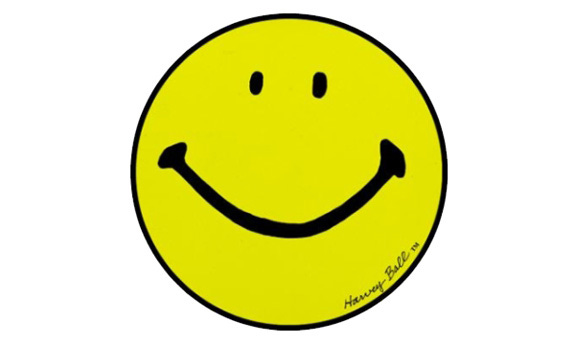
• 1963: Harvey Ball Designs the Yellow Smiley Face
The round yellow smiley that now symbolizes happiness worldwide began as a low-key corporate commission. In 1963, in Worcester, Massachusetts, graphic artist Harvey Ball was paid $45 to design a morale-boosting button for an insurance company who was merging offices.
His quick sketch with two oval eyes and a wide, asymmetrical grin was never trademarked, but copies of the image spread so widely that it became one of the world’s most reproduced symbols.
• 1971: Paul Ekman Demonstrates Cross-Cultural Recognition of Smiles
Psychologist Paul Ekman publishes research showing that people in Papua New Guinea and the United States both reliably recognize facial expressions of happiness, supporting the idea that smiling is a near-universal signal of positive emotion.
• 1982: The First Digital Smiley Emoticon Was A Campus In‑Joke
The sideways smiley made from punctuation marks :-) originated in an early online message at Carnegie Mellon University in 1982, when computer scientist Scott Fahlman suggested using “:-)” and “:-(” on bulletin boards to distinguish jokes from serious posts.
His note, recovered from backup tapes decades later, is the earliest known written proposal to use ASCII characters as faces, paving the way for modern emoticons and eventually emoji.
• 2003: Meta-Analysis Reveals Gender Differences in Smiling
Psychologists LaFrance, Hecht, and Paluck publish a meta-analysis indicating that women smile more often than men across many social situations, highlighting how smiling reflects social roles as well as inner feelings.
• 2019: Facial Feedback Effects on Emotion Quantified
A meta-analysis by Coles, Larsen, and Lench reports that adopting facial expressions such as smiling produces small but reliable shifts in felt emotion, lending measured support to the facial feedback hypothesis.
How to Celebrate National Smile Power Day
Smile at Yourself
If you want a little boost to your self confidence - for example, if you’re waiting on an impending job interview - you might want to smile to yourself beforehand. Smiling in the mirror at yourself can often instill a sense of self-confidence. Remember to carry that smile with you into your interview, as you continue with a sense of calmness and confidence.
Notice the Smiles of Others
National Smile Power Day will also make you question just how much you smile as well as who around you takes the time to smile too.
A recent study found that children laugh and smile about 400 times in 24 hours, while the average adult smiles or laughs about 20 times a day, and those who consider themselves happy smile 40-50 times a day.
So aim to be child-like - and remember, smiling can be contagious! So if you notice other people smiling, you may find yourself smiling more too.
Do Things To Help You Smile
Taking actions that we enjoy often helps generate smiles. Here are some actions you might take that may help you smile more:
Enjoying some time outdoors
Seeing an old friend
Looking at pictures
Exchanging compliments with others
Eating comfort food
Doing a good deed for someone
Hugging a loved-one
Watching funny animal videos
Scientists have proven staying active helps improve your mental health, and when we feel better, we tend to smile more. Stay active - it helps your smile!
Commit to Smile More!
Challenge yourself, not just on National Smile Power Day but also on other days of the year, to smile at least once to yourself, to a stranger, or to a family member.
See the response it has and the connection it forms; especially if you take time to let the smile last a little longer than usual. Remember, we all need a bit of encouragement at times.
Share That It’s ‘National Smile Power Day’ with Others
National Smile Power Day is meant to be shared with loved ones and friends alike. So do that!
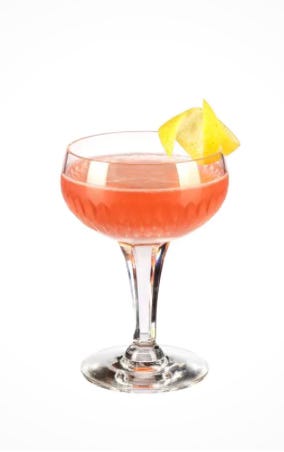
You could go out to a stand-up comedy show with your friends, eat smiley-glazed cupcakes, paint smileys on crafts, send smiley emojis to friends - even drink some smiley cocktails, which is what we suggest, and why we’re giving you the recipe for today’s Drink Of The Day, a Royal Smile cocktail & mocktail.
Ingredients
Here’s what you’re going to need for this drink:
