
DOTD For Monday, June 29, 2026
We're Saluting An American City Today - & Its Transportation System
Today’s DOTD - Drink Of The Day - is a Cable Car cocktail inspired by the founding of the REAL city by the bay, San Francisco, which happened on this date, June 29, 1776.
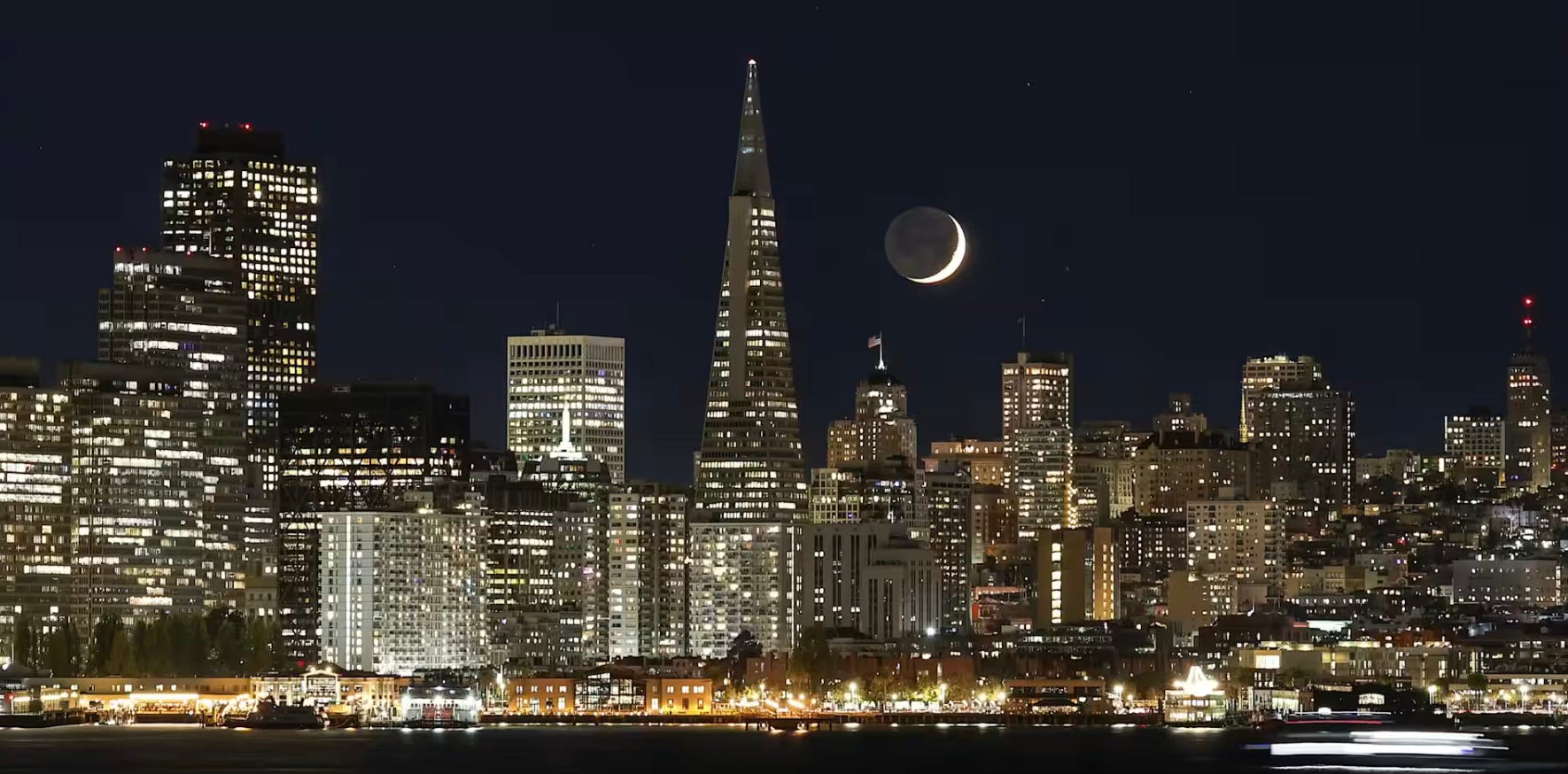
San Francisco: History in Overview
Perched atop hills and filled-in marshland at the entrance to one of the Pacific Ocean’s largest natural harbors, San Francisco has had an outsized influence on the history of California and the United States. Originally a Spanish (later Mexican) mission and pueblo, it was conquered by the United States in 1846, and flooded by an invading army of prospectors following the 1848 discovery of gold in hills around the Bay Area. The Gold Rush made San Francisco a cosmopolitan metropolis with a frontier edge. The great 1906 earthquake and fire destroyed much of the city but barely slowed its momentum; San Francisco barreled through the 20th century as a center of wealth, military power, & progressive culture, and has come out in the 21st century as a center for high technology.
San Francisco: Prehistory and Founding
The first inhabitants of the San Francisco area arrived around 3000 B.C. By the 16th century, when the first Europeans sailed along the California coast - somehow always missing the Golden Gate Strait, due to fog - the area was inhabited by the Ohlone-speaking Yelamu tribe. The first westerners to see the bay were members of the 1769 Portola expedition. Seven years later, Juan Bautiza de Anza marched north from San Diego with a settlement party, and on June 29, 1776, Spanish settlers officially founded the Presidio of San Francisco and the Mission San Francisco de Asís (Mission Dolores)
By 1808 Mission San Francisco de Asis was the center of spiritual and material life for more than 1,000 people drawn from local tribes.
San Francisco: Mexican Rule, American Takeover
In 1821, Mexico won its independence from Spain, officially ending the mission era. In 1835 an American, William Richardson, became the first permanent resident of the Spanish settlement of Yerba Buena, which would later be re-named to San Francisco. By the 1840s dozens more Americans came to California and began agitating for independence. After a briefly declared “California Republic,” they welcomed the arrival of James B. Montgomery, a U.S. Navy captain who came ashore on July 9, 1846, to raise the U.S. flag in the plaza - what would become today’s Portsmouth Square - at the heart of San Fransisco.
San Francisco: Gold Rush and Rapid Growth
On January 24, 1848, the first gold was found at Sutter’s Fort, in the California foothills. Within months, San Francisco (renamed from Yerba Buena in 1847) became the central port and depot of the frenzied Gold Rush. Over the next year, arriving “forty-niners” increased the city’s population from 1,000 to 25,000.
In 1849 San Francisco’s harbor was filled with abandoned ships, whose crews had deserted to head for the gold fields. Many of the vessels were used as raw materials for the city’s harborside expansion.
The city was lawless and wild, its Barbary Coast district full of prostitution and gambling. Six major fires broke out between 1849 and 1851. In 1859 the silver boom of Nevada’s Comstock Lode again filled the city’s docks and lined its pockets. Construction of the Central Pacific Railroad—funded by the “Big Four” businessmen Charles Crocker, Mark Hopkins, Collis P. Huntington and Leland Stanford—drew thousands of laborers from China. Although many were later forced to leave by exclusionary U.S. immigration policies, San Francisco’s thriving Chinatown quickly became the largest Chinese settlement outside of Asia.
San Francisco: The Cable Car Era Begins
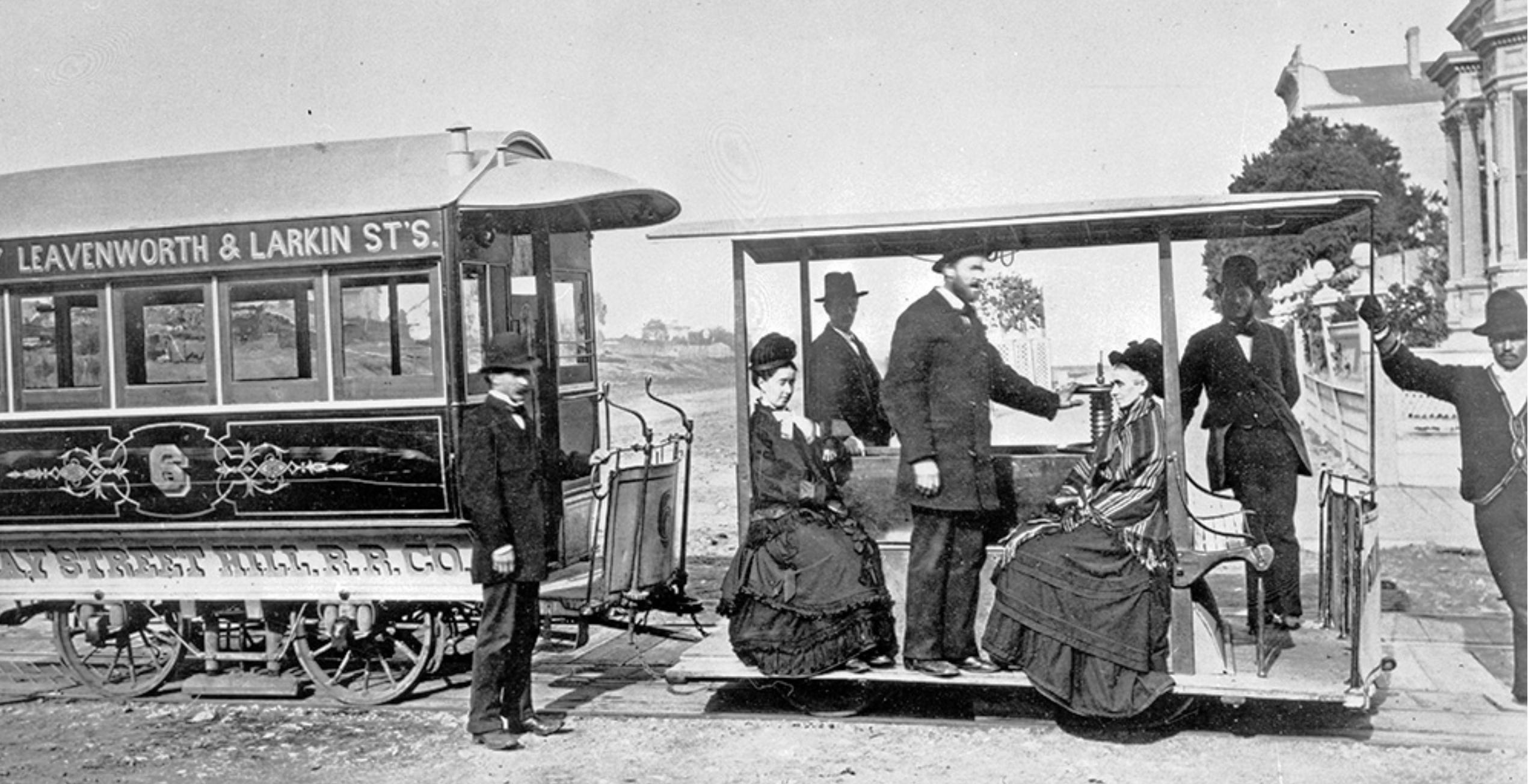
Andrew Smith Hallidie was an American entrepreneur and engineer who is widely celebrated as the inventor of the first practical cable car system. Born in London, he immigrated to California during the Gold Rush, where he used his engineering background to design wire suspension bridges and overhead tramways for mines.
Hallidie tested the first cable car at 4 o'clock in the morning on August 2, 1873, on San Francisco's Clay Street. His idea for a steam engine-powered, cable driven rail system was conceived in 1869, after witnessing an accident in which a streetcar drawn by horses over wet cobblestones on a steep stretch of Jackson Street slid backwards, killing the horses.
Hallidie’s Clay Street Hill Railroad was the sole San Francisco cable car company for four years, though many others would soon develop. Eventually, San Francisco cable car companies laid down 53 miles of track stretching from the Ferry Building to the Presidio, to Golden Gate Park, to the Castro, and to the Mission.
During the 1940s, the “Great American Streetcar Scandal” - a real cabal of big oil, big automotive, & tire corporations - tried to kill off streetcar systems around the country, and replace them with buses. In many cities they were successful, though not San Francisco. The people of San Fransisco rallied in 1947, passing ballot measure 10, which saved their streetcars, and forced the big corporations to back off.
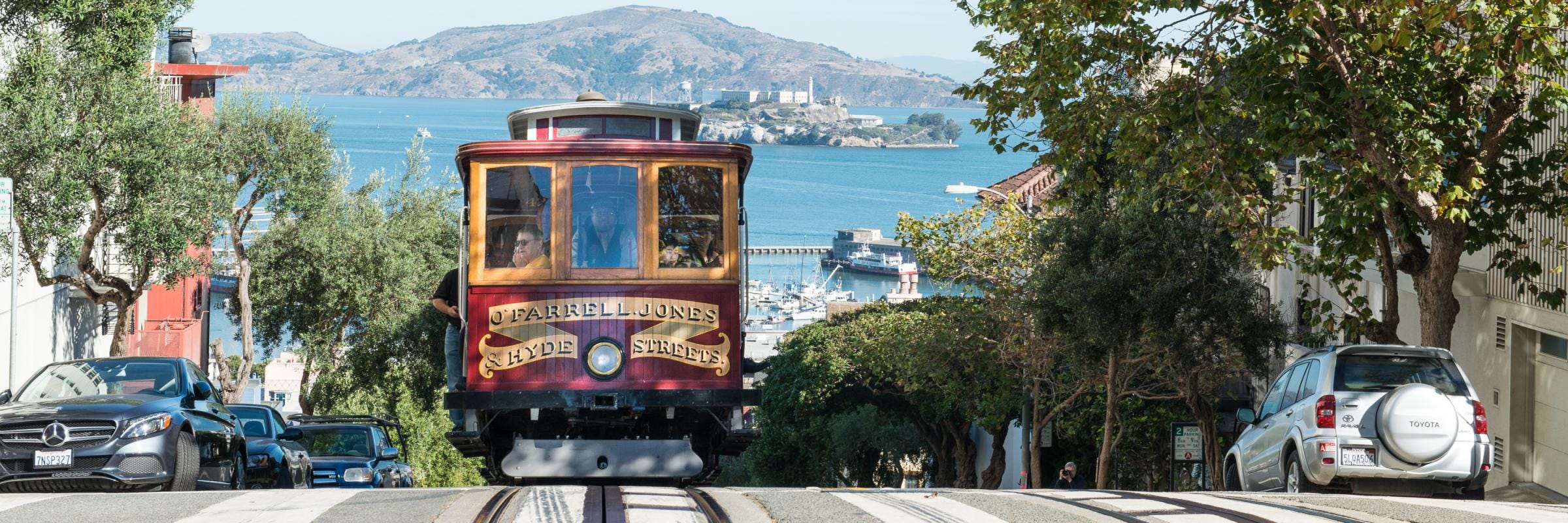
Their iconic cable cars were officially designated as a National Historic Landmark in 1964, becoming the first moving National Historic Landmark in the United States. Today, there are only three cable car lines left, all of which are operated by the SFMTA (San Francisco Metropolitan Transit Authority)
San Francisco: Earthquake, Fire and Recovery
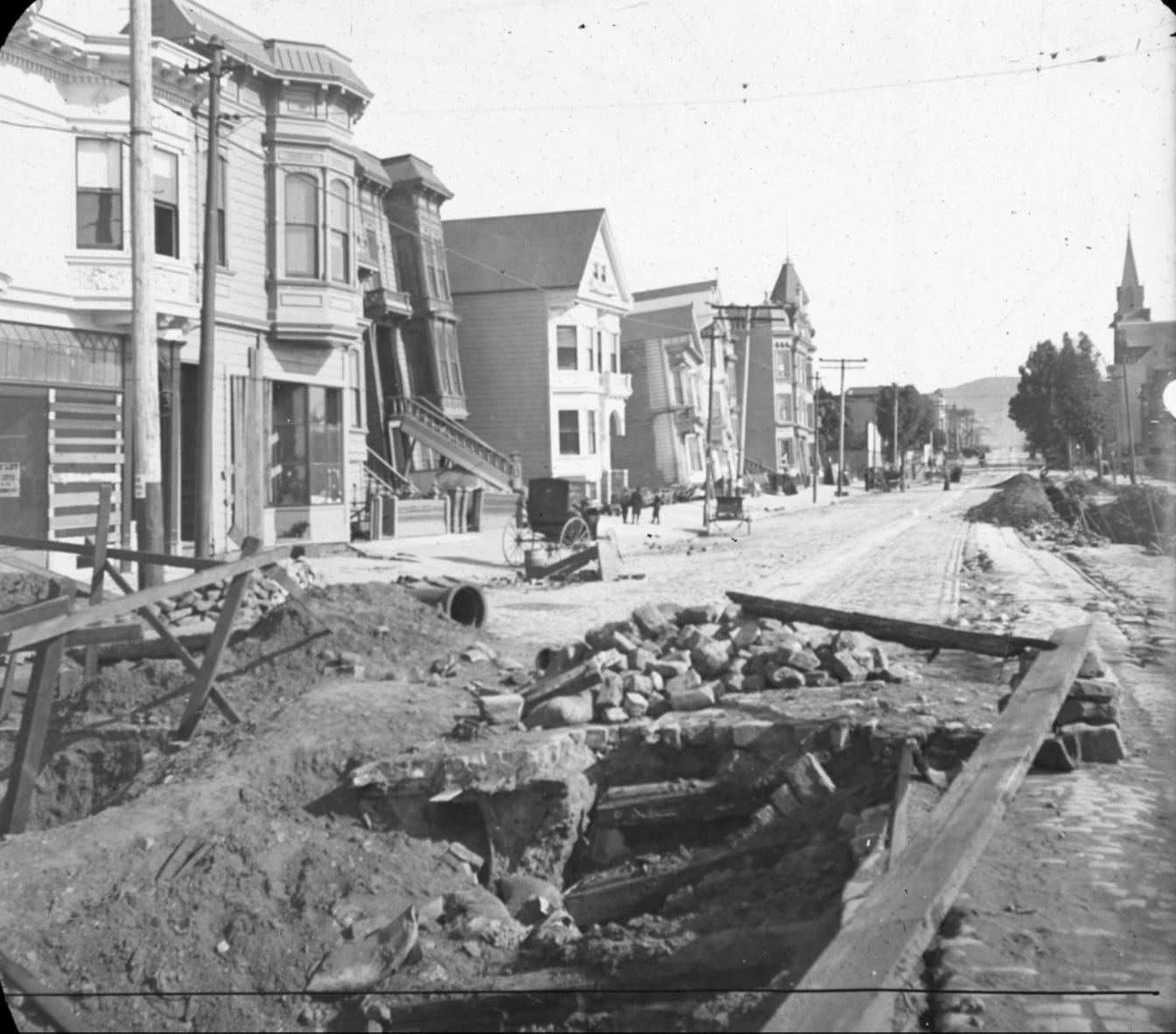
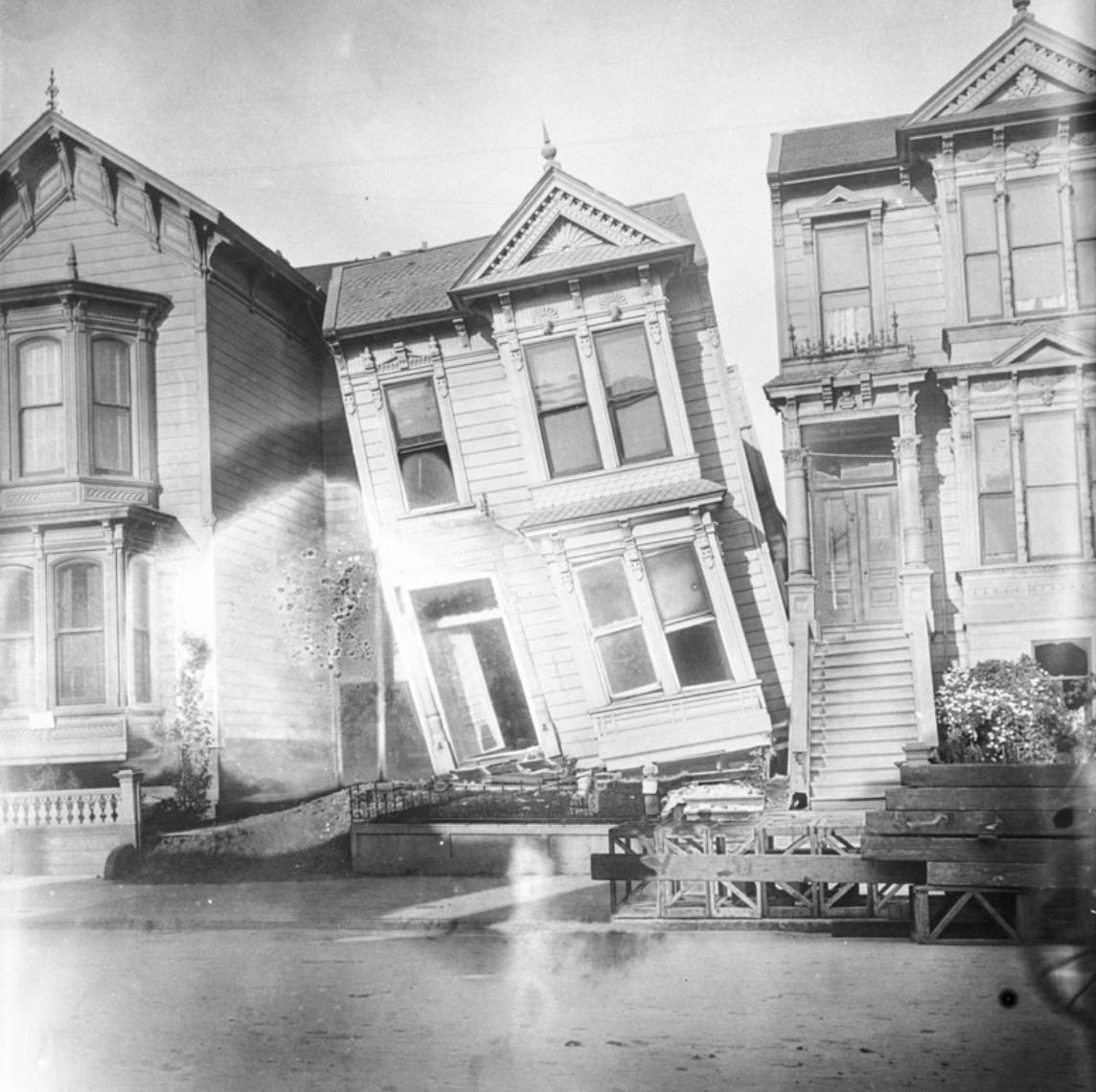
On April 18, 1906, the San Andreas Fault slipped more than 10 feet, unleashing a massive earthquake later estimated at 7.8 on the Richter scale. The tremors broke water mains and triggered fires that raged for four days, killing 3,000 people, destroying 25,000 buildings and leaving 250,000 homeless. The city rebuilt quickly with an improved city center and hosted the lavish Panama International Exposition just nine years later.
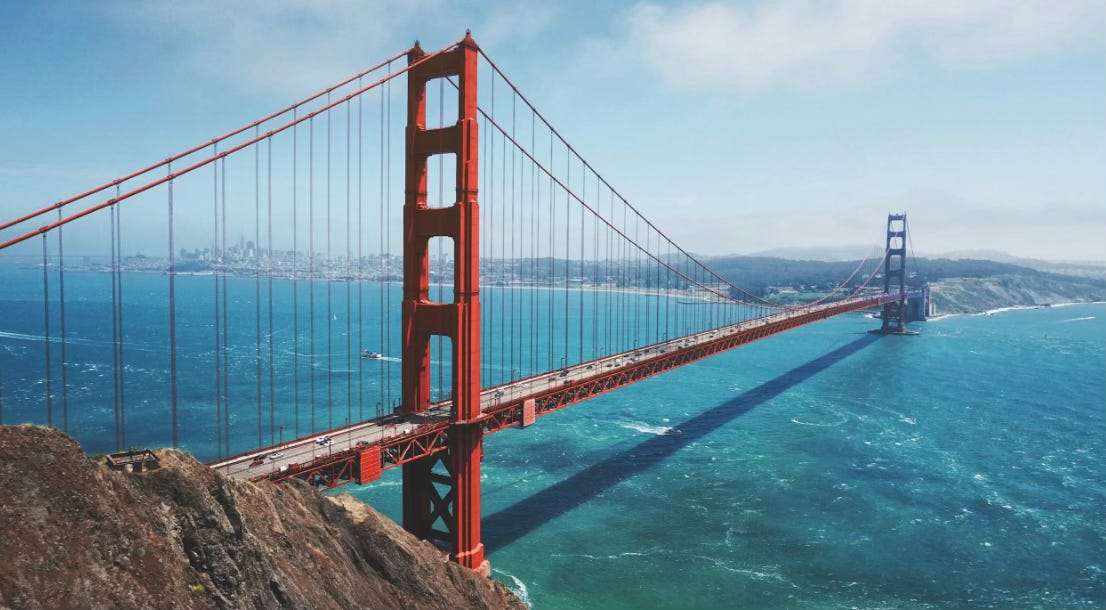
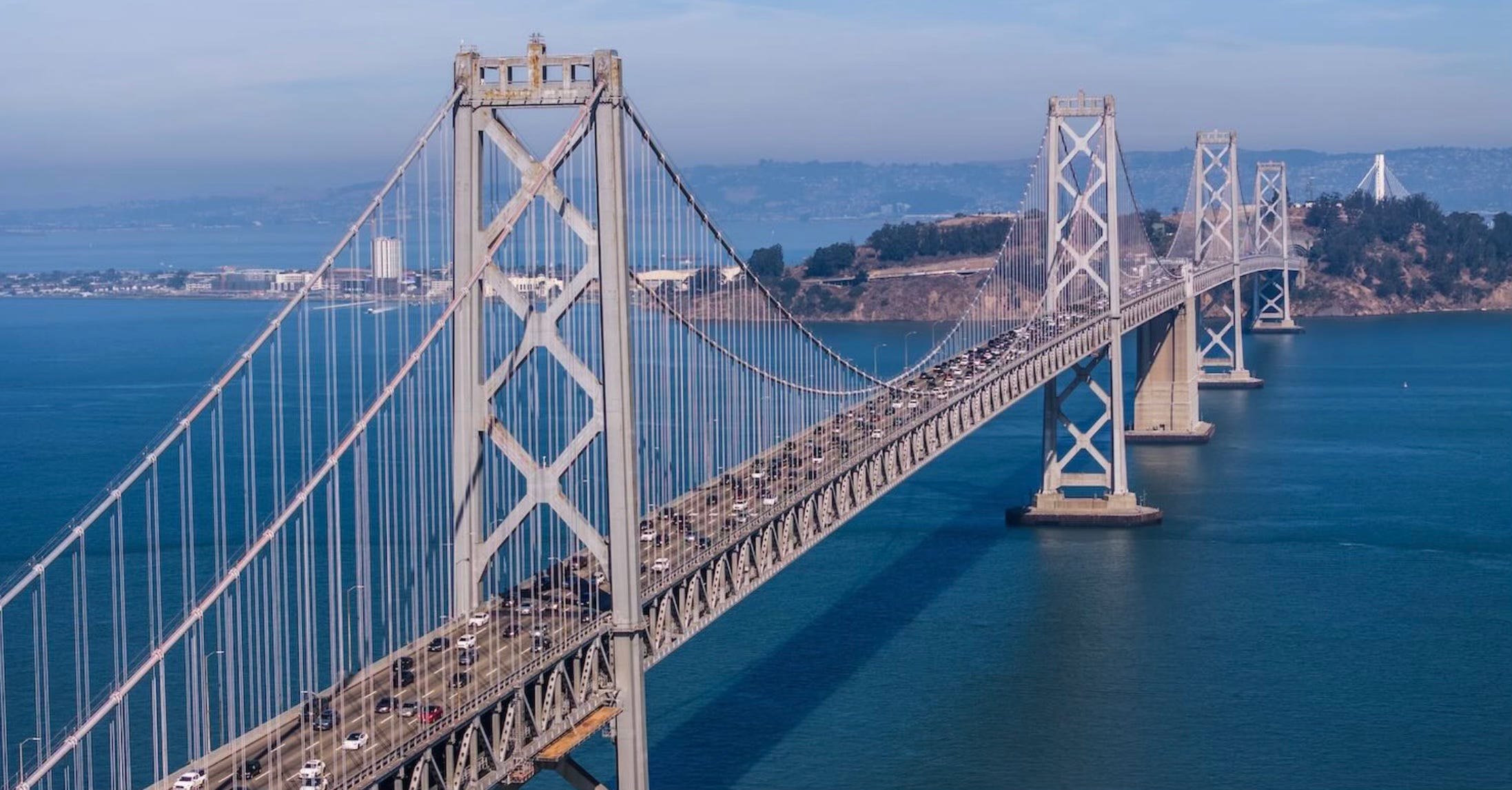
The 1930s saw growth both in the city and its outlying communities, with the construction of the iconic Golden Gate and San Francisco Bay Bridges.
San Francisco: World War II and the Cold War
San Francisco was the main point of embarkation for World War II’s Pacific theater, and the region became a major arms production center. Embarrassingly, after the Japanese attack on Pearl Harbor, Hawaii, the city’s Japanese residents were forced into internment camps far inland. Their abandoned neighborhood was soon filled by African-Americans arriving from the South to work in the war industries.
The city also played a key role in the transition from World War II to the Cold War, hosting the 1945 conference at which the U.N. Charter was drafted and continuing to draw workers to develop technologies for the nuclear age. In the decades following the Cold War, U.S. government defense spending & foundational work by technology researchers—such as the creation of the silicon transistor—began to establish the wider Bay Area as a hardware, software, technology, & research mecca.
San Francisco: Counterculture
While it’s technology future was beginning to develop, San Francisco also became the center of cultural bohemianism. In earlier years, it had drawn writers from Mark Twain to Jack London, and it became a center for the 1950s beat poets and for the Haight-Ashbury hippie counterculture that peaked with the 1967 “Summer of Love.”
Long a hotbed of environmental, labor, and women’s rights activism, the city also gained a reputation for welcoming gays and lesbians, and its Castro District became a center of the gay rights movement. In the 1980s, the city worked hard to respond to the challenges of chronic homelessness and the AIDS epidemic.
San Francisco’s Rise As A Tech Center
On October 17, 1989, the Loma Prieta earthquake hit the city, damaging buildings, collapsing freeways, killing 67, and injuring nearly 4000 people . A decade later, a regional economic boom centered on Internet technology began, based in large part on the tech roots that had been planted there during the Cold War, and the crowded city’s population, steady for decades, began to rise again.

During the second half of the 1990’s, commercialization of the internet drew a wave of optimistic, web-first startups into the city, as the first Dot Com boom grew. After the first Dot Com bust happened, around 2000, San Francisco & the Bay Area began growing again, with the advent of mobile apps, cloud computing, and social networking. Giant corporations like Twitter and Salesforce defined this period, bringing thousands of jobs directly into downtown San Francisco.
San Francisco - a city worth celebrating!
Ingredients
Here’s what you’re going to need for this drink:
