Today’s DOTD - Drink Of The Day - is a Shifting Sands Cocktail inspired by the anniversary of Las Vegas officially becoming a city, which it did by becoming incorporated on March 16, 1911.
While we all know Las Vegas as the place where certain kinds of things happen that don’t happen elsewhere, it hasn’t always been a place to vacation, and leave your troubles - and your inhibitions - behind.
The early period of Las Vegas
Paleo-Indian peoples, whose descendants include the Paiute, were the first inhabitants in the area, some 12,000 years ago. Their tools have been discovered at several sites in the Las Vegas Valley. The Ancestral Pueblo(Anasazi) and Paiute peoples came later and migrated between seasonal camps in the mountains and the valley. The first Europeans known to have entered the area were members of a Spanish exploration party led by Santa Fe trader Antonio Armijo and a scout, Rafael Rivera, who were seeking a new route from Santa Fe, New Mexico to Los Angeles. Arriving in the area in 1829 and noting its wetlands and meadows, Armijo described the area on his map as “Las Vegas” - meaning “the meadows.” In that same year, the first Americans to see the area were in a trapping party that included famous American frontiersman Kit Carson. He returned 15 years later as a guide for the pioneering mission to the region led by legendary explorer John Charles Frémont.
In 1855, a group of Mormon missionaries settled in the area. Led by church elder William Bringhurst, the Mormons built a log fort surrounded by garden plots and fields of grain. In 1856, Bringhurst’s men discovered lead in the Spring Mountains, and Mormon church leader Brigham Young sent metallurgists from Salt Lake City to develop a mine for the purpose of making tools and ammunition. The find did not become profitable at that time, but was developed during World War I as the Potosi mine, a rich source of galena ore and silver.
The land and climate were harsh, however, and the crops failed the second year, which led to internal dissent and Bringhurst’s dismissal. Under the leadership of Samuel Thompson, the settlers again faced hardships in 1857, as insects devoured most of that year’s crops. The dispirited Mormon missionaries abandoned the fort at the end of the year. Other Mormons came to the area in the next few years, notably Daniel and Ann Bonelli, who operated a ferry on the Colorado River. The Las Vegas Valley—part of Arizona Territory until 1866, when it joined the state of Nevada—remained little explored and thinly populated for several decades. The census of 1900 counted only 30 people, almost all of whom were employees of a cattle ranch that had been established near the site of the old Mormon fort.
The early 20th century
At the turn of the 20th century, Las Vegas was much smaller than Searchlight, a mining town about 60 miles (100 km) to the south. The community’s fortunes improved, however, with the arrival of William A. Clark, a mining magnate and politician from Montana, for whom the present-day county was named. Clark, a principal investor in the company building a railroad from Los Angeles to Salt Lake City, recognized that the artesian springs of Las Vegas would provide a reliable water source along the railroad route. He purchased a large tract of land in the Las Vegas Valley, secured water rights to the springs there, and arranged for a railroad depot to be built. Clark also exercised his political and economic clout, openly bribing legislators to secure favors for the railroad.
In 1905, Clark organized an auction of his landholdings near the new railroad depot and station café, which included the town’s first casino. The auction, heavily advertised in the railroad’s two terminal cities, far exceeded Clark’s expectations and resulted in the sale of nearly every available lot. Clark used a portion of the proceeds to build a pipeline from the springs to the depot and dig a well, which would assure a steady water supply for the new town. He also helped fund the construction of secondary rail lines to the mining towns of Tonopah and Goldfield.
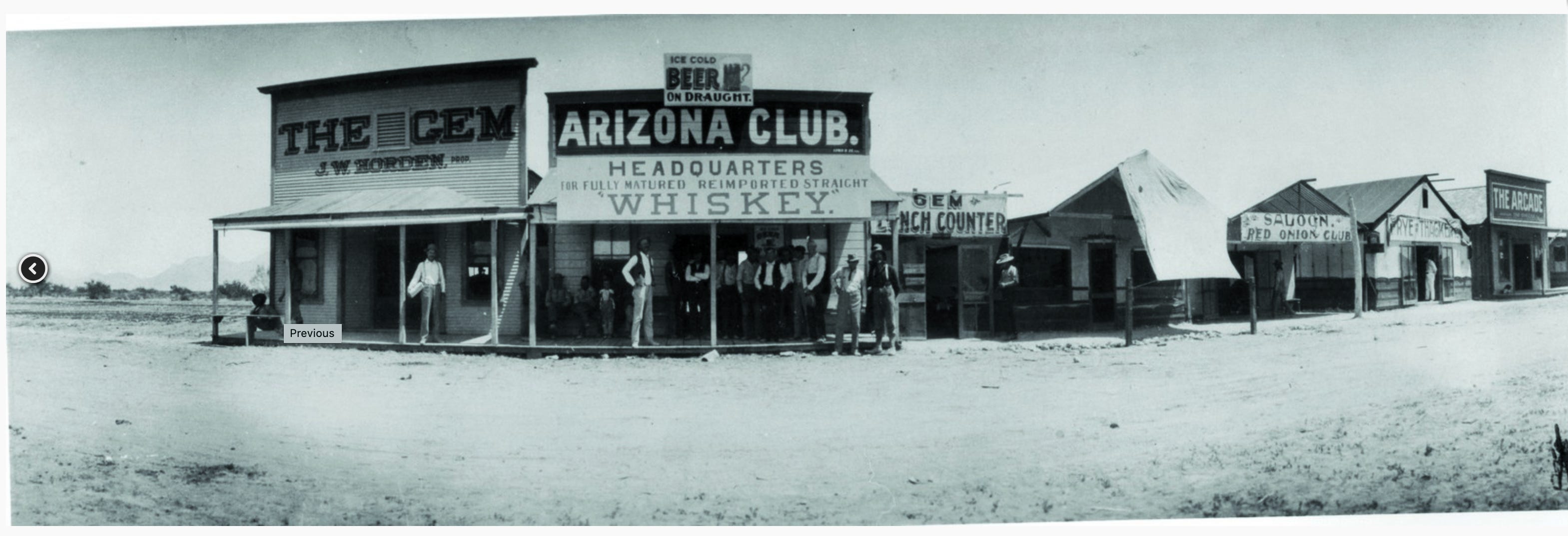
Las Vegas grew slowly at first—with the exception of one area, which rapidly developed as a legally sanctioned zone of prostitution and gambling. The zone suffered a modest setback in 1910 when the Nevada legislature outlawed gambling. In response, the casinos went underground and continued to flourish covertly until gambling was again legalized in 1931. Las Vegas, which was officially founded on May 15, 1905, was incorporated on March 16, 1911, two years after it had been named the county seat.
Development as a tourist destination
Clark sold his share of the railroad to the Union Pacific Company in 1921. Small ranches began to pop up in and around Las Vegas, some of them thinly disguised brothels, and the town soon became a popular weekend destination for residents of Los Angeles. An influx of people who worked in the Hollywood movie industry helped fuel a growth spurt, bringing the population to more than 5,000 by 1930. Californians were lured not only by the climate and gambling, but also by Nevada’s newly relaxed divorce laws, which required only a six-week residency in the state before one was eligible to file for divorce. Construction of the Boulder (later Hoover) Dam across nearby Black Canyon in the 1930s, during the height of the Great Depression, proved to be a tremendous boon for Las Vegas. The project, one of the largest and most ambitious public works endeavors ever undertaken by the federal government, would come to provide the two key commodities that made contemporary Las Vegas possible: water and electric power. More immediately, the city benefited from the thousands of dam builders who came to the small town each weekend, lured by the handful of casinos and other diversions.
Wartime and early postwar growth
With the advent of World War II, Las Vegas grew even larger as the dam builders were followed by defense workers and military personnel. Nevada Senator Pat McCarran successfully lobbied the federal government to establish two major installations near Las Vegas in 1941: a magnesium-processing plant southeast of the city in Henderson and a military airfield just to the northeast. The latter, Nellis Air Force Base, eventually grew to occupy an area of some 1,350 square miles (3,500 square km), including the U.S. Air Force’s vast testing range northwest of the city. These and other defense-related installations set up in the region brought in thousands more people. Hotel owners, encouraged by the large influx of newcomers, began to offer entertainment featuring top-name performers such as Frank Sinatra, Tommy Dorsey, and the Andrews Sisters.
After World War II, many of the returning soldiers chose to settle in the Las Vegas area. Their decision was made easier because air-conditioning systems were rapidly being installed in buildings, which made Las Vegas and the rest of the Southwest much more habitable during the hot summer months. Growth was rapid, the city’s population nearly tripling between 1940 and 1950 and more than doubling again in the following decade.
Emergence of the contemporary city
The prospect of enormous profits from legalized gambling and prostitution proved to be a strong attraction for organized crime syndicates. In 1945, Bugsy Siegel, one of the most prominent mobsters in American history, began constructing the Flamingo, one of the city’s first casino and hotel complexes. He incurred a large debt with Meyer Lansky and other mob associates, and the first months of the Flamingo’s operation were shaky. It opened for good in March 1947, but Siegel was murdered shortly thereafter—according to one theory, at the behest of Lansky and other disgruntled investors—and Lansky immediately took over the business. The Flamingo’s enormous success encouraged more ventures, and several new casinos sprang up along what had become known as The Strip: the Thunderbird in 1948, the Desert Inn in 1950, the Sands and the Sahara in 1952, and the Riviera, the Royal Nevada, and the Dunes in 1955.
The first racially integrated casino on the Strip, the Moulin Rouge, which was partly owned by African American heavyweight boxing champion Joe Louis, opened in 1955. Five years later, Las Vegas and the Strip integrated all properties after an agreement between Mayor Oran Gragson and the National Association for the Advancement of Colored People (NAACP), proving that Las Vegas was far ahead of much of the United States.
For the record, The Strip is not technically within the Las Vegas city limits. It stretches 4.2 miles southward, immediately south of the Las Vegas city limits through the unincorporated towns of Paradise and Winchester. These days, the area is legally and commonly known as part of the “Las Vegas” metropolitan area, though early casino developers, many of whom were mobsters, built outside the city limits to avoid municipal taxes and regulations- AKA the law.
Although organized crime syndicates largely created contemporary Las Vegas, their dominance was short-lived. By the late 1950s, the newly established Nevada Gaming Commission—which was responsible for licensing and overseeing gambling operations—began to curtail severely the freedom of gangsters to operate in the city. In the early 1960s, the commission formulated its so-called “Black Book.” Seeking to remove corruption from the gambling industry, the commission listed people with criminal records and banned from the casinos anyone listed in the book. Through vigorous enforcement of the law and the removal of corrupt public officials, the commission largely succeeded in separating crime organizations from the casinos over the next 25 years, and corporations (some would call them a different kind of criminal organization) later took their place.
Also of importance to the development of the city were private individuals, among them Wilbur Clark, the owner of the Desert Inn, who proposed that the federal government retire its World War II–era debts by holding a national lottery, and Howard Hughes, who kept a suite at the Desert Inn throughout the 1950s and lived there permanently from 1966 to 1970. Some of the investments made by Hughes proved to be failures, including the costly Landmark Casino, which went bankrupt, but others were outstanding successes that brought Hughes vast profits. The Howard Hughes Parkway, a major thoroughfare that skirts the University of Nevada and McCarran International Airport, honors his many contributions to the city’s development.
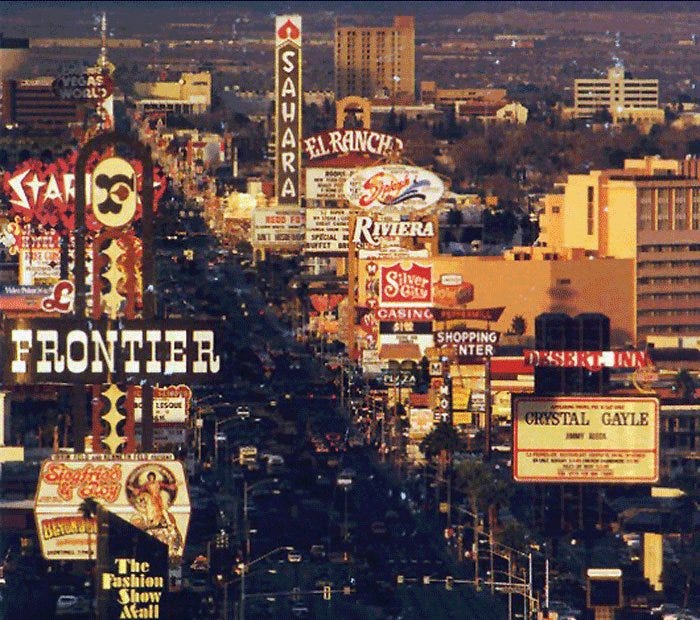
The area also became well known in the 1950s and ’60s for the nuclear weapons tests conducted at the federal government’s Nevada Test Site, some 65 miles (105 km) from Las Vegas. At first the local populace responded favorably to these events, which could easily be seen by city dwellers; for a time, the atomic bomb’s mushroom cloud was even incorporated into the official seal of Clark county. Soon, however, protests were mounted against aboveground testing, forcing the government to conduct its experiments underground; Hughes, one of the most influential protestors, argued that open-air testing would drive visitors away from the city. It also became apparent in later years that exposure to nuclear fallout from those tests was yielding a high incidence of radiation-related cancers.
Las Vegas continued to grow in the 1960s, thanks in part to the publicity brought by such popular entertainers as Frank Sinatra, Sammy Davis, Jr., Wayne Newton, and Elvis Presley, all of whom became residents there.
Themed hotel-casino complexes also began popping up during the 1960s, including Caesars Palace in 1966 and Circus Circus, a family-oriented resort, in 1968. Las Vegas’ growth faltered only for a few years, beginning with a nationwide economic recession in the late 1970s. In addition, tourism declined after a fire at the MGM Grand Hotel killed more than 80 people in November 1980. Entrepreneur Steve Wynn, who had operated the Golden Nugget Casino since the early 1970s, used the downturn to acquire and renovate old casinos and build new ones, foremost among them the lavishly expensive Mirage, which opened in 1989.
In the late 1980s, the city’s overall growth accelerated to match that of its gaming and tourist economy. The city’s population increased by nearly 100,000 between 1980 and 1990 to exceed a quarter million, and it surpassed the half-million mark early in the 21st century. The metropolitan area reached one million inhabitants in the mid-1990s and was well on its way to doubling that number a decade later.
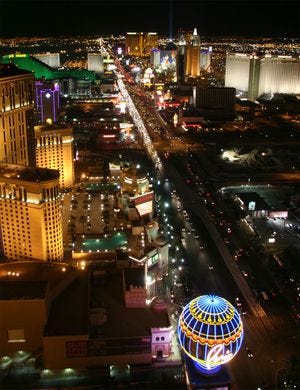
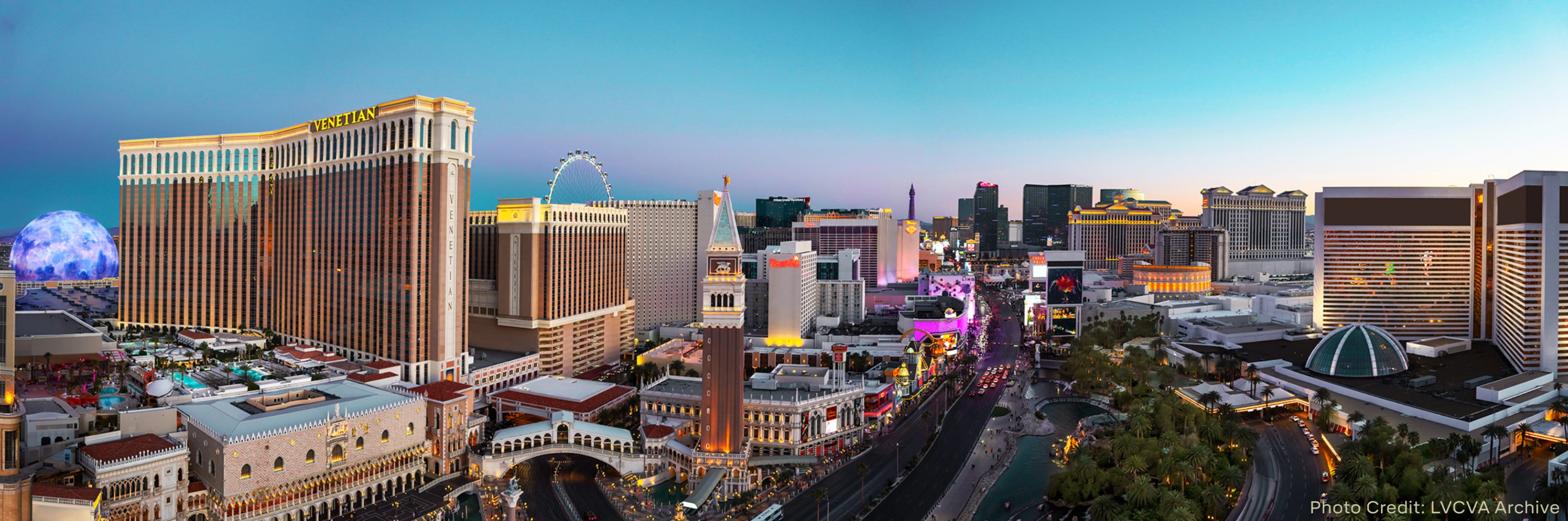
The venerable Dunes hotel & casino was demolished in October 1993—in true Vegas tradition, as a spectacle in front of a huge crowd of onlookers. It was the last of the city’s 1950s-era hotels, and its destruction symbolically ushered in a new era of elite hotels, including the Venetian and the Bellagio. In addition, these new hotels were concentrated in fewer hands; the MGM Grand Corporation bought the Mirage Resorts Corporation in March 2000, effectively ending Steve Wynn’s chairmanship and bringing several major resorts under one corporate umbrella. Wynn, however, remained a presence in the city, opening a new casino resort complex in 2005.
While entertainment & residencies have always been a part of Las Vegas, they’ve grown even more in the past few years. The musical artists alone that have committed to residencies in 2026 include The Eagles, Rod Stewart, Santana, the Backstreet Boys, New Kids on the Block, Jennifer Lopez, Kelly Clarkson, Blake Shelton, and Bruno Mars.
But the stars don’t just come to Las Vegas. The city itself is often a star, as locations on The Strip have been featured in many movies over the years. Elvis Presley’s Viva Las Vegas (1964) showcased several resorts, and the buddy comedy The Hangover (2009) was shot at Caesars Palace. Both Ocean’s Eleven movies, the 1960 version and its 2001 remake, feature resorts on the Strip: the Desert Inn, Flamingo, Riviera, Sahara, and Sands are featured in the first, and the Bellagio, the MGM Grand, and the Mirage are the targets of the heist at the center of the remake. Narratives inspired by mobsters who owned Strip properties were showcased in Bugsy (1991), based on the original Flamingo owner, and Casino (1995), based on Frank “Lefty” Rosenthal, who ran several Strip properties in the 1970s.
In a city that has long been characterized by such periods of sweeping growth and change, tourism, gambling, entertainment, and the vast array of ancillary services needed for all of those have provided Las Vegas with a generally strong economy over the years. Only recently has that record of stability been damaged by the abuses of government from the Trump regime that have turned tourists away from all of the United States.
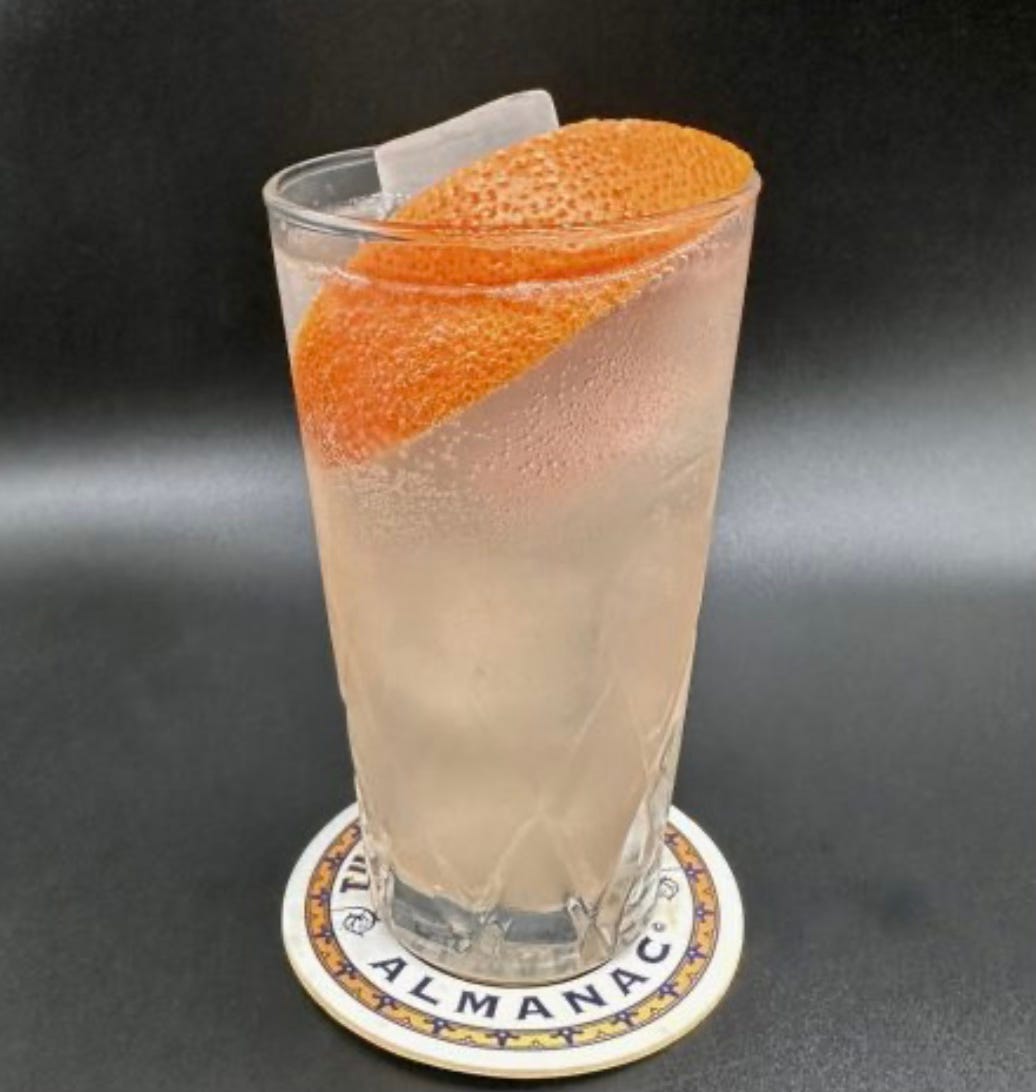
Still, Trump isn’t forever, and Las Vegas will long outlast him & his MAGA minions. We say salute Las Vegas officially becoming a city with today’s Drink Of The Day, a Shifting Sands Cocktail!
Ingredients
Here’s what you’re going to need for this drink: