
Today’s DOTD - Drink Of The Day - is a Mary Pickford Cocktail inspired by the opening of Grauman’s Chinese Theatre, of which she was an original investor!
The History Of Grauman’s Chinese Theatre
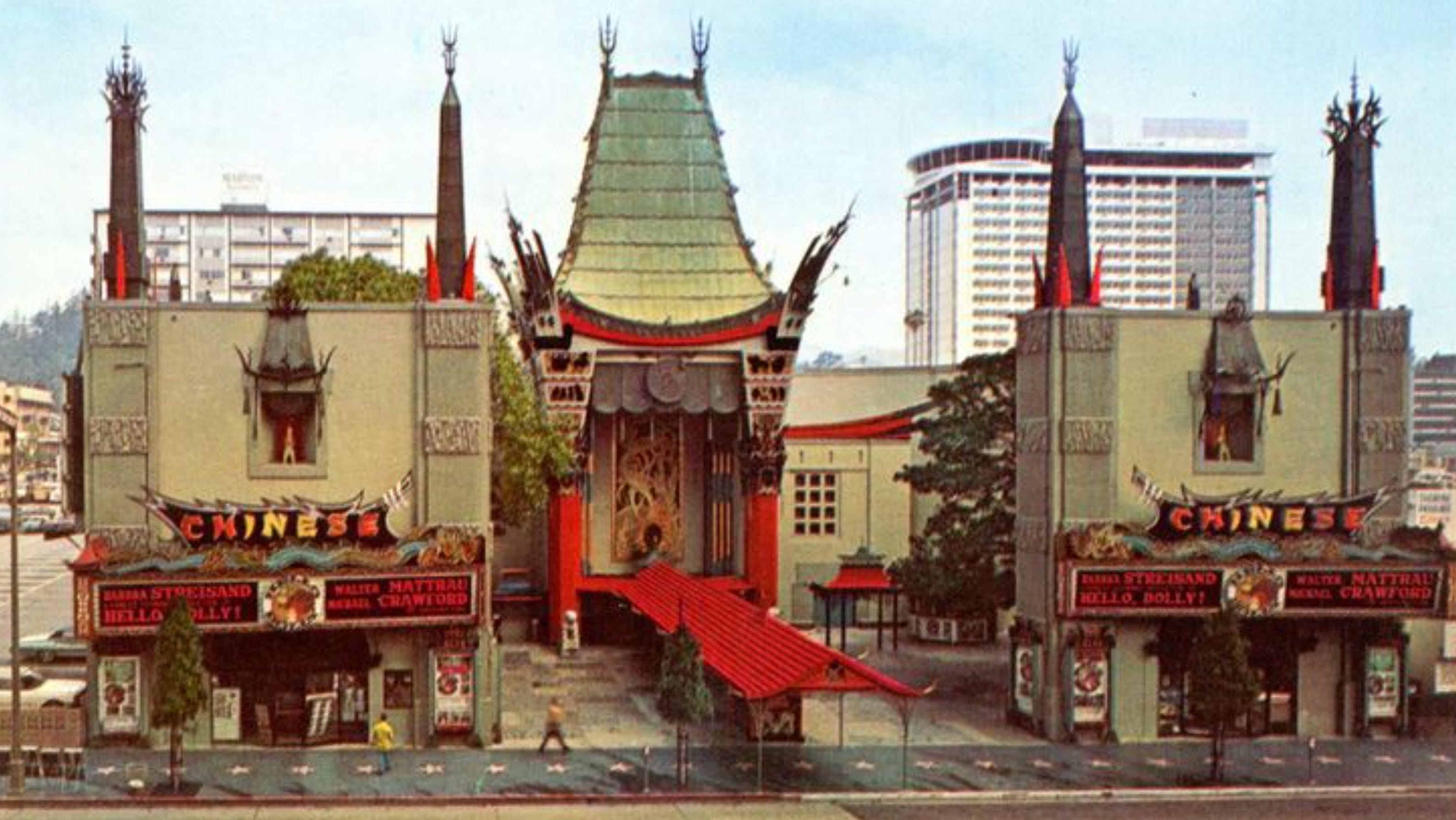
For almost a century, Grauman’s Chinese Theatre, now technically the “TCL Chinese Theatre,” has been the beating heart of Hollywood tourism. The venue, named for its giant Chinese pagoda structure, hosted the Academy Awards from 1944 to 1946. The Chinese Theatre is still a working cinema, long known for its larger-than-life film premieres and uniquely extravagant moviegoing experience. Additionally, the Chinese Theatre offers a personal encounter with film history through the iconic hand- and footprints left by Hollywood stars in the cement out front from the 1920s to today, part of the famous Hollywood Walk Of Fame.
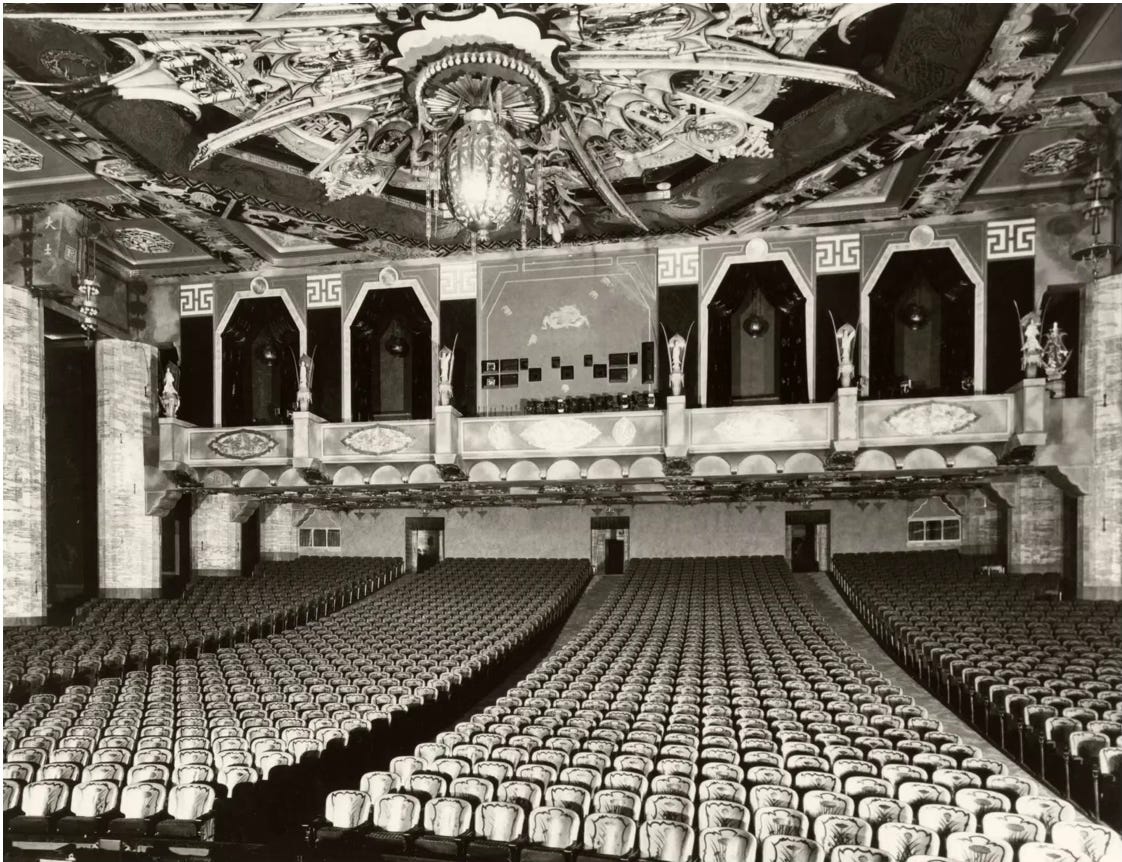
In the 1920s, businessman and entertainer Sid Grauman owned theaters and movie palaces across the country, including the Egyptian Theatre on Hollywood Boulevard and the Million Dollar Theatre in downtown Los Angeles. Grauman first leased the land where his Chinese Theatre would eventually stand from silent film star Francis Xavier Bushman, who owned a mansion on the site. Working with businessman Joseph Schenck and Hollywood acting legends & power couple Mary Pickford and Douglas Fairbanks, Grauman built the theater for $2 million, or what would be roughly $30 million today.
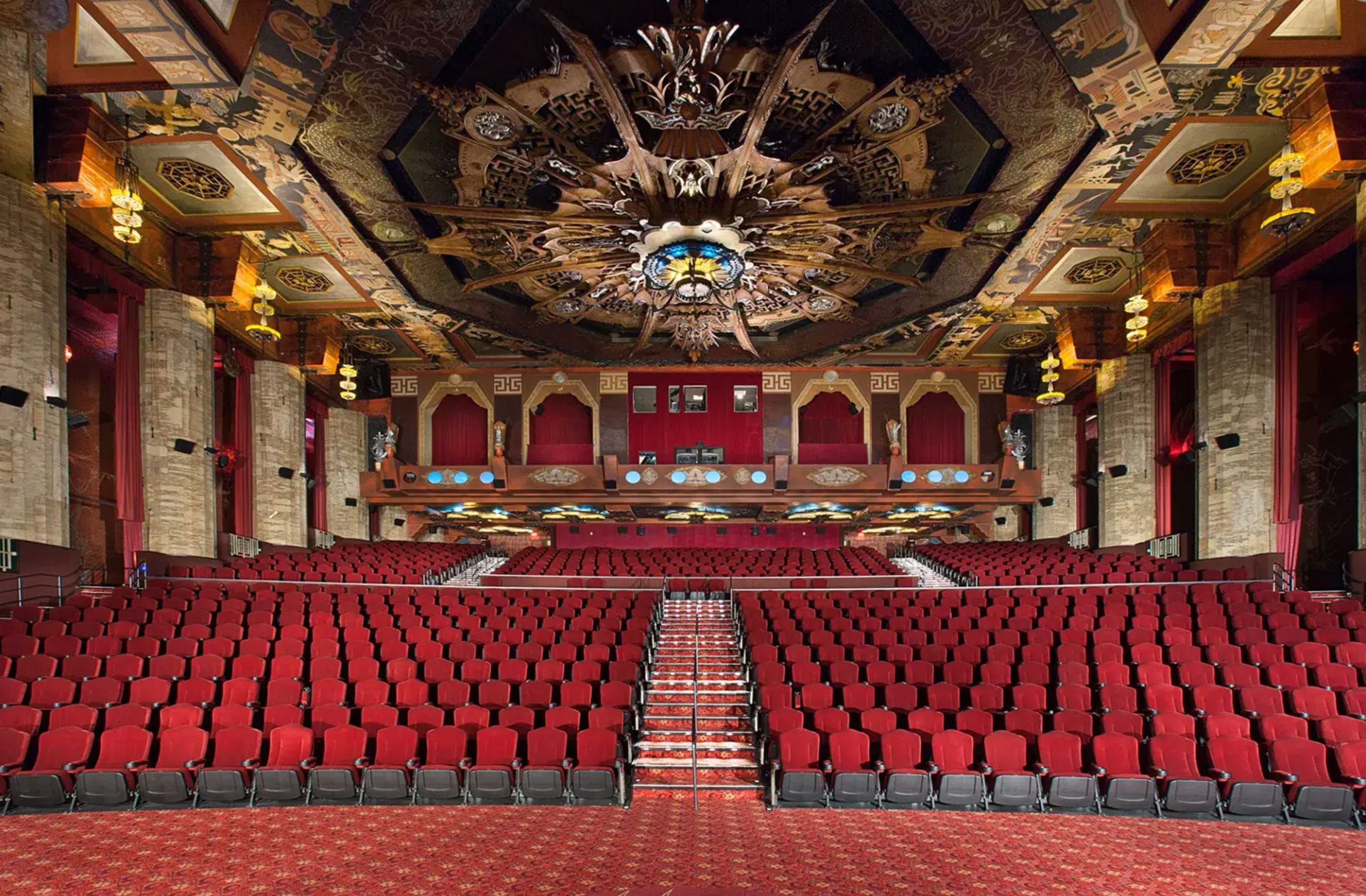
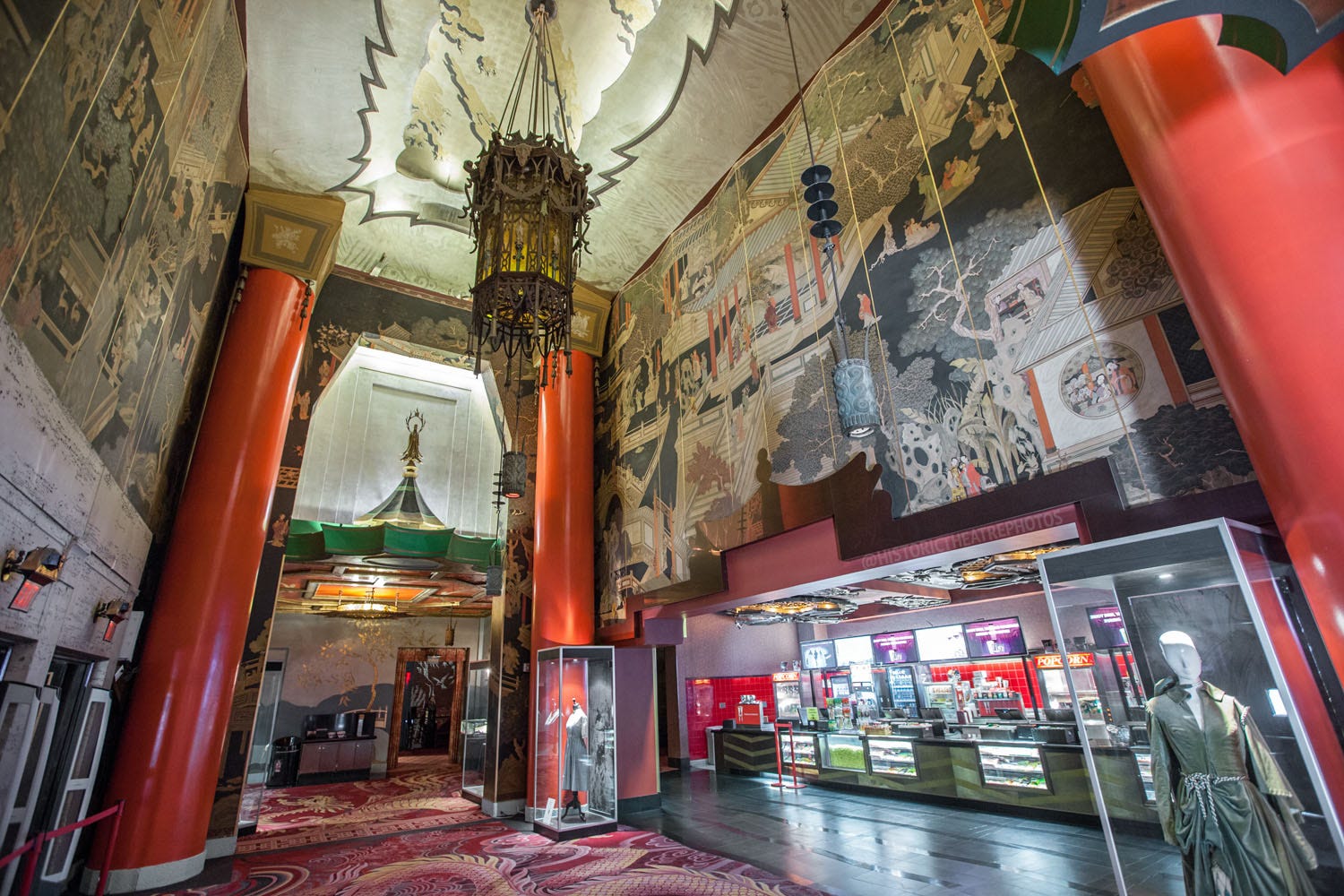
Like the neighboring Egyptian, the Chinese Theatre was built in the Exotic Revival style, this time with a dramatic, fanciful interpretation of Chinese art and architecture. Raymond Kennedy of the Meyer & Holler firm designed the Theatre’s striking pagoda, supported by two massive coral-red columns and a 30-foot-high stone dragon. Though the approach to Chinese architecture was fundamentally ersatz, many multi-talented Chinese Americans working in Hollywood produced key features of the building. Director Moon Quan designed and collaborated with Chinese artisans to create many of the Theatre’s statues, and actor Keye Luke painted the murals decorating the lobby.
Grauman famously said that moviegoers deserved a “theatrical dinner, not just popcorn,” and the elaborate productions he staged during the early years of the Chinese Theatre offered just that. Films opened with custom variety shows directed by Grauman, many featuring a 65-piece orchestra. The second film ever to play at the theater, The Gaucho (USA, 1927), opened with Douglas Fairbanks playing the cowboy character on stage before appearing in the movie itself.
The Theatre was also known for its grand premieres, as with the launch of the wartime epic Hell’s Angels (USA, 1930). Expectant fans lined up a mile and a half down Hollywood Boulevard to witness the extravaganza outside the Chinese Theatre that included World War I biplanes buzzing overhead, actors parachuting down to the street, and a fireworks display.
The collection of cement hand- and footprints outside the front entrance is perhaps the best-known feature of the Chinese Theatre, however. Accounts vary, but the most cited version of the origin story for the prints involves Grauman and actress Norma Talmadge accidentally stepping in wet concrete during the Theatre’s construction. The oldest official prints are from 1927 and belong to Douglas Fairbanks and Mary Pickford, but the forecourt now features hundreds more. Marilyn Monroe even famously left an earring in cement when making her handprints at the premiere for Gentlemen Prefer Blondes (USA, 1953). The Theatre’s portfolio of prestige Hollywood events evengrew to include the Academy Awards from 1944 to 1946.
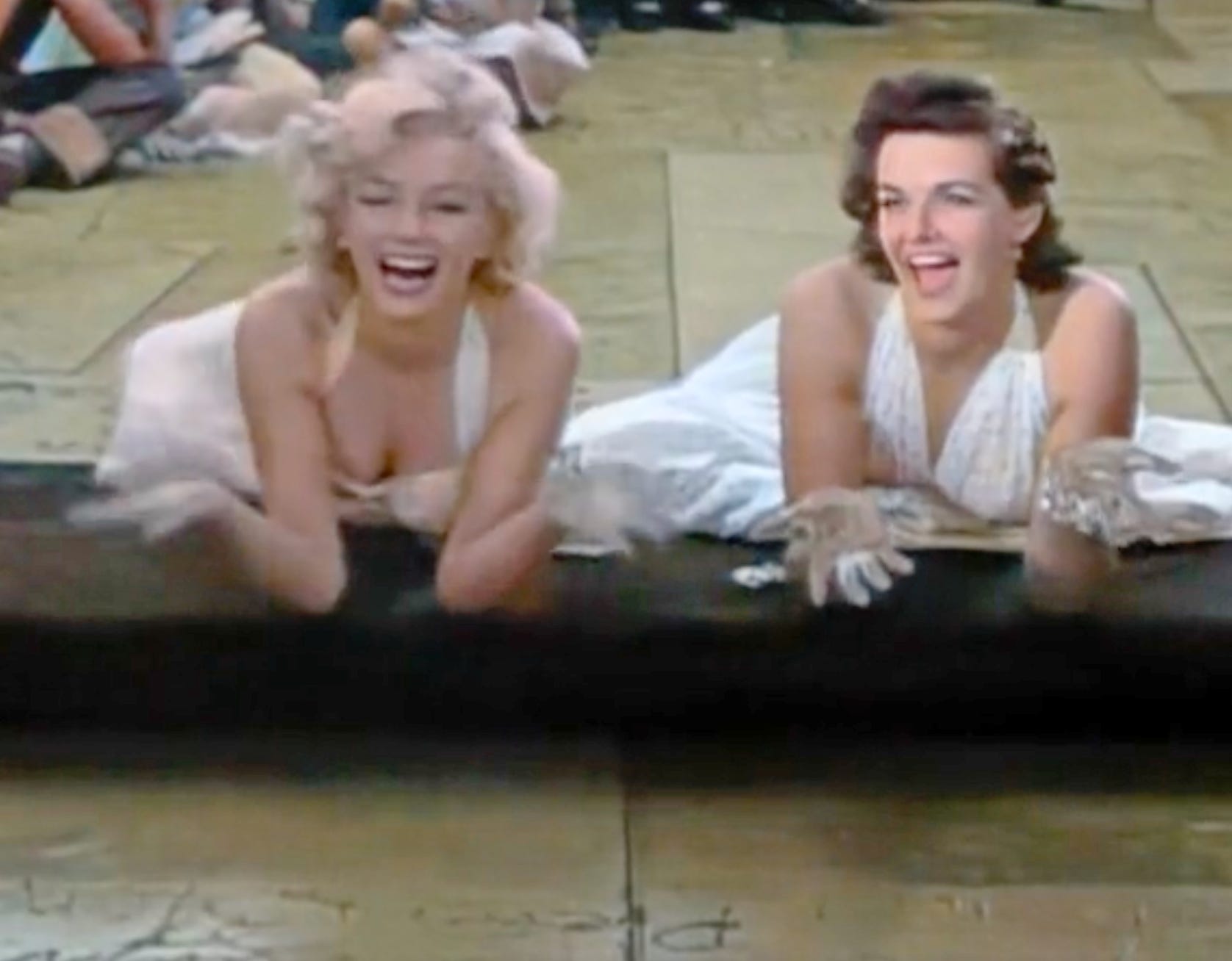
Of course, Graumann’s Chinese Theatre would never have been built if it wasn’t for the investment of Mary Pickford, a highly talented Canadian-American actress, writer, producer, businesswoman, philanthropist, and one of the first movie stars.
Mary Pickford was born Gladys Marie Smith in 1892 in Toronto, Canada. After her father was killed in an accident, Gladys quickly became the family’s main breadwinner by performing in the theatre, starting when she was only seven years old. The young Ms. Smith took to the stage like a duck to water, and her local fame began to grow. In 1901, her family moved to the United States to pursue theatre as a family enterprise. The family first joined traveling theatre groups, and then chose to stay in New York City, where the young Gladys began to get parts on Broadway.
Living in New York City, Gladys pursued the successful Broadway producer David Belasco at his office for months. Eventually Belasco relented and auditioned her for a child role in the 1907 Broadway play ‘The Warrens of Virginia.’ Belasco hired her for the part at $25 per week, but didn’t think her name was right for the stage. He liked her middle name and for a last name chose Gladys’ maternal grandmother’s last name Pickford and so Mary Pickford became her permanent stage name.
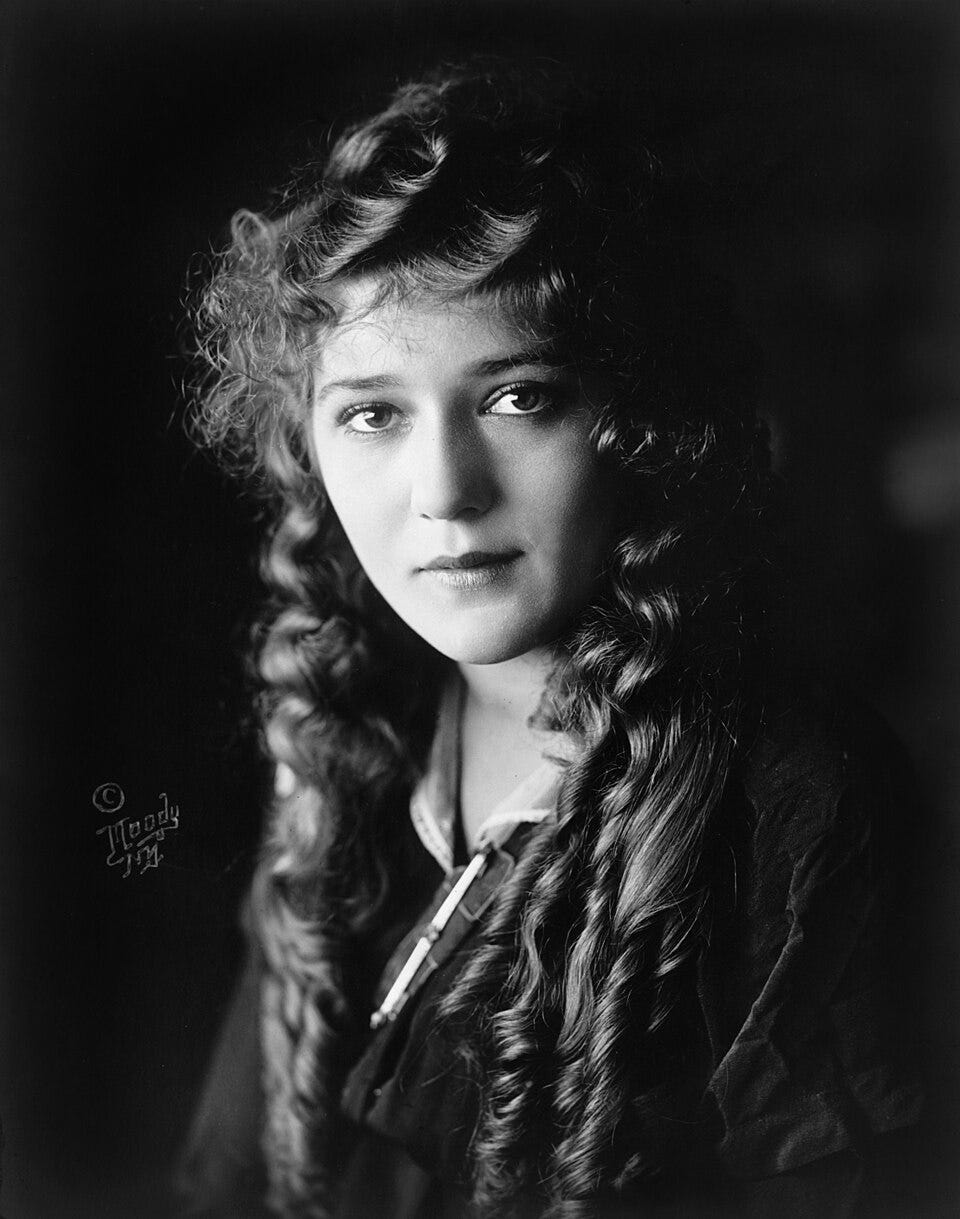
In 1909, when she was 17, Pickford was between theatrical engagements, so she approached director D. W. Griffith at the Biograph Company, then located in New York, to ask for work in moving pictures. She had no intention of working permanently in the new medium, but hoped the income would tide her over before she went back to work in the theatre. Griffth was immediately taken with her acting abilities. Most Biograph actors earned $5 a day at that time, but after Pickford's single day in the studio, Griffith agreed to pay her $10 a day on a $40-a-week guarantee - the equivalent of $1450/week in 2026 dollars. Pickford worked prolifically, appearing in 51 films in 1909, averaging almost one a week.
Pickford ended up moving to California in 1910, and becoming a pioneer in the American film industry with a Hollywood career that spanned five decades, becoming one of the most popular actresses of the silent film era. Pickford became Hollywood’s first millionaire by 1916, and, at the height of her career, had complete creative control of her films, as well as being one of the most recognizable women in the world.
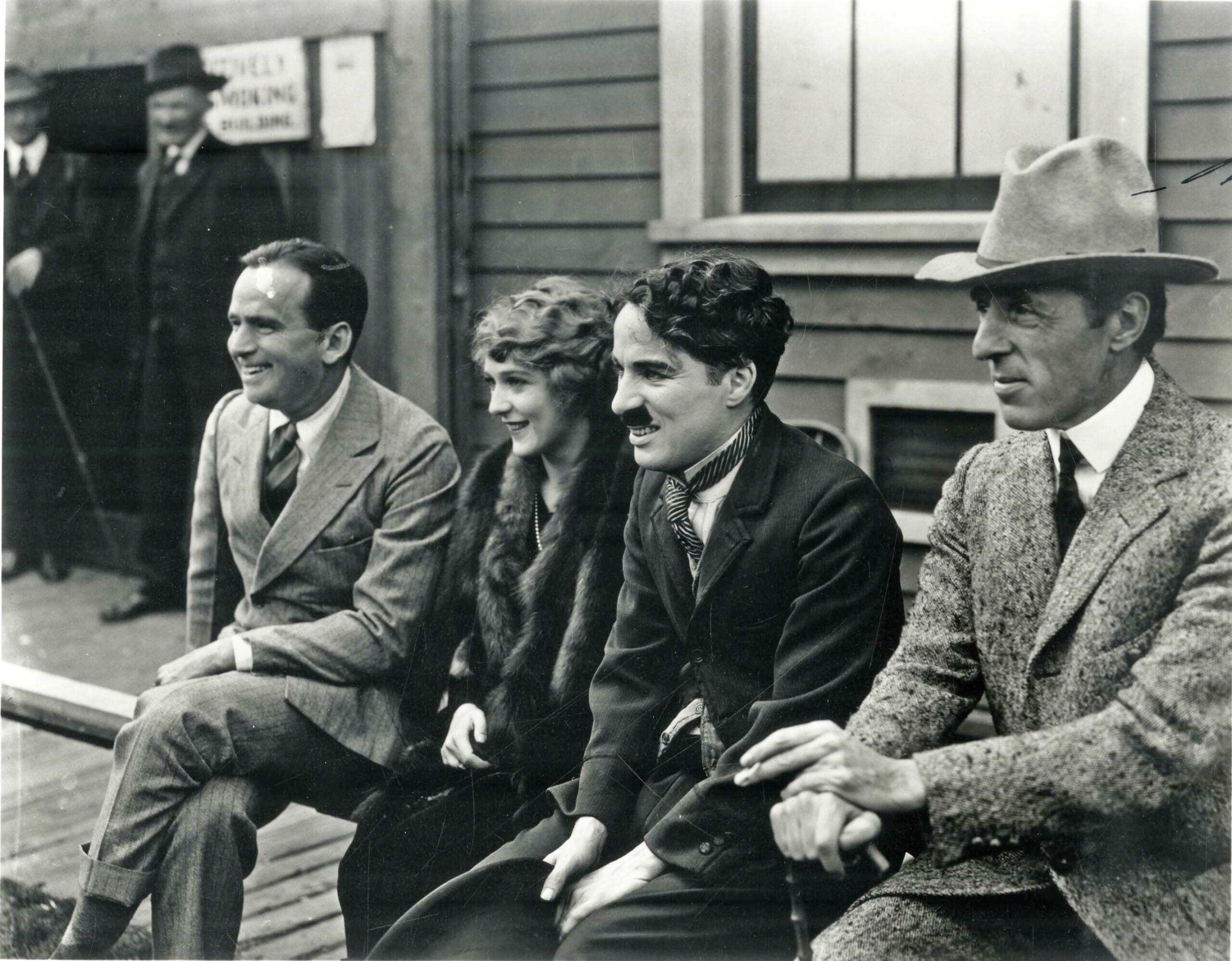
Mary Pickford didn’t get to be a Hollywood legend just by being a major movie star. She was also a savvy businesswoman. In 1919, when she was only twenty-seven years old, Pickford cofounded United Artists, the first independent film distribution company, along with Charlie Chaplin, D. W. Griffith, and her then-future husband Douglas Fairbanks, as we wrote about earlier this year when we gave you the Charlie Chaplain Cocktail.
Pickford was also one of the 36 founders of the Academy of Motion Picture Arts and Sciences in 1927, and in 1929 she earned the second ever Academy Award for Best Actress for her first role in a “talkie” - a motion picture with sound - in the film Coquette. Pickford continued to act in films until she retired from acting in 1933, though she continued producing films into the 1950s.
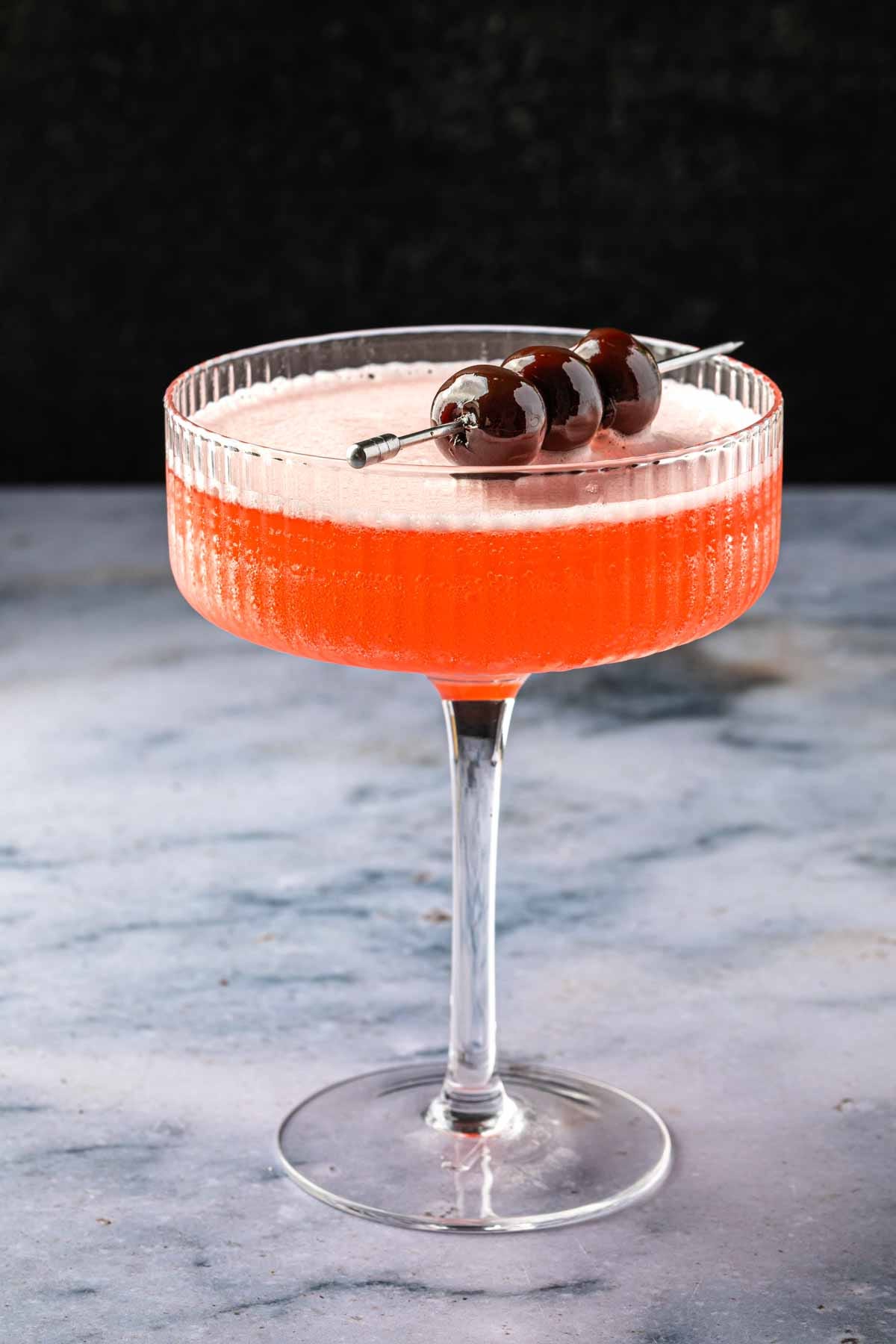
Mary Pickford was such a star that even at the height of Prohibition in the United States, a cocktail was created for her, and popularized around the world. The drink was created at the Hotel Nacional de Cuba, after a trip she took to Havana with Charlie Chaplin and Douglas Fairbanks. You may also remember when we featured the Hotel de Nacional de Cuba this past year in another DOTD.
To celebrate Ms. Pickford, and the Grauman’s Chinese Theatre she made possible, let’s make today’s Drink Of The Day, a Mary Pickford Cocktail.
Ingredients
Here’s what you’re going to need for this drink:
