
DOTD For Thursday, March 12, 2026
Live, Travel, Adventure, Bless - And Don't Be Sorry
Today’s DOTD - Drink Of The Day - is A Rusty Nail, inspired by the birthday of legendary American writer, Jack Kerouac!
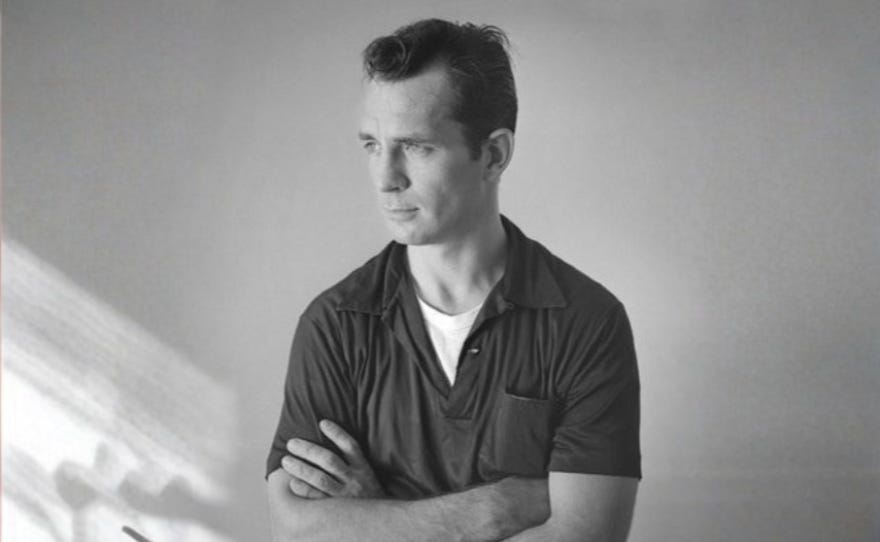
Jack Kerouac was born March 12, 1922, in Lowell, Massachusetts. He would become one of the most famous American novelists, poets, and leaders of the Beat movement - the 1950s countercultural literary movement that rejected postwar conformity, materialism, and traditional social values in favor of personal liberation, Eastern spirituality, sexual exploration, and jazz-influenced spontaneous expression. Kerouac’s most famous book, On the Road (1957), had broad cultural influence before it was recognized for its literary merits. On the Road captured the spirit of its time as no other work of the 20th century had since F. Scott Fitzgerald’s The Great Gatsby did in 1925.
Childhood and early influences
Lowell, Massachusetts in the 1920s was a mill town, and had a large French Canadian population, including Jack’s parents, who spoke French at home. While Kerouac’s mother worked in a shoe factory and his father worked as a printer, Kerouac, at the age of six, began attending a French Canadian school in the morning, and continued his studies in English in the afternoon. He spoke joual, a Canadian dialect of French, and so, though he was an American, he viewed his country as if he were a foreigner. His family was devoutly Roman Catholic.
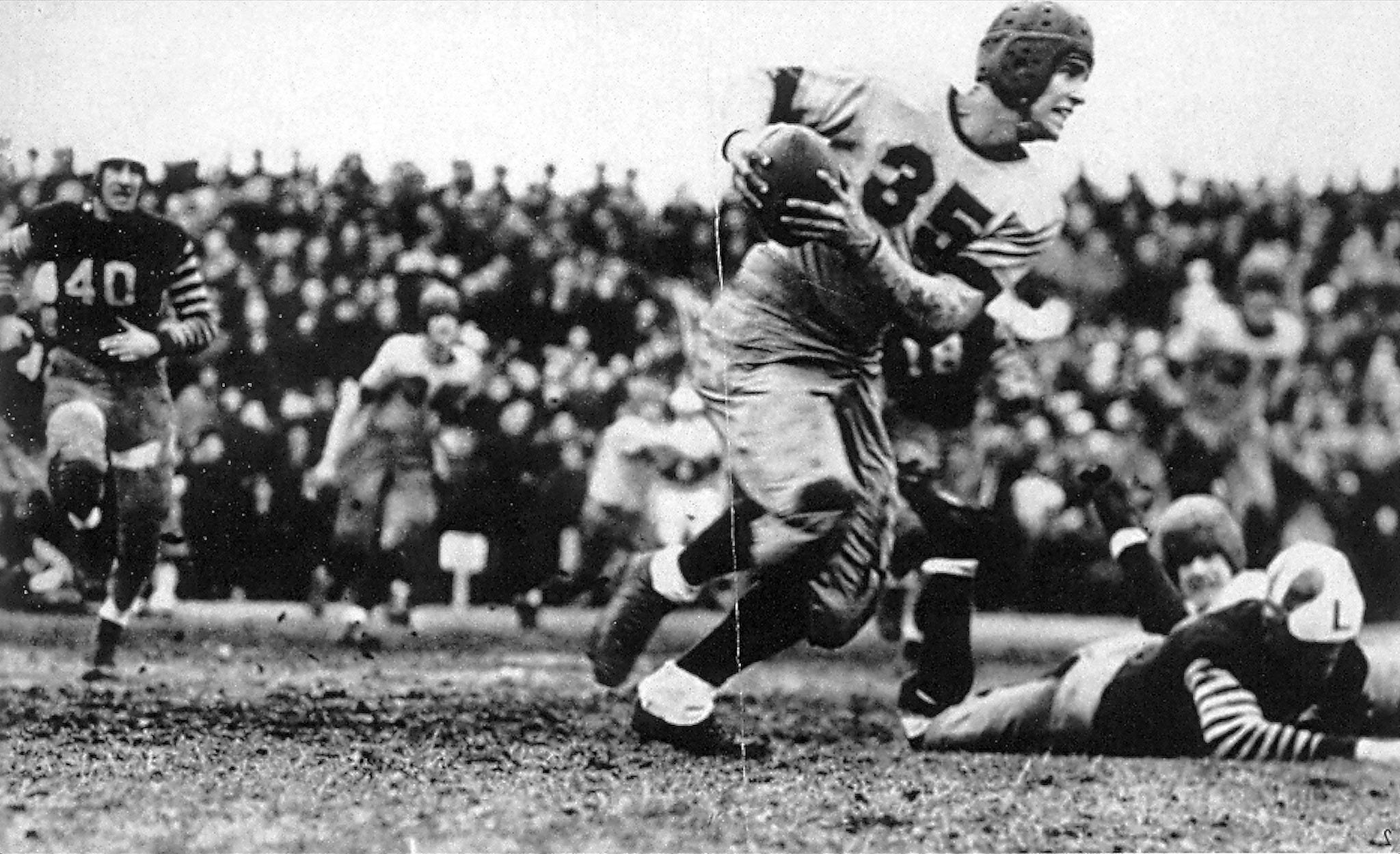
Jack had an older sister, Caroline, and an older brother Gerard, though his brother died of rheumatic fever in 1926 when Jack was just four and his brother was nine. Kerouac was deeply affected by his brother’s death, believing his brother became a guardian angel for him the rest of his life. Jack went to public school in Massachusetts, and at Lowell High School, Kerouac's skills as a running back in football earned him scholarship offers from Boston College, Notre Dame, and Columbia University in New York City, where he subsequently enrolled.
Prior to Columbia, Kerouac went to the Horace Mann School, a preparatory school in New York City, for a year. There he met Henri Cru, who later helped Kerouac find jobs as a merchant seaman, and Seymour Wyse, who introduced Kerouac to jazz.
In 1940, Kerouac would officially enroll at Columbia University, on a football scholarship. But in Kerouac’s second game, he broke his leg, which effectively ended his football career and contributed to him dropping out of college to pursue writing.
Columbia was also where he met two writers who would become his lifelong friends, Allen Ginsberg and William S. Burroughs. Together with Kerouac, they are the seminal figures of the literary movement known as Beat, a term introduced to Kerouac by Herbert Huncke, a Times Square junkie, petty thief, hustler, and writer. It meant “down-and-out” as well as “beatific” and therefore signified the bottom of existence (from a financial and an emotional point of view) as well as the highest, most spiritual high.
Writing & The Navy
During World War II, Kerouac served as a United States Merchant Mariner from July to October of 1942. He also served aboard the SS Dorchester before its maiden voyage. A few months after his service, the SS Dorchester was sunk during a submarine attack while crossing the Atlantic, and several of his former shipmates died.
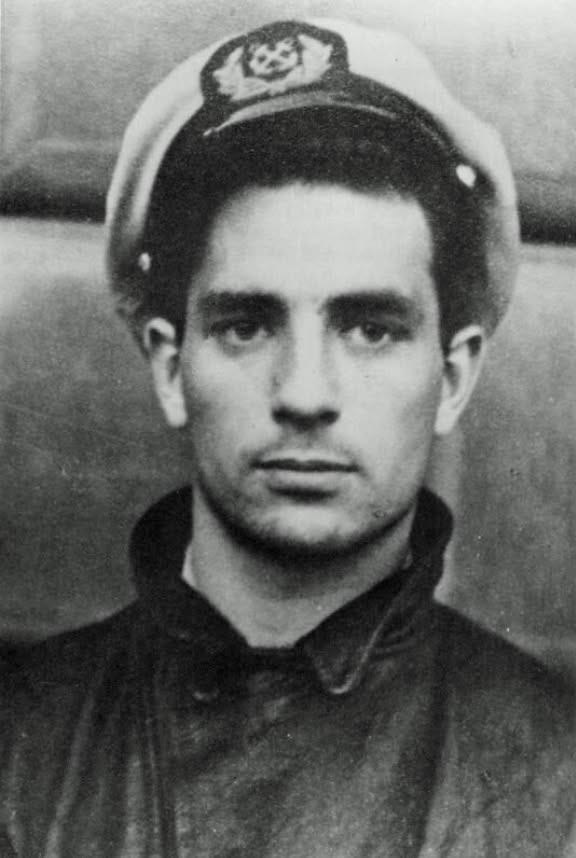
In 1943, Kerouac joined the United States Navy Reserves. He served eight days of active duty with the Navy before he ended up on the sick list. According to his medical report, Kerouac said he “asked for an aspirin for his headaches and they diagnosed me (with) dementia praecox and sent me here.” Two days later, he was honorably discharged on the psychiatric grounds that he was of “indifferent character” during a war.
While a Merchant Mariner in 1942, Kerouac also wrote his first novel, The Sea Is My Brother. While he viewed the work as a failure, calling it a “crock as literature” and never actively sought to publish it, the book was published in 2011, 70 years after it was written and over 40 years after his death. Kerouac described the work as being about “man’s simple revolt from society as it is, with the inequalities, frustration, and self-inflicted agonies.”
On the Road and other early work
By the time Kerouac and Burroughs met in 1944, Kerouac had already written a million words. More words came in the wake of Kerouac’s brief detainment in August 1944, when friend and fellow Beat writer Lucien Carr—who had introduced him to Burroughs and Ginsberg—confessed to having killed David Kammerer, a longtime admirer whose advances had gotten aggressive, in Manhattan’s Riverside Park. Kerouac assisted Carr in disposing of Kammerer’s glasses and the knife used in the killing. When Carr eventually confessed to the police, Kerouac was arrested as a material witness, and his father refused to bail him out. He was bailed out by his then-girlfriend Edie Parker, in a bizarre series of events, where Jack was allowed to leave jail, taken downtown with Edie by two NYPD detectives, and married. Once married, Edie could access an inheritance from her grandfather's then-unprobated estate to post Kerouac's bail. Edie and Jack separated only two months after their wedding, and she filed for annulment two years later. Kerouac and Burroughs eventually collaborated on a novelization of the events, And the Hippos Were Boiled in Their Tanks. It went unpublished until 2008.
In 1944, Kerouac also wrote a novella about his childhood in Massachusetts. He left it unfinished, however, and then lost the manuscript. It was eventually found in a Columbia University dorm & sold at auction for nearly $100,000 in 2002. It was published, along with some of Kerouac’s notes on the book and some letters to his father, as The Haunted Life and Other Writings in 2014. That novella was just one expression of Kerouac’s boyhood ambition to write “the great American novel.”
His first published novel, The Town & The City (1950), received favorable reviews but was considered derivative of the novels of Thomas Wolfe, whose Time and the River (1935) and You Can’t Go Home Again (1940) were then popular. In The Town & The City, Kerouac articulated his “New Vision,” that “everything was collapsing,” a theme that would eventually dominate his grand design to have all his work taken together as “one vast book.”
While others appreciated his work, Kerouac was unhappy with the pace of his prose. The music of bebop jazz artists Thelonious Monk and Charlie Parker began to drive Kerouac toward his “spontaneous bop prosody,” as Ginsberg later called it, which took shape in the late 1940s through various drafts of his second novel, On the Road.
The original manuscript, a scroll written in a three-week, amphetamine-fueled blast in 1951, is legendary. Composed of approximately 120 feet from a giant roll of industrial paper, threaded through his typewriter, and fueled by a pharmaceutical called Benzedrine (also known as “speed”), Kerouac banged out his romanesque chronicle of getting lost in America and Mexico with his fictional sidekick, Dean Moriarty, in just three weeks. Rejected for publication at first, it finally was printed as a book in 1957. In the interim, Kerouac wrote several more “true-life” novels, including Doctor Sax (1959), Maggie Cassidy (1959), and Tristessa (1960) among them.
Kerouac became a national sensation after On the Road received a rave review from The New York Times literary critic Gilbert Millstein. While Millstein extolled the literary merits of the book, to the American public, the novel represented a departure from tradition. Kerouac though, was disappointed with having achieved fame for what he considered the wrong reason: Little attention went to the excellence of his writing and more to the novel’s radically different characters and its characterization of hipsters and their nonconformist celebration of sex, jazz, and endless movement.
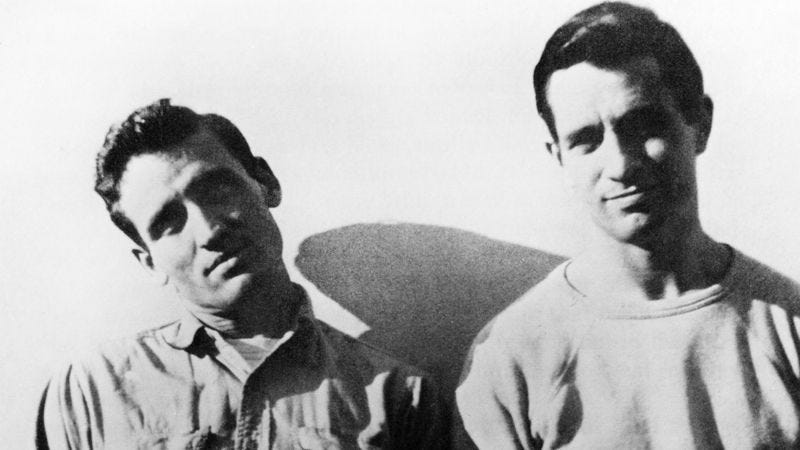
The character Dean Moriarty (based on his close friend Neal Cassady, another important influence on Kerouac’s style) was an American archetype, embodying “IT,” an intense moment of heightened experience achieved through fast driving, talking, or “blowing” (as a horn player might) or in writing. In On the Road, main character Sal Paradise explains his fascination with others who have “IT,” characters for whom the perpetual now is everything, like as Dean Moriarty and Rollo Greb, as well as jazz performers: “The only ones for me are the mad ones, the ones who are mad to live, mad to talk, mad to be saved.”
Readers often confused Kerouac with his character Sal Paradise, the amoral hipster at the center of his novel. The critic & conservative political commentator Norman Podhoretz famously wrote that Beat writing was an assault against the intellect and against decency. This misreading dominated negative reactions to On the Road. Kerouac’s rebellion, however, is better understood as a quest for the solidity of home and family, what he considered “the hearthside ideal.” He wanted to achieve in his writing that which he could find neither in the promise of America nor in the empty spirituality of Roman Catholicism. He strived instead for the serenity that he had discovered in his adopted Buddhism. Kerouac also felt that the “Beat” label marginalized him, and prevented him from being treated as he wanted to be treated, as a man of letters in the American tradition of Herman Melville and Walt Whitman.
Sketching, poetry, and Buddhism
Despite the success of the “spontaneous prose” technique Kerouac used in On the Road, he sought further refinements to his narrative style. Following a suggestion by Ed White, a friend from his Columbia University days, that he sketch “like a painter, but with words,” Kerouac sought visual possibilities in language by combining spontaneous prose with sketching. Visions of Cody (written in 1951–52 and published posthumously in 1972), was an in-depth, more poetic variation of On the Road, describing a buddy trip and including transcripts of his conversation with Cassady (now fictionalized as Cody). Visions of Cody is considered the most successful realization of Kerouac’s sketching technique.
As he continued to experiment with his prose style, Kerouac also bolstered his standing among the Beat writers as a supreme poet. With his sonnets and odes, he ranged across Western poetic traditions. He also experimented with the idioms of blues and jazz in such works as Mexico City Blues (1959), a sequential poem comprising 242 choruses. After he met the poet Gary Snyder in 1955, Kerouac’s poetry, as well as that of Ginsberg and fellow Beats Philip Whalen and Lew Welch, began to show the influence of the haiku, a genre mostly unknown to Americans at that time.
While Ezra Pound had modeled his poem “In a Station of the Metro” (1913) after Japanese haiku, Kerouac, departing from the 17-syllable, 3-line strictures, redefined the form and created an American haiku tradition. In the posthumously published collection Scattered Poems (1971), he proposed that the “Western haiku” simply say a lot in three short lines: “Above all, a Haiku must be very simple and free of all poetic trickery and make a little picture and yet be as airy and graceful as a Vivaldi Pastorella.”
In his pocket notebooks, Kerouac wrote and rewrote his versions of haiku, revising and perfecting them. He also incorporated his haiku into his prose. His mastery of the form is demonstrated in his novel The Dharma Bums (1958).
Kerouac turned to Buddhist study and practice from 1953 to 1956, after his “road” period and in the lull between composing On the Road in 1951 and its publication in 1957. In the fall of 1953, he finished The Subterraneans (it would be published in 1958). Fed up with the world after the failed love affair upon which the book was based, he read Henry David Thoreau and fantasized a life outside civilization. He immersed himself in the study of Zen, and he became acquainted with the writings of American Buddhist popularizer Dwight Goddard, particularly the second edition of his A Buddhist Bible. Kerouac began his genre-defying Some of the Dharma in 1953 as reader’s notes on A Buddhist Bible, and the work grew into a massive compilation of spiritual material, meditations, prayers, haiku, and musings on the teaching of Buddha.
In an attempt to replicate the experience of Han Shan, the reclusive Chinese poet of the Tang dynasty (618–907), Kerouac spent 63 days atop Desolation Peak in Washington state. Kerouac recounted this experience in Desolation Angels (1965) using haiku as bridges (connectives in jazz) between sections of spontaneous prose. In 1956 he wrote a sutra, The Scripture of the Golden Eternity. He also began to think of his entire oeuvre as a “Divine Comedy of the Buddha,” thereby combining Eastern and Western traditions.
Later work and death
By the 1960s, Kerouac had finished most of the writing for which he is best known. In 1961 he wrote Big Sur in 10 days while living in the cabin of Lawrence Ferlinghetti, a fellow Beat poet, in California’s Big Sur region. Two years later, Kerouac’s account of his brother’s death was published as the spiritual Visions of Gerard. Another important autobiographical book, Vanity of Duluoz (1968), recounts stories of his childhood, his schooling, and the dramatic scandals that defined early Beat legend.
In 1969, Kerouac was broke, and many of his books were out of print. An alcoholic, he was living with his third wife and his mother in St. Petersburg, Florida. He spent his time at the Beaux Arts coffeehouse in nearby Pinellas Park and in local bars, such as the Wild Boar in Tampa. A week after he was beaten by fellow drinkers whom he had antagonized at the Cactus Bar in St. Petersburg, he died of internal hemorrhaging in front of his television while watching The Galloping Gourmet at the age of 47 — the ultimate ending for a writer who came to be known as the “martyred king of the Beats.”
Legacy of Jack Kerouac
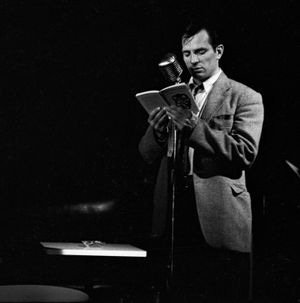
Kerouac’s insistence upon “First thought, best thought” and his refusal to revise was controversial. He felt that revision was a form of literary lying, imposing a form farther away from the truth of the moment, counter to his intentions for his “true-life” novels. For the composition of haiku, however, Kerouac was more exacting. Yet he accomplished the task of revision by rewriting. Hence, there exist several variations of On the Road, the final one being the 1957 version that was a culmination of Kerouac’s own revisions as well as the editing of his publisher. Significantly, Kerouac never saw the final manuscript of the 1957 edition before publication. Still, many critics found the long sweeping sentences of On the Road ragged and grammatically derelict.

Kerouac’s legacy remains complex and somewhat controversial, though his style of stream of consciousness spontaneous prose has become a guide for many. He remains an essential American mythologiser, and an icon for the ability to change while following one’s own path. He greatly influenced many of the most enduring cultural icons of the 1960s, including Bob Dylan, the Beatles, Jerry Garcia, and the Doors, and through them, continues to influence American literature & culture today.
We salute Jack Kerouac with today’s Drink Of The Day, his favorite cocktail, a Rusty Nail.
Ingredients
Here’s what you’re going to need for this drink:
