
Today’s DOTD - Drink Of The Day - is a Twelfth Night Cocktail inspired by the holiday, Epiphany!
Epiphany, also known as Three Kings Day, or Theophany, is an ancient Christian holiday that predates the celebration of Christmas. Like many Christian holidays, its celebration contains pieces of other holidays from other religions. People around the world still observe it today, typically on January 6.
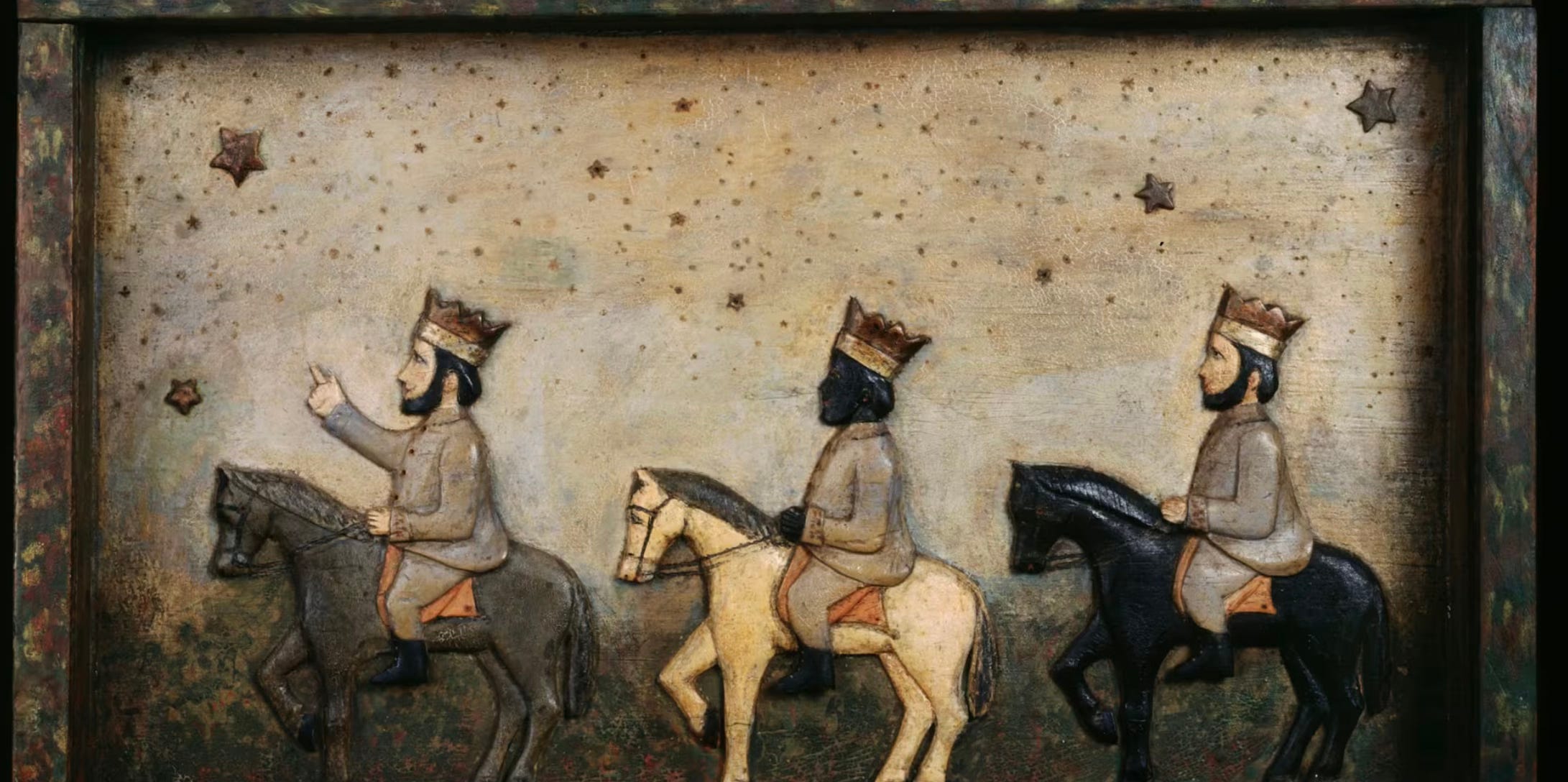
Epiphany is derived from the Greek word “epiphaneia,” meaning “manifestation.” Before Christmas was its own holiday, the early Christian church established the Feast of the Epiphany on January 6 to commemorate several miraculous events that “manifested” Jesus’ divinity: his virgin birth, the visitation of the Three Wise Men (also called the Three Kings or the Magi), his baptism, and when he turned water into wine at the Wedding of Cana.
By the early fourth century, the church set aside December 25 for the celebration of Jesus’ birth, known as Nativity, and kept Epiphany on January 6.
Epiphany has marked the end of the 12 days of Christmas for centuries. In the Middle Ages, the Christmas holiday was celebrated with feasting and singing every night from Christmas Day through Epiphany. Using some creative math—December 25 was the first night and December 26 the first day—the period of time totaled 12 straight days of merriment.
The final night on January 5 is called Twelfth Night. In the Tudor era, the English commonly held lavish parities on Epiphany Eve that grew to include plays. William Shakespeare named one of his plays after the event, and “Twelfth Night” is believed to have been performed for the first time on Epiphany in 1601.
Although Epiphany marks the end of the Christmas season, it is also a beginning. For many cities around the globe, including New Orleans, the holiday starts the season of Carnival in the lead up to Mardi Gras.

Feasts and home blessings are common Epiphany customs. Some cultures “chalk the door” on Twelfth Night as a way to sanctify houses and publicly declare their Christian faith. The chalk symbols include the year and the letters C, M and B for the traditional names of the biblical Magi (Caspar, Melchior and Balthazar) but also for “Christus mansionem benedicat,” a Latin phrase meaning “May Christ bless this house.”
In Spain, Mexico, and most of Latin America, Epiphany is better known as “Día de Los Reyes “ or “Three Kings Day,” and festivities often include parades. The night before the holiday, children leave out shoes in expectation of gifts from “Los Reyes Magos” or the Three Wise Man: Balthazar, Melchior and Gaspar. In Puerto Rico, children fill small boxes with grass or hay for the wise men’s camels and horses. In many Spanish-speaking countries, children receive presents on this day instead of or in addition to Christmas.
The traditional food of Three Kings Day is “Rosca de Reyes,” a sugar-dusted king cake studded with dried fruit and containing a small plastic baby figurine symbolizing the newborn Jesus. In Mexico, the person who finds the plastic Jesus in their cake slice must host a tamale party on Candlemas (February 2).
In Ireland, Epiphany is also known as “Women’s Christmas” or “Little Christmas.” Traditionally, it was a day for women to rest after the long, busy holiday season and for the men to take over household duties. That included taking down Christmas decorations, as doing so before Epiphany is considered bad luck. This widespread belief has led to many people across the globe keeping their Christmas trees up until January 6.
The United Kingdom has a long history of “wassailing” on Twelfth Night. Brits sing songs door-to-door in between swigs of hot mulled cider. In some areas, people go caroling through fruit orchards to bless the trees. They also enjoy slices of Twelfth Night Cake, which traditionally has a single bean or pea hidden inside.
In Greece, which follows the Eastern Orthodox tradition linking Epiphany with Jesus’ baptism, priests bless the waters within churches and out in nature. Some Greek towns hold contests to see which swimmer is the first to retrieve a cross thrown into the sea (or other body of water) by a priest.

Swimmers vied to retrieve a wooden cross during an Epiphany ceremony in Greece’s northern seaport of Thessaloniki on January 6, 2012.
Baptisms historically occurred on Epiphany. In a nod to that custom, it’s an Epiphany tradition in Russia to submerge yourself in an icy lake or other body of water three times to symbolize the Holy Trinity.
Italy has its own colorful Epiphany traditions. On Twelfth Night, an old woman named La Befana is said to fly on a broom from house to house to deliver candy for good children or coal for bad children. According to tradition, La Befana gave shelter to the Three Kings on their journey. La Befana might have evolved from myths associated with the ancient celebrations of the winter solstice, in which magical women on broomsticks would fly over the fields to bless the harvest.

In the United States, a secular holiday tradition has grown up around Twelfth Night, with parties being held to celebrate the end of the season, often tied loosely to Shakespeare’s Twelfth Night. Parties often include abundant food & drink (like wassail), often with “cakes and ale,” as mentioned by Shakespeare, as well as theatrical merriment, including quote contests, and music. Because of course, “If music be the food of love, play on.”
However you choose to celebrate, we recommend today’s Drink Of The Day be part of it, the Twelfth Night Cocktail !
Ingredients
Here’s what you’re going to need for this drink:
