
DOTD For Tuesday, May 26, 2026
Today's Drink Of The Day Really Bites - Or Does It Suck?
Today’s DOTD - Drink Of The Day - is a Dracula’s Bite Cocktail, inspired by World Dracula Day.
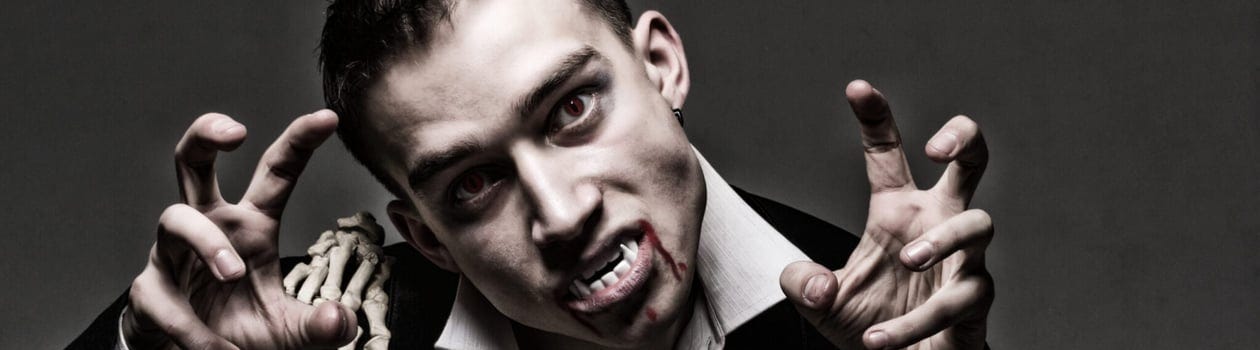
Why Celebrate World Dracula Day
Of all of the monsters known to humanity, one of the of the most iconic is clearly Count Dracula?
The quintessential vampire, Dracula has inspired tens of films and thousands stories the world over, not to mention the virtual immortality of a character as beloved - or feared - enough to become it’s own genre. So to celebrate Dracula, and vampires in general, in all their many forms actually kinda makes sense.
History of World Dracula Day
World Dracula Day is celebrated every year on May 26. The holiday was created in 2012 by the Whitby Dracula Society, a literary fan group, and was created to commemorate the publication date of Bram Stoker’s famous novel “Dracula,” published on May 26, 1897.
The relation of Whitby, England to Stoker’s Dracula story is simple - it’s in the book.
In Stoker’s Gothic novel, Count Dracula arrives in England by crashing his doomed, unmanned ship, the Demeter, directly into Tate Hill Beach, in Whitby, in the dead of night. He then transforms into a large black dog, and bounds up the town’s famous 199 steps towards the dramatic abbey ruins, that look like a haunted burned out ancient castle.
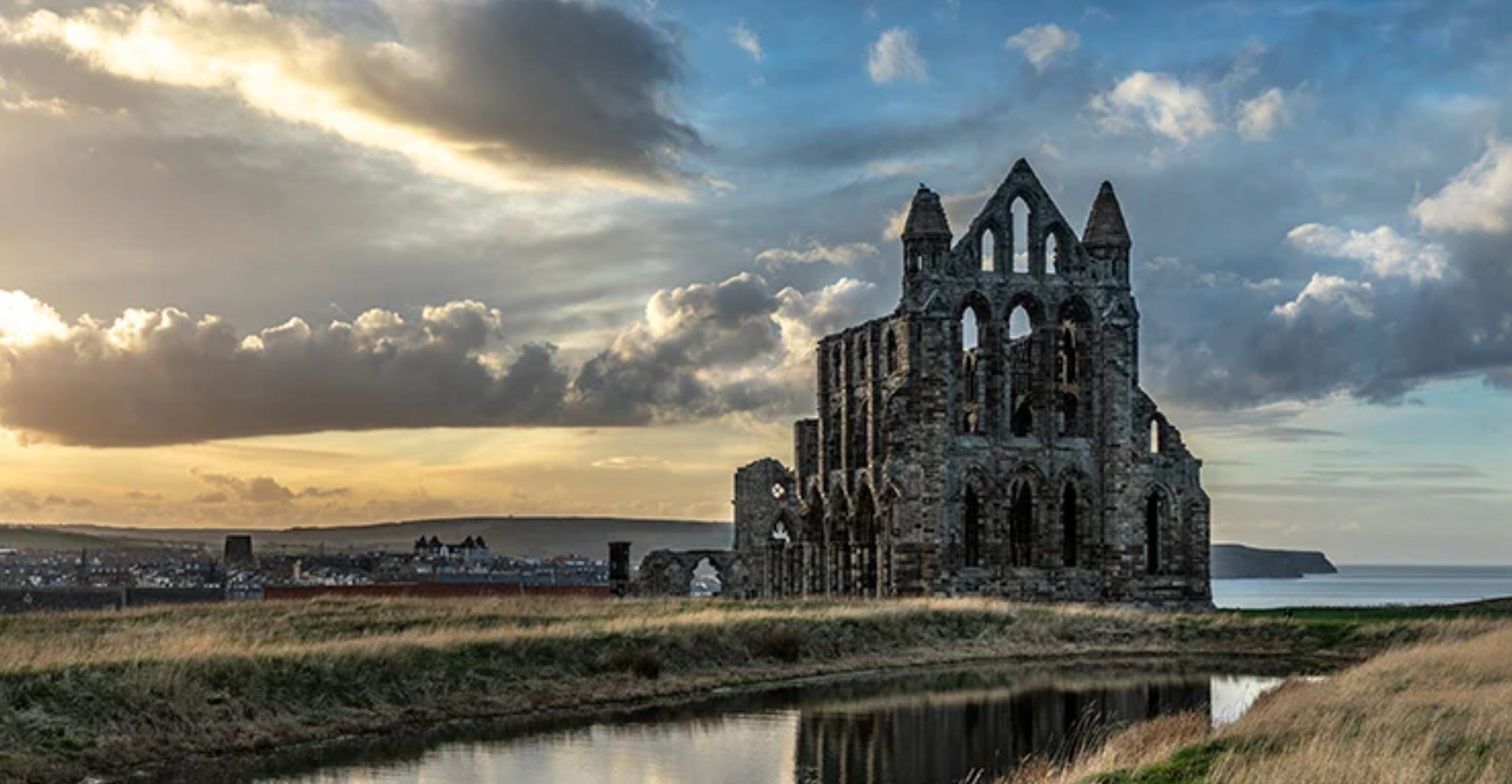
Stoker vacationed in Whitby in 1890, while he was writing Dracula, and the abbey ruins, stormy North Sea, and dark folklore stories of the townspeople provided the perfect atmosphere for that part of his masterpiece.
World Dracula Day Timeline
1475 CE - First Written Use of the Name “Dracula”
The first written use of the name “Dracula” was found in a series of medieval records from Wallachia - a historical and geographical region, and former nation, located in southern Romania, situated between the Southern Carpathian Mountains to the north and the Danube River to the south.
The records stated that Prince Vlad II, who became the ruler of Wallachia in 1436, had joined the chivalric Order of the Dragon, a militant fraternity founded by Sigismund of Luxemburg, King of the Holy Roman Empire & of Hungary. The Order of the Dragon was dedicated to halting the advance of the Ottoman Empire from what is now Türkiye into Europe.
Upon entry into the militant fraternity that was Order of the Dragon, Vlad II took the surname of “Dracul,” which meant “son of the dragon.” His son, Vlad III added an “a” to the end of “Dracul” which at the time meant “son of” and hence gave us the name “Dracula” - which admittedly sounds much more sinister than “son of son of the dragon.”
1819 - “The Vampyre” Creates the First Popular Literary Vampire
John Polidori’s tale The Vampyre, published in New Monthly Magazine, introduces Lord Ruthven, a suave aristocratic bloodsucker character. The story becomes a literary sensation that helps shape the vampire archetype.
1872 - “Carmilla” Establishes Gothic Female Vampirism
Sheridan Le Fanu’s novella Carmilla, serialized in The Dark Blue, a London-based literary magazine, presents a seductive female vampire in a Central European setting, influencing later Gothic vampire fiction and anticipating themes later echoed in Dracula.
1897 - Publication of Bram Stoker’s “Dracula”
Bram Stoker’s Gothic novel “Dracula” is published in London, blending Transylvanian folklore, modern technology, and Victorian anxieties to create the definitive vampire, and a cornerstone of horror literature.
1922 - “Nosferatu” Brings the Vampire, & The Sunlight Myth, to Silent Cinema
W. Murnau’s German Expressionist film “Nosferatu” adapts Stoker’s story without authorization, introducing Count Orlok and popularizing the idea that sunlight can destroy vampires, a concept not found in the original novel.
1931 - Bela Lugosi’s “Dracula” Defines the Count on the Big Screen
Universal Pictures releases “Dracula,” starring Bela Lugosi, whose accent, cape, and hypnotic stare fix the visual image of the count for generations and help establish Universal’s cycle of classic horror monsters.
1958 - Christopher Lee Revives Dracula for a New Era
Hammer Film Productions’ “Dracula,” released in the United Kingdom and retitled “Horror of Dracula” in the United States, features Christopher Lee’s more overtly sensual and violent count, reigniting interest in Gothic horror worldwide.
1992 - Coppola Brings Dracula Into The Modern Era
Francis Ford Coppola took Stoker’s original work, and a few liberties, and added them to an all-star cast including Gary Oldman, Winona Ryder, Anthony Hopkins, Keanu Reeves, Cary Elwes, Richard Grant, and Monica Bellucci. In doing so, he brought the character of Dracula into the modern age, and helping to create a classic film
The History Of The Dracula Legend
While Bram Stoker’s definitive story of Dracula may only be about 130 years old, the concept of vampirism dates back thousands of years.
The ancient Greeks, Hebrews, Egyptians, and Babylonians all had legends telling hair-raising tales of demon-like undead creatures that lived off of the blood of the living. However, the most iconic vampire of all time, Bram Stoker’s Dracula, was based on a real historical figure.
Prince Vlad III of Wallachia was the real-life inspiration behind Stoker’s gothic horror novel. Wallachia and Transylvania are neighboring historical regions separated by the Carpathian Mountains. Throughout history, they shared deep cultural, ethnic, and economic ties, functioning as sister principalities that frequently allied against neighboring empires, before officially uniting to form modern Romania in 1918.
An extremely cruel and merciless ruler, Vlad earned the nickname “Vlad the Impaler” for the many ways he tortured his opponents as well as people who betrayed him when they were captured.
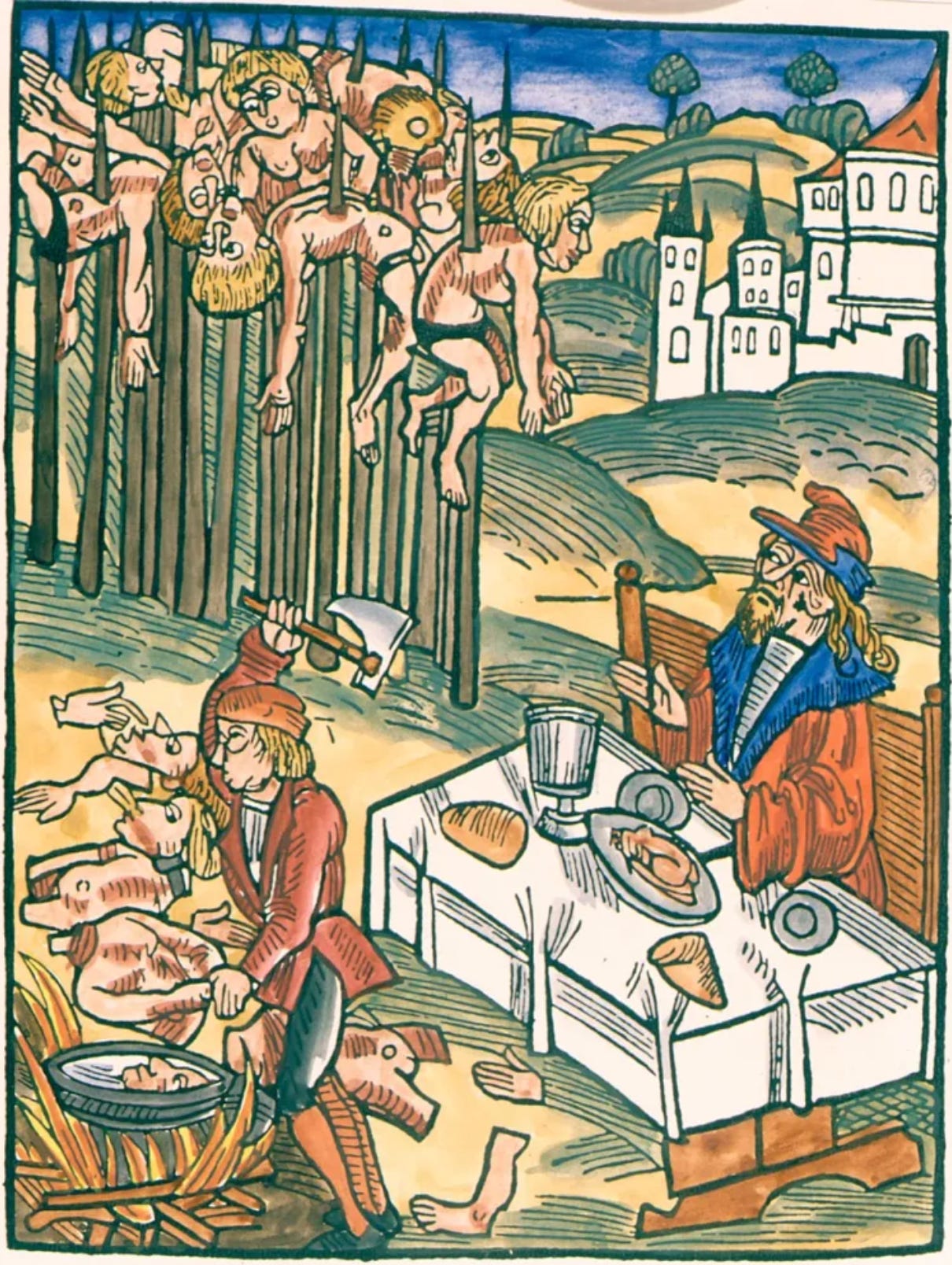
As can be guessed from his nickname, impaling was his favorite method of execution. It’s believed that he killed up to 100,000 people during his reign, and was infamous for the “forests” of impaled victims he left behind when he won a battle.
The connection of the cruelty and barbarity of this historical figure with vampirism was made by Bram Stoker around the 1890’s, and has become a permanent element of vampire lore since then.
FAQs About Dracula & Vampires
Is There Any Real Basis For Vampire Folklore?
Yes. Vampire folklore grew from very real burial fears. Across Eastern Europe, from the 17th to 19th centuries, villagers sometimes used shocking “anti‑vampire” measures on suspected corpses, such as burying bodies face down, staking them, or placing sickles over their necks so they would be decapitated if they tried to rise.
Archaeological finds in Poland, Bulgaria, and elsewhere suggest these practices were responses to misunderstood decomposition processes, like bloating and blood seepage, which people interpreted as signs that the dead were still feeding on the living.
Is Bram Stoker’s “Dracula” A Story That Pits The Past Against The Future?
Somewhat. Bram Stoker’s “Dracula” was written in a way that described technology that was then coming into vogue, and placed it in conflict with the idea of an ancient horror, coming to take vengeance on the modern age.
When Stoker published “Dracula” in 1897, he framed the novel as a collage of diaries, letters, telegrams, typewritten notes, phonograph recordings, and newspaper clippings.
This “documentary” structure let him weave cutting‑edge technologies of the time, such as typewriters, telegraphs, shorthand, trains, and even blood transfusions, into the story, turning the hunt for a medieval monster into a clash between Victorian modernity and ancient superstition.
Did Vlad the Impaler’s Reputation Mix Terror With Statecraft?
Yes. The historical figure often linked with Dracula, Vlad III of Wallachia, cultivated a deliberate image of horror as a political tool.
Contemporary and near‑contemporary chronicles of his actions describe literal “forests” of impaled enemies that greeted invading Ottoman forces. Some more favorable Romanian sources also portray him as a harsh ruler who stabilized a lawless region and resisted Ottoman invasion, illustrating how his legend blends propaganda, fear, and regional heroism.
Did The Movie “Nosferatu” Accidentally Invent A Core Vampire Trait?
Yes. The 1922 silent film “Nosferatu,” an unauthorized adaptation of “Dracula,” introduced the idea that sunlight destroys vampires. In Stoker’s novel, Dracula moves about in daylight, and though he is weakened by the sun, he isn’t destroyed.
Because the film’s makers sought to differentiate their version and heighten the horror, they made sunrise lethal to the creature, and this visual became so iconic that it reshaped popular vampire lore across later books, films, and television.
Did Dracula Help Define The Idea of “Eastern Europe” As A Backwards Place?
Literary scholars agree that “Dracula” played a role in cementing Western views of the Carpathian region as a mysterious, half‑medieval frontier.
Stoker drew on travelogues and folklore to depict Transylvania as both geographically remote and temporally “behind” industrial Britain, reinforcing cultural stereotypes about Eastern Europe as a space of superstition and danger set against the rational, modern West.
Is Vlad Dracula The Only Historical Figure Tied To Vampires?
No. There are several but two stand out, for clear reasons.
The first: Countess Elizabeth Báthory, also known as “The Blood Countess” was one of history’s most prolific female serial killers. This 16th-century Hungarian noblewoman was infamous for her alleged vampiric rituals. According to legend, she tortured and murdered hundreds of young women, bathing in or drinking their blood to preserve her youth and beauty, a trait that has since become another facet of many vampire stories. Countess Elizabeth Báthory is often referred to as the “Countess Dracula.”Mercy Brown may also be one of the most famous “folk vampire” cases in history. Ms. Brown, a young woman from Rhode Island, died from tuberculosis (then called “consumption”) in 1892. Many of her family members also died of tuberculosis, which makes sense since tuberculosis is a contagious, airborne bacterial infection. It was common at that time to blame several deaths in one family on the “undead.” The bodies of each dead family member were often exhumed and searched for signs of vampirism.
When Mercy’s body was exhumed and didn’t display severe decay (not surprising, since her body was placed in an above-ground vault during a harsh New England winter), the townspeople accused her of being a vampire and making her family sick from her icy grave. They cut out her heart, burned it, then fed the ashes to her sick brother. Perhaps not surprisingly, he died shortly thereafter. Still, the idea of cutting out the heart of a vampire and burning it to end their reign of terror is now also woven into many vampire stories.
Ways To Celebrate World Dracula Day
Host a Goth party - like we just talked about last Friday - or watch any of the great adaptations of Bram Stoker’s absolutely iconic piece of Gothic literature, including the 1992 classic “Bram Stoker’s Dracula” which is one of Jody’s favorites.
Ideas for creating the perfect atmosphere include giving your party a Gothic feel by making sure all of your decorations are either black or blood red, the table setting is rather sophisticated, everyone is dressed elegantly and wears fangs, hanging up plenty of bat and spider web decorations, and serving plenty of blood red drinks.
It would also be perfect to watch one or more of the classic vampire movies to have been made, such as the 1958 British classic “Dracula” (Also known as “Horror Of Dracula”) and starring the incredibly impressive Christopher Lee as the aristocratic titular character. Other movie choices include “Nosferatu”, a 1922 German expressionist horror film; “The Lost Boys” a 1987 cult classic that’s now become a Tony Award-nominated hit musical; or “Interview with the Vampire” starring Tom Cruise, Brad Pitt, and a young Kirsten Dunst.
Of course, reading a good book is always a good idea, and in the era social media’s 140-character blurbs of text, it’s even more important to keep literature alive.
If you’ve already read Stoker’s classic, consider tackling Anne Rice’s Vampire Chronicles, a series of 11 critically acclaimed books that follow influential vampires all throughout history. You might also try Stephen King’s Salem’s Lot, or if you’re into young adult fiction, the Twilight series by Stephenie Meyer may be more your speed. As you can see, there are no shortage of ways to celebrate the vampires of the world this World Dracula Day!
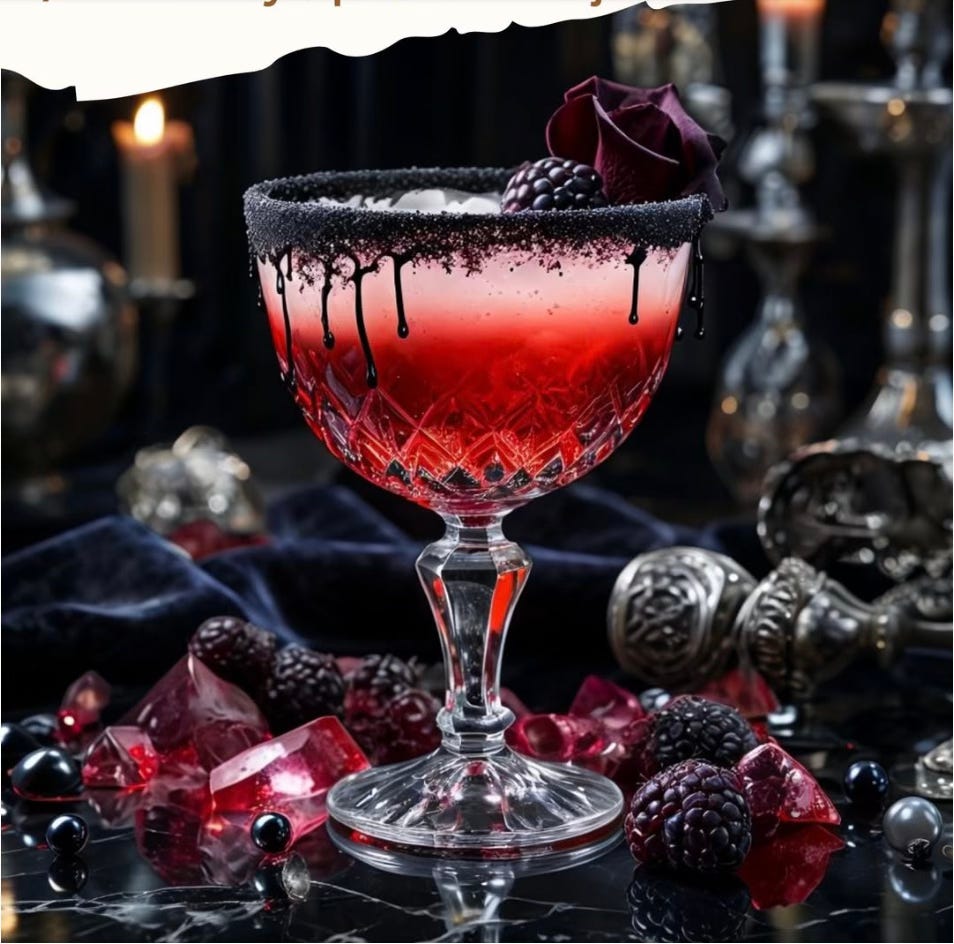
And of course, we recommend tipping your cup with today’s Drink Of The Day, a Dracula’s Bite Cocktail, on this World Dracula Day.
Ingredients
Here’s what you’re going to need for this drink:
