
DOTD For Wednesday, April 1, 2026
We Pity The Fool Who Doesn't Know What Today Is…
Today’s DOTD - Drink Of The Day - is an Apple Fool cocktail inspired by Alternate St. Patrick’s Day –– No, of course, it’s inspired by April Fools’ Day!
Where do we in “The West” (mostly meaning Europe, the Western Hemisphere, & Australia) get the strange custom of playing pranks on April 1? The short answer is that nobody knows for sure - and that’s an answer that comes from experts in history and folklore. All we know about the holiday for certain is that the custom was known in Renaissance Europe, and probably has roots older than that.
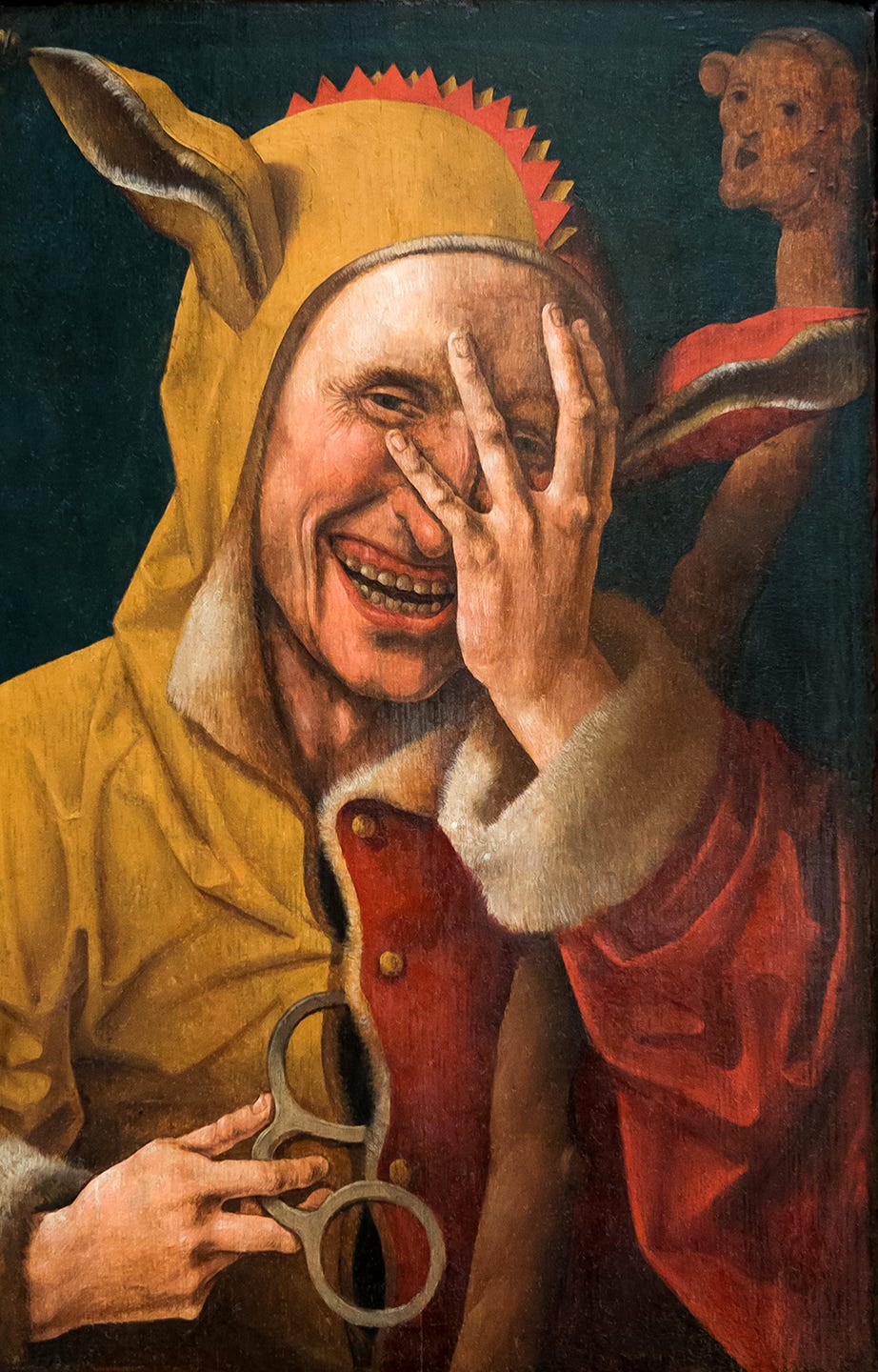
Some experts believe the idea of April Fools’ Day goes back to classical Roman times, when a joyful festival called Hilaria - probably originally an equinox celebration - came to be celebrated on March 25. In Roman terms, March 25 was called “the eighth of the Calends of April,” which associates the festival strongly with April. However, clear references to a tradition of fooling in April don’t begin until the late Middle Ages.
Another common theory placing the origin of April Fools’ Day in the Roman Empire dates it to the reign of Emperor Constantine. According to this story, a group of fools or jesters convinced Constantine to make one of them “king for a day.” Constantine obliged, and one of the jesters, named “Kugel,” was appointed to the position. He decreed that it would be a day of jollity, and thus created what came to be called April Fools’ Day.
The only problem with that story is that it’s a hoax. As this news story reveals, it was itself an April Fools’ Day prank, pulled by Boston University professor Joseph Boskin on Associated Press reporter Fred Bayles in 1983. Bayles reported the story, and the AP ran it, only to retract it some days later. This is a good object lesson: don’t take as fact everything you read about April Fools’ Day!
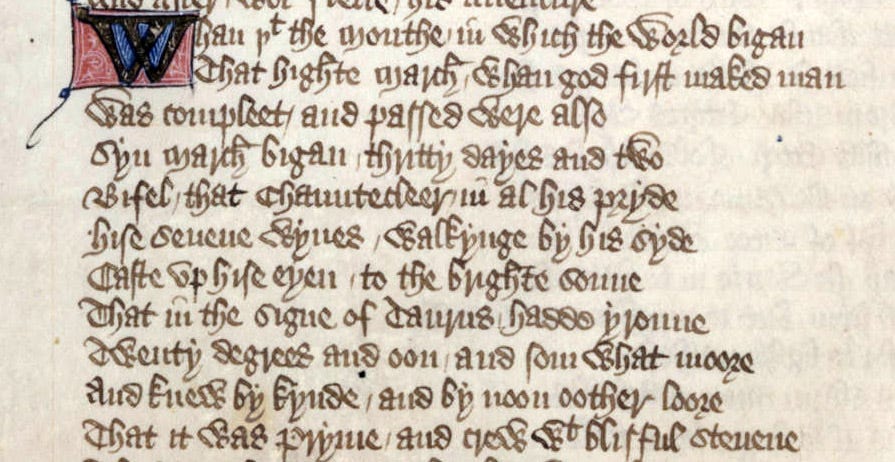
Chaucer’s “Nun’s Priest’s Tale” (circa 1390) shows the rooster Chaunticleer being fooled by a fox. This occurs “thirty-two days since March began” - which would be April 1. This historical note suggests April Fools Day may have been celebrated in England before many other parts of Europe. However, some scholars think the word “began” is a scribal error, and that the true wording was “thirty-two days syn March was gon” - which would beMay 3.
In France, “poisson d’avril,” or “April fish,” is the name for a person duped on April Fools’ Day. The first reference to “poisson d’avril” is from a 1508 poem by Eloy D’Amerval called Le Livre de la Deablerie, or The Book of Deviltry (available online here from the French national library’s Gallica site.) However, from the context, we can’t be sure if the author was referring to April 1 or to fools in general. The idea of the “April fish” seems to be the fact that fish were plentiful and hungry in the spring, and thus easy to catch—an “April fish” was more gullible than a fish at other times of the year. That said, a minor reference to an “April fish” doesn’t prove there was a holiday on April 1.
The first certain reference to April Fools’ Day comes from a 1561 Flemish poem by Eduard De Dene, which you can read here. (But only if your Renaissance Flemish is good!) In the poem, a nobleman sends his servant on crazy, fruitless errands. The servant recognizes that he is being sent on “fool’s errands” because it’s April 1.

Eduard de Dene’s trick, in which someone is assigned an errand to find a nonexistent object or person, is still a popular April Fools’ joke over 450 years later. A 1902 article in the Akron Daily Democrat newspaper [top of column 2] explains:
One of the most popular amusements on April 1…is the sending of persons on fruitless errands. Unsophisticated persons are sent to the bookstores for a copy of the “History of Eve’s Grandmother,” or to the chemist’s shop for “pigeon’s milk,” while small boys are sometimes sent to the harness shop for strap oil, when a liberal dose of this treatment is usually administered to the boy.
If nothing else, the longevity of this joke is a testament to the enduring power of even the most foolish folk traditions!

In 1686, antiquarian John Aubrey (1626-1697) first mentions April Fools’ Day in English in his book Remaines of Gentilisme and Judaisme, as “Fooles Holy Day,” explaining: “We observe it on the first of April. And so it is kept in Germany everywhere.”
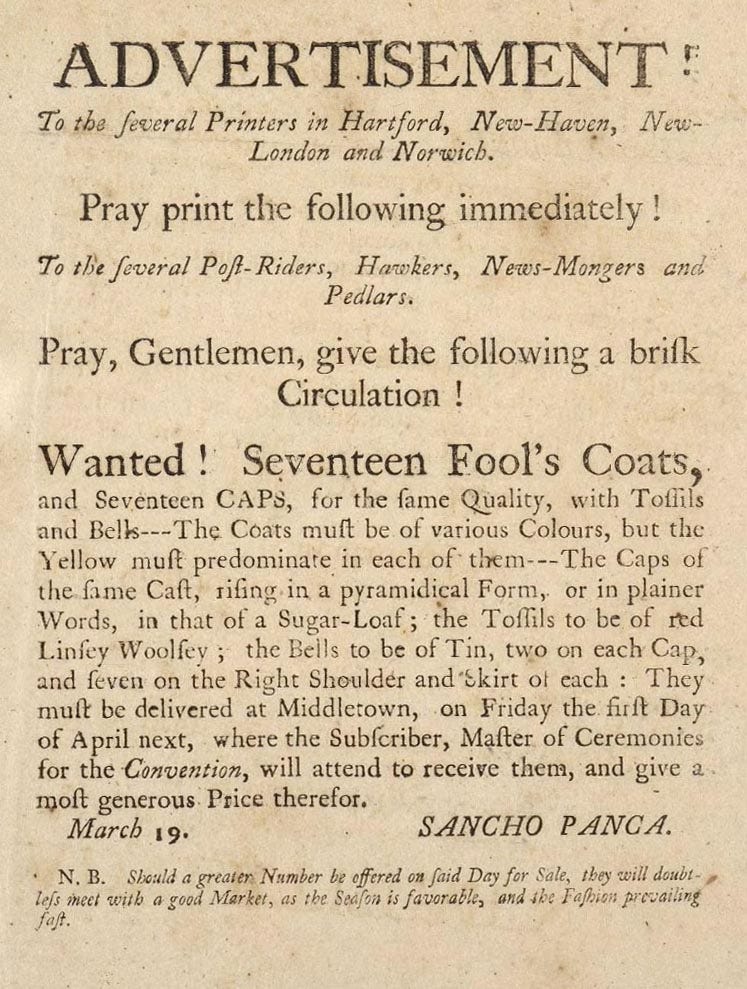
A 1796 handbill requesting the delivery of 17 fool’s coats and caps to Middletown, Connecticut, on April 1 shows that April Fools’ Day came to America by the 18th century, and it was widespread and popular soon after.
By the nineteenth century the holiday was so popular, references to it were frequent in newspapers and magazines like this Puck magazine from April 3, 1895
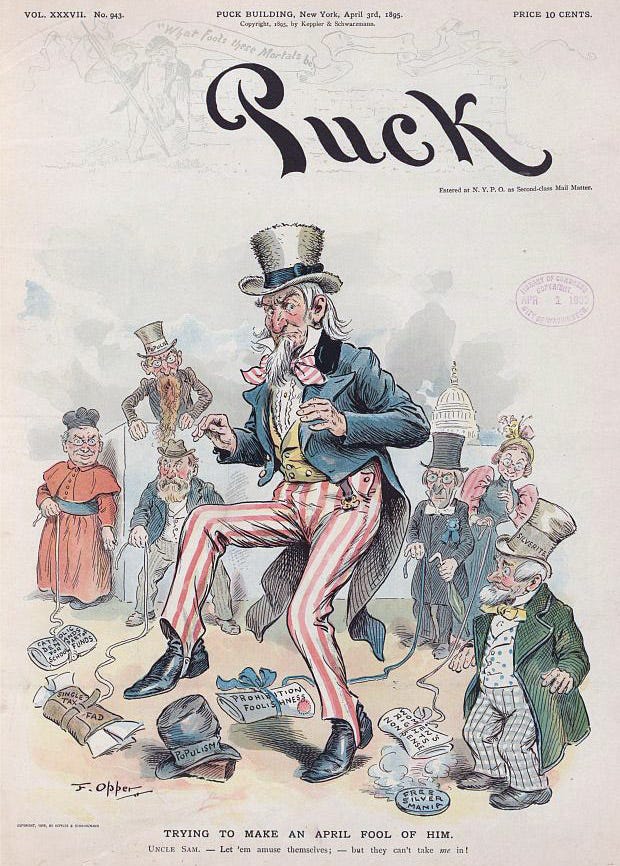
The cover of Puck Magazine, dated April 3, 1895, titled “Trying to Make an April Fool of Him,” shows Uncle Sam dancing through a minefield of political issues on Capitol Hill in the form of common April Fools’ pranks. One of those pranks is the hat with a brick in it; the idea was that someone would succumb to the urge to kick the hat and thus stub his toe on the brick.
Another side to the April Fools’ holiday, especially in the United States, is that schoolchildren love to pull pranks on their teachers. One common April Fool’s prank in the late 19th century was to lock the teacher out of the school altogether. Dr. Samuel Lathan, born in 1842 in rural South Carolina, noted in a 1938 interview conducted by the WPA, a story about just that prank from his own school days:
April the 1st was dreaded by most rural school teachers. The pupils would get inside and lock the teacher out. The teacher, who didn’t act on the principle that discretion is the better part of valor, generally got the worst of it. Mr. Douglass soon learned this, and, on April Fools’ Day, he would walk to the school, perceive the situation, laughingly announce there would be no school until the morrow, and leave.
A 1968 interview with an African American student in Washington, D.C. - part of the American Folklife Center’s Center for Applied Linguistics collection - shows that the tradition of fooling the teacher lasted over a century. “I believe it was April Fools’ Day,” says the student. “[He] put tacks on a piece of tape and the teacher sat on them. She said she was going to fail everybody in class. But, I think, she found out who did it, you know. He was put out of school.”
April Fools’ Day continues to be somewhat popular today, even in our modern 21st Century world, and these days pranks often involve food.
For example, buy a package of Oreo-like sandwich cookies, & carefully take 1/3 of them out of the package. Carefully remove one of the pair in the cookie sandwich, and scrape out the frosting in the center of the cookie. Then replace the frosting with white toothpaste, put the cookie sandwich back together, and put the cookies back in the package - but take two good ones for yourself. When you bring the package to your workplace, stick around for the reactions!

Or take an empty mayonnaise jar and fill it with vanilla pudding the same color as the mayo that was originally in the jar. Then feel free to eat it liberally in front of your co-workers - though be prepared for some of them to freak out.
Whatever tricks or pranks you pull, our advice is to be careful, both online and in the real world. Remember - April Fool’s Day pranks are supposed to be fun for BOTH the prankster and the one getting pranked. And they’re not supposed to be serious - so don’t try to make anyone think you’re pregnant, or that someone famous has died.
In fact, you may just want to celebrate by skipping the pranks, and instead making today’s Drink Of The Day for yourself and your friends. So here’s how to make an Apple Fool cocktail!
Ingredients
Here’s what you’re going to need for this drink:
