
Today’s DOTD - Drink Of The Day - is an Army Martini inspired by the anniversary of the WWI Christmas Truce, on this Christmas Eve.
The Christmas Truce of 1914 has become one of the most famous and mythologized events of World War I. The truth behind it, as we know it, is a bit melancholy, but worth hearing on this important holiday.
In the lead up to Christmas that year, Pope Benedict XV, who had taken office just a few months prior in September 1914, had called for a Christmas truce. But the war had only begun in July 1914, and the idea of a truce was officially rejected by the leaders of governments on all sides.
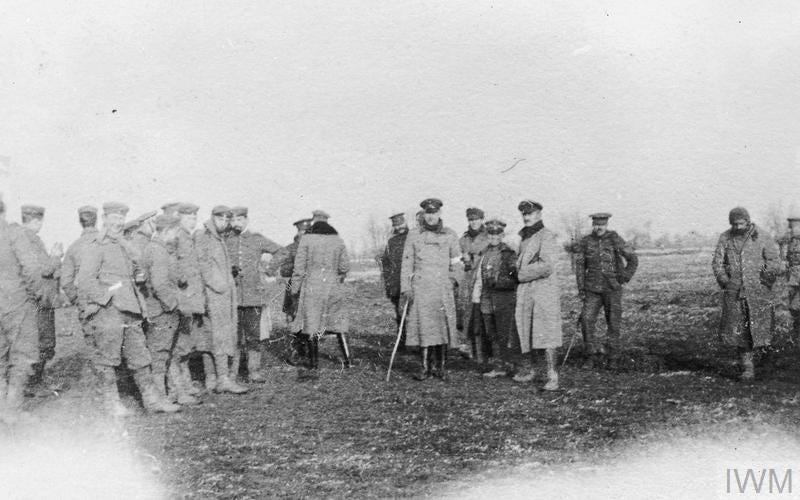
However, leaders of governments aren’t the ones who fight in the trenches - literally in WWI, where trench warfare was the primary fighting method. And in the trenches, soldiers from many nations seemingly decided to heed the Pope’s words.
To this day, historians disagree about how the idea spread, or who was responsible. Nevertheless, some two-thirds of troops — about 100,000 people — are believed to have participated in the legendary truce, a series of widespread unofficial ceasefires mainly along the Western Front.
Most historians agree, the truce began on Christmas Eve, as troops began by singing carols in their trenches. Germans also began putting candles on the top ledges of their trenches, and on trees surrounding the areas they held. As the trenches were often far closer than we realize today - sometimes as close as 100 feet - soldiers in opposing armies could heard each other easily. As they heard the singing, they began responding with their own carols, and in some cases, eventually joining in the same carols together, a moment legendarily captured in song by country artist Garth Brooks, in the song “Belleau Wood.”
The next morning, on Christmas, in many places along the Western Front, German soldiers emerged from their trenches calling out “Merry Christmas” to Allied soldiers in English. Allied soldiers came out warily to greet them. In other places, Germans held up signs reading “You no shoot, we no shoot.” Over the course of the day, troops exchanged gifts of cigarettes, food, buttons and hats. The Christmas truce also allowed both sides to finally bury their dead comrades, whose bodies had lain for weeks on “no man’s land,” the ground between opposing trenches.
The phenomenon took different forms across the Western front. One account mentions a British soldier having his hair cut by his pre-war German barber; another talks of a pig-roast. Several mention impromptu kick-abouts with makeshift soccer balls were reported, although contrary to popular legend, it seems unlikely that there were any organized matches. The truce lasted a day, and in some places two days. After Boxing Day, meetings in no man’s land petered out.

The truce was not observed everywhere along the Western Front. In some places, the fighting continued and casualties did occur on Christmas Day. Some officers were unhappy at the truce and worried that it would undermine the troop’s fighting spirit.
After 1914, political and military leaders of multiple nations tried to prevent any truces on a similar scale happening again. Despite this, there were some isolated incidents of soldiers holding brief truces later in the war, and not only at Christmas.
In what was known as the ‘Live and Let Live’ system, in quiet sectors of the front line, brief pauses in the hostilities were sometimes tacitly agreed, allowing both sides to repair their trenches or gather their dead.
The photographs, letters and interviews in the collection of London’s Imperial War Museum (IWM) tell the story of the Christmas Truce in even greater detail. In this video, Head of Documents and Sound Anthony Richards explains how the truce came about, its impact on the course of the First World War and why it never happened again after 1914.
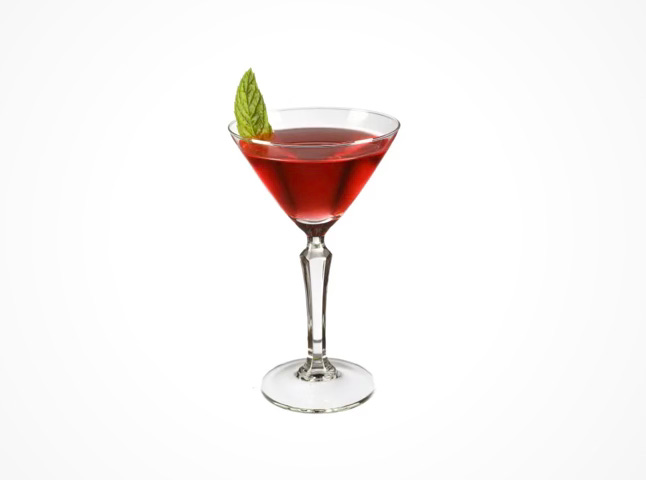
In light of the truce, and the idea that peace is possible, even in the midst of the worst times, we raise a glass this evening with our Drink Of The Day, the Army Martini.
Ingredients
Here’s what you’re going to need for this drink:
