
Today’s DOTD - Drink Of The Day - is a Brain Hemorrhage Shot inspired by World Brain Day! World Brain Day unites people globally every July 22 to spotlight the importance of brain health. This annual observance, championed by the World Federation of Neurology, aims to raise awareness about neurological diseases and promote prevention strategies. Join the movement by educating yourself, supporting research, and advocating for better brain care. (Better brain care, means you don’t get an ACTUAL brain hemorrhage.)
History of World Brain Day
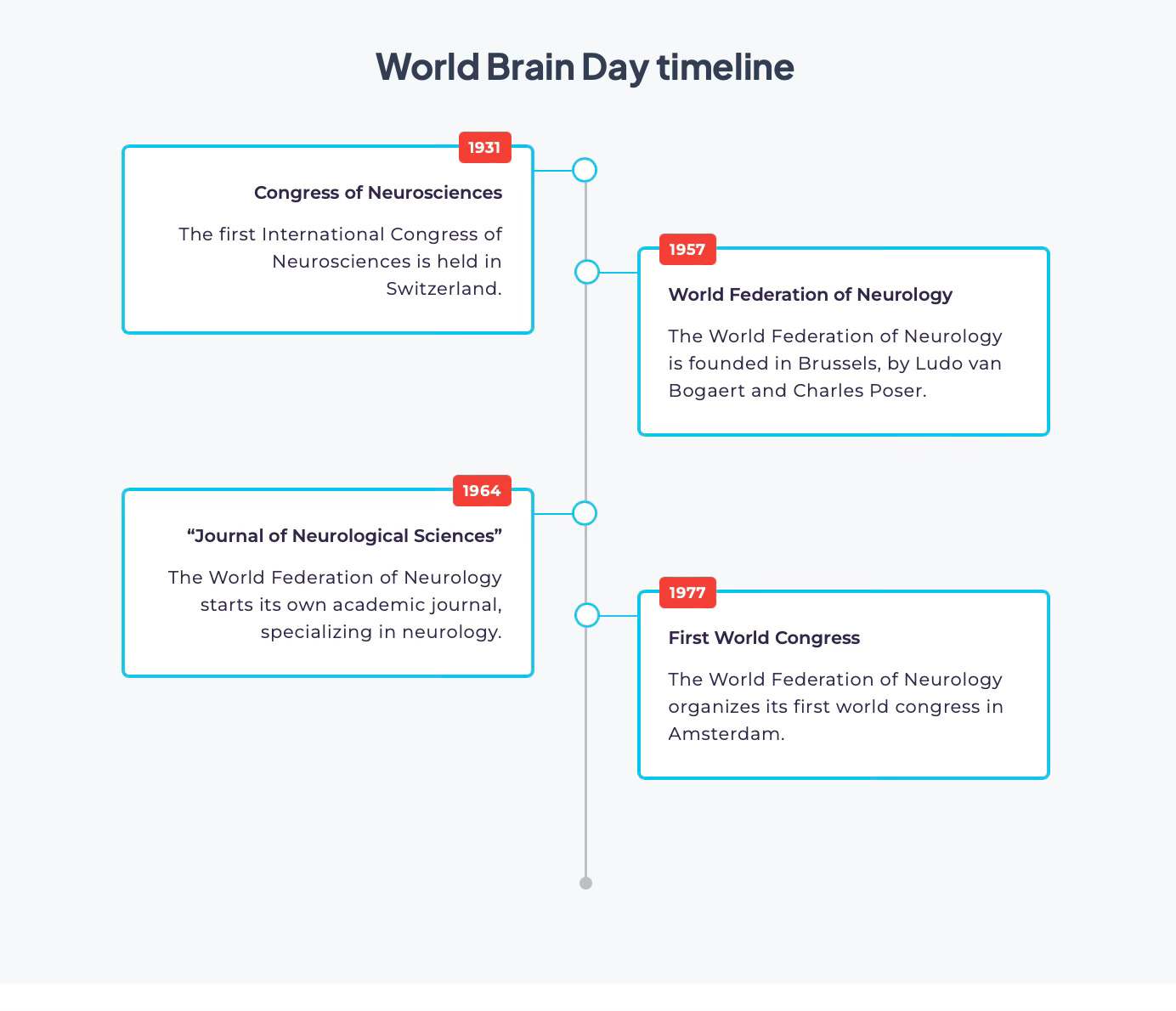
The World Federation of Neurology was the first to establish World Brain Day as a worldwide commemoration day in 2014, to coincide with the anniversary of their founding in 1957. The holiday’s date, July 22, honors not only the World Federation of Neurology’s foundation in 1957 but also the crafting of the organization’s first constitution. The World Federation of Neurology established World Brain Day to address the rising global burden of neurological diseases, which are currently recognized as the leading cause of disability worldwide.
Every year, the campaign highlights a specific theme to drive international collaboration among healthcare professionals, policymakers, and the public to reduce stigma, improve access to care, and promote early intervention. This year, the theme is “Brain Health: Access for All,” to highlight the urgent need to reduce global disparities in neurological care, and bring critical brain health services and resources to under-served communities everywhere around the world.
Today, the World Federation of Neurology is one of the strongest professional associations in the world, with an ever-increasing outreach. It includes more than 100 member organizations, as well as several specialized groups within the organization. It has effectively fostered training, education, and neurology research, and it is one of the most important aspects of making neurology more accessible to the general public. The group has taken on numerous initiatives to raise awareness of brain health, including the establishment of this annual international day of awareness.
World Brain Day FAQs
How many people are affected by neurological disorders?
Globally, neurological disorders affect an estimated one billion people, encompassing conditions like Alzheimer’s, Parkinson’s, stroke, epilepsy, and migraine. These conditions are a leading cause of disability and mortality worldwide.
What is brain health?
Brain health refers to the ability to perform all mental processes of cognition, including learning, memory, judgment, and emotional regulation. It encompasses not just the absence of disease but also the optimization of brain function throughout life.
How to Observe World Brain Day
Get A Brain Check-up
Visit any clinic or, better yet, a neurologist’s practice with a neurology specialist. Patients who are prepared to go above and beyond to help prevent problems from occurring are always welcomed by neurologists.
Read About Neurology
Understanding basic brain health and safety could be lifesaving information someday. Most hospitals and clinics will gladly give you some brochures and reading guides. These can prove helpful and give you information to point you to other resources so that you can keep learning.
Appreciate Neurology
Reading about neurology and the history of neurosciences may be both enjoyable and educational, as well as providing you with a deeper understanding of the field. Learning about it could also potentially help you identify your own neurological disorders, so that you can handle them better.
Do Something Good For Your Brain
Humor is highly beneficial for brain health. It triggers the release of feel-good chemicals like dopamine and endorphins, while lowering the stress hormone cortisol. Processing jokes also acts as a mental workout that enhances cognitive flexibility, encourages emotional resilience, and improves blood flow to the brain. So enjoy a brain-related clip from the 1974 classic “Young Frankenstein!”
Five Intriguing Facts About The Brain
Four Inputs Do Most Of The Work
The human brain contains roughly 86 billion neurons. More than half of these - about 50 to 60 billion - are a specific type of neuron called granule cells. While many complex neurons in the brain, like pyramidal cells in the cortex, receive thousands of incoming signals, granule cells are highly streamlined. They feature only four short dendrites - effectively, antennas - through which all the signals in our brains travel. Despite their simplicity—having only four dendrites apiece—these granule cells play a massive role in motor control, balance, and fine-tuning movement. Because there are tens of billions of them acting as a massive processing filter, they allow the brain to process highly complex sensory and motor information with extreme precision..
Neurons Can Repair Themselves
Historically, scientists did not think damaged neurons could grow back. For decades, the established dogma was that the adult central nervous system had no capacity for regeneration.
However, modern neuroscience has entirely overturned this idea. Biologists now understand that damaged central nervous system (CNS) cells can be stimulated to regrow under the right conditions.
Born This Way
According to many studies, the neurons that a person is born with are most likely the same ones they will keep throughout their lives.
The Animal With The Largest Brain
The sperm whale has the largest brain of all animals on Earth, weighing 20 pounds.

Humans Have Been Performing Brain Surgery For Millenia
The earliest successful brain surgeries can be traced back to the Stone Age, when they used an ancient surgical practice known as trepanation, which involves scraping or drilling a hole directly into a living person’s skull. Archaeologists have uncovered over 1,500 trepanned prehistoric skulls globally, spanning Europe, Asia, and the Americas. We know these primitive operations were successful because many of the skulls show clear signs of advanced bone regrowth and healing around the edges of the holes. Because bone can only regenerate while a patient is alive, this physical evidence proves that a remarkable number of individuals survived the harrowing procedures and lived for years afterward.
With all of that brain info in mind, we give you today’s Drink Of The Day, a Brain Hemorrhage Shot!
Ingredients
Here’s what you’re going to need for this drink:
