
DOTD For Wednesday, June 3, 2026
A Salute To The Artist That Made The Ordinary Extraordinary
Today’s DOTD - Drink Of The Day - is an Andy Warhol Cocktail inspired by the traumatic commemoration of the day Andy Warhol was shot & was technically dead before being revived. That event happened on this date, June 3, 1968.
Who Was Andy Warhol?
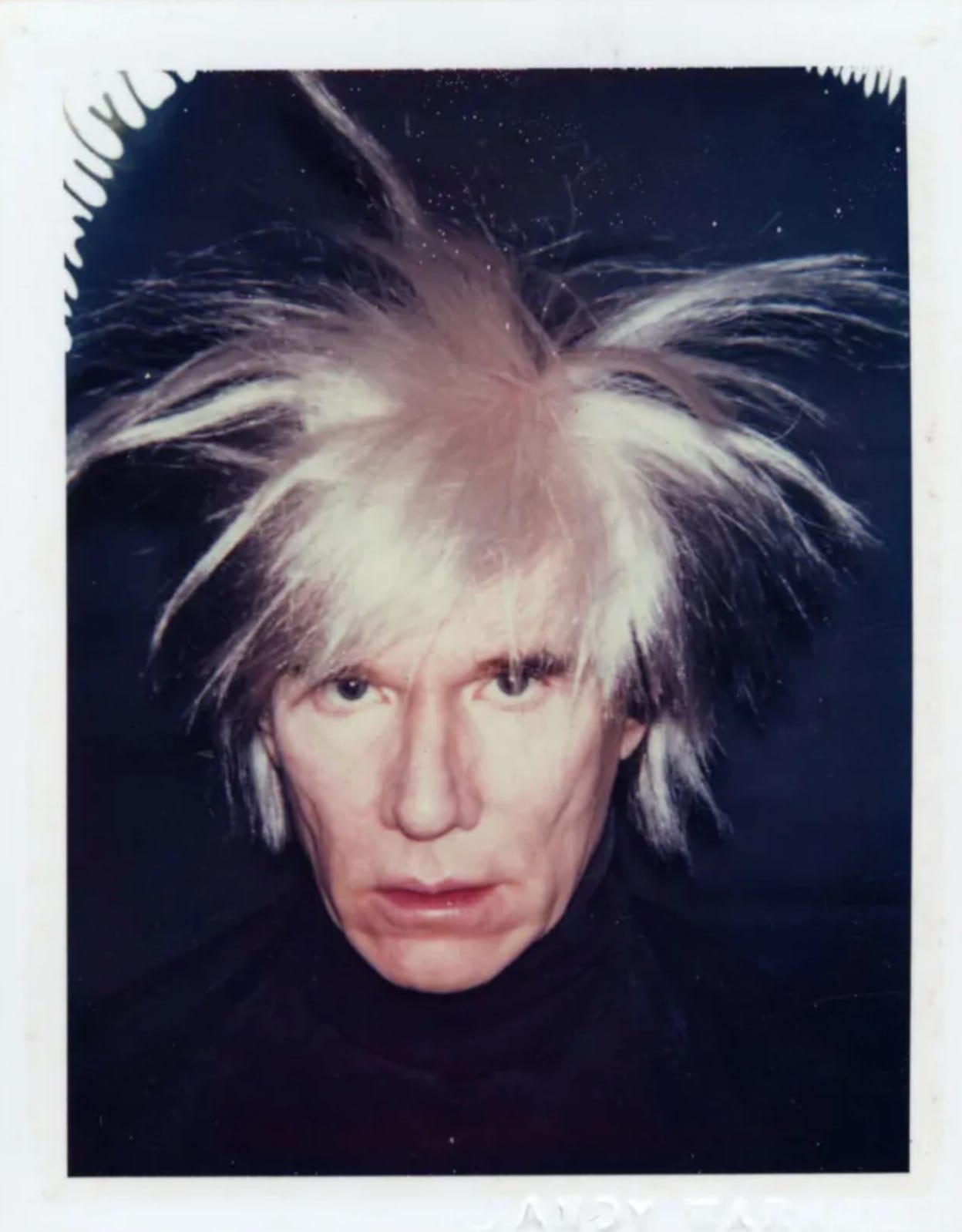
Andy Warhol was a successful magazine and ad illustrator who became a leading artist of the 1960s Pop Art movement, which emerged in the 1950s in Britain and peaked in the 1960s in America. . It challenged traditional fine art by elevating mass culture, consumer goods, and media iconography—like comic books, advertisements, and soup cans—into the realm of “high art.”
Warhol ventured into a wide variety of art forms, including performance art, filmmaking, video installations, and writing, and controversially blurred the lines between fine art and mainstream aesthetics. Warhol died on February 22, 1987, in New York City.
Early Life
Born Andrew Warhola on August 6, 1928, in the neighborhood of Oakland in Pittsburgh, Pennsylvania, Warhol’s parents were Slovakian immigrants. His father, Andrej Warhola, was a construction worker, while his mother, Julia Warhola, was an embroiderer. They were devout Byzantine Catholics who attended mass regularly and maintained much of their Slovakian culture and heritage while living in one of Pittsburgh’s Eastern European ethnic enclaves.
At the age of eight, Warhol contracted Chorea—also known as St. Vitus’s Dance — a rare and sometimes fatal disease of the nervous system that left him bedridden for several months. It was during these months, while Warhol was sick in bed, that his mother, herself a skillful artist, gave him his first drawing lessons. Drawing soon became Warhol’s favorite childhood pastime. He was also an avid fan of movies, and when his mother bought him a camera at the age of nine, he took up photography as well, developing film in a makeshift darkroom his father and brothers set up in the basement for him.[
Warhol attended Holmes Elementary school and took the free art classes offered at the Carnegie Institute (now the Carnegie Museum of Art) in Pittsburgh. In 1942, at the age of 14, Warhol again suffered a tragedy when his father died of tubercular peritonitis, after having years earlier drunk contaminated water from a coal mine in West Virginia. Warhol was so upset that he could not attend his father’s funeral, that he hid under his bed throughout the wake. Warhol’s father had recognized his son’s artistic talents, and in his will, he dictated that his life savings go toward Warhol’s college education. That same year, Warhol began at Schenley High School, and upon graduating, in 1945, he enrolled at the Carnegie Institute for Technology (now Carnegie Mellon University) to study pictorial design.
Warhol’s Pop Art
When he graduated from college with his Bachelor of Fine Arts degree in 1949, Andy Warhol moved to New York City to pursue a career as a commercial artist. It was also at this time that he dropped the “a” at the end of his last name to become Andy Warhol. He landed a job with Glamour magazine in September, and went on to become one of the most successful commercial artists of the 1950s. He won frequent awards for his uniquely whimsical style, using his own blotted line technique and rubber stamps to create his drawings.
Campbell’s Soup Cans
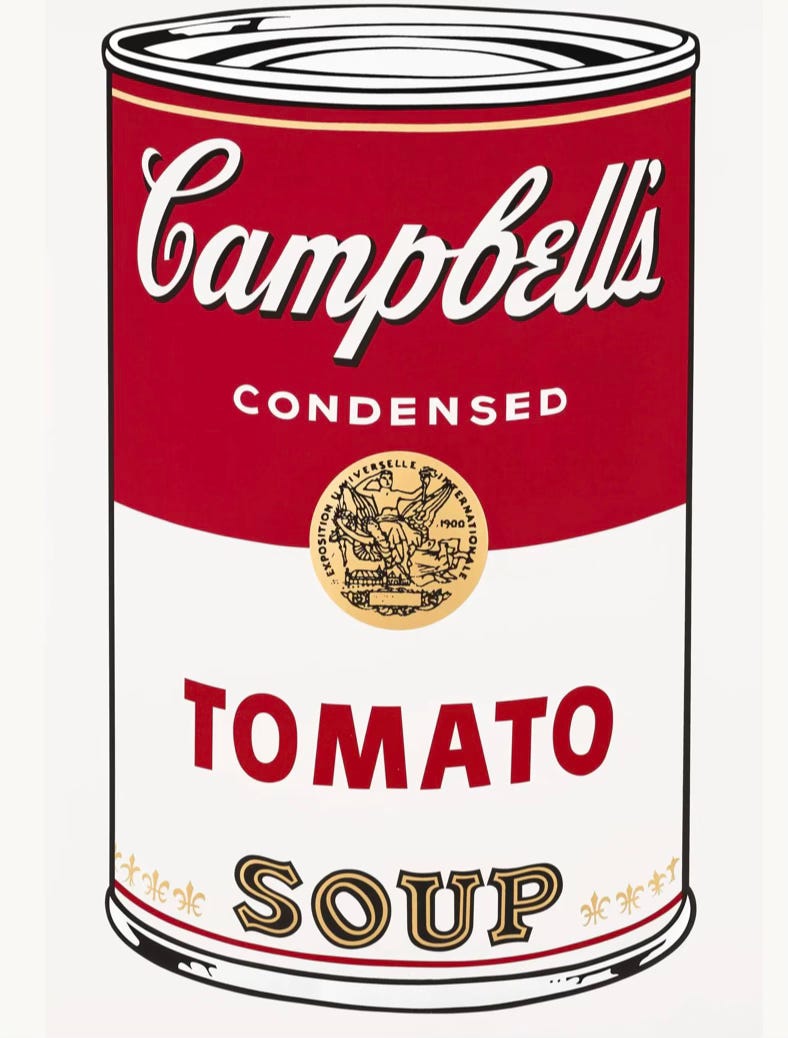
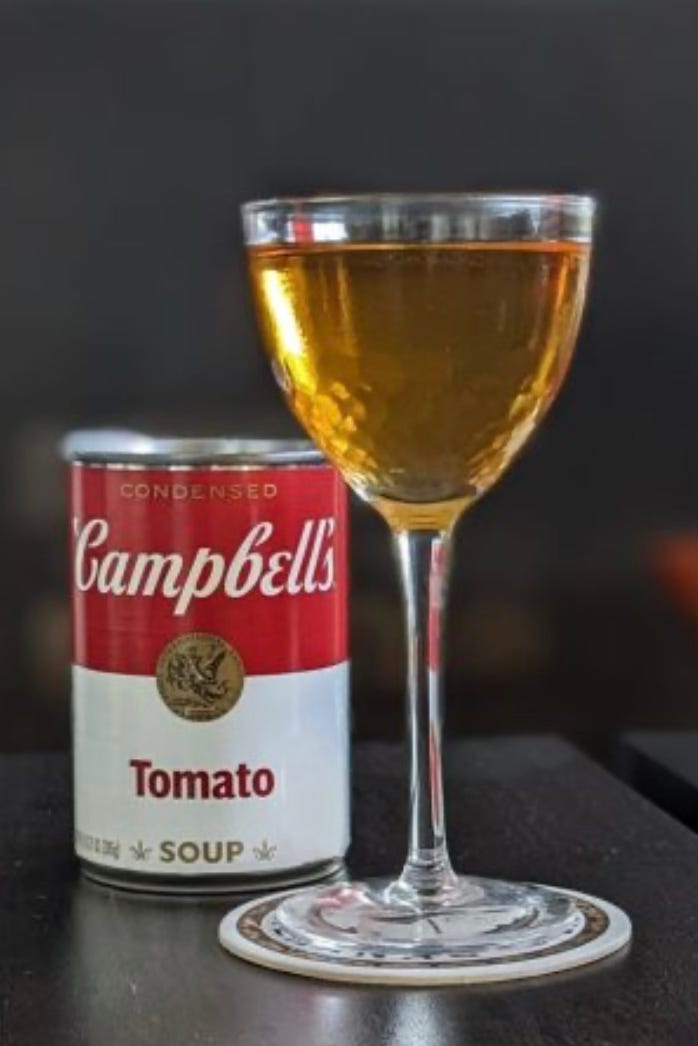
In the late 1950s, Warhol began devoting more attention to painting, and in 1961, he debuted the concept of “pop art”—paintings that focused on mass-produced commercial goods. In 1962, he exhibited the now-iconic paintings of Campbell’s soup cans. These small canvas works of everyday consumer products created a major stir in the art world, bringing both Warhol and pop art into the national spotlight for the first time.
British artist Richard Hamilton described pop art as “popular, transient, expendable, low cost, mass-produced, young, witty, sexy, gimmicky, glamorous, big business.” As Warhol himself put it, “Once you ‘got’ pop, you could never see a sign the same way again. And once you thought pop, you could never see America the same way again.”
Some of Warhol’s other famous pop paintings depicted Coca-Cola bottles, vacuum cleaners, and hamburgers.
Warhol’s Portraits
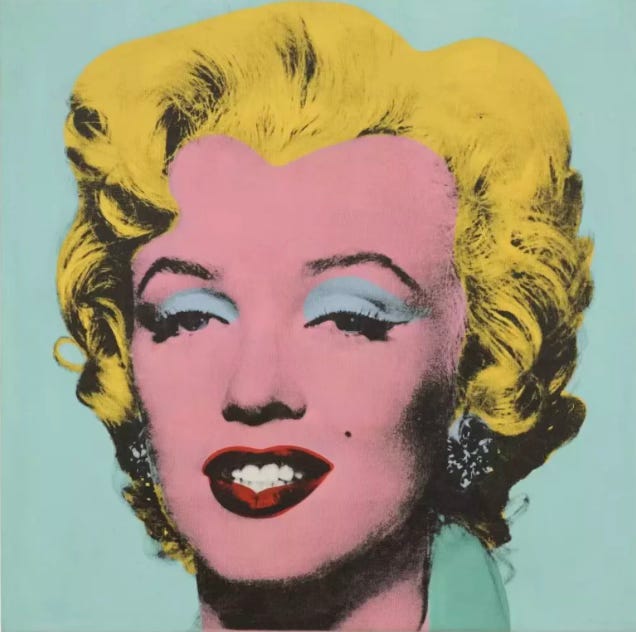
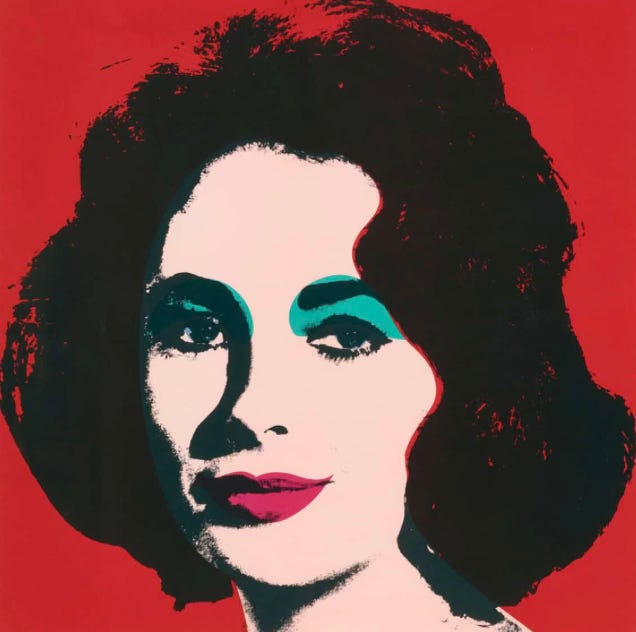
Warhol also painted celebrity portraits in vivid and garish colors; his most famous subjects include Marilyn Monroe, Elizabeth Taylor, Mick Jagger and Mao Tse-tung. As these portraits gained fame and notoriety, Warhol began to receive hundreds of commissions for portraits from socialites and celebrities. His portrait “Eight Elvises” eventually resold for $100 million in 2008, making it one of the most valuable paintings in world history.
The Factory
In 1964, Warhol opened his own art studio, a large silver-painted warehouse known simply as “The Factory.” The Factory quickly became one of New York City’s premier cultural hotspots, a scene of lavish parties attended by the city’s wealthiest socialites and celebrities, including musician Lou Reed, who paid tribute to the hustlers and transvestites he’d met at The Factory with his hit song “Walk on the Wild Side”—the verses of which contain descriptions of individuals who were fixtures at the legendary studio/warehouse during the ‘60s, including Holly Woodlawn, Candy Darling, “Little Joe” Dallesandro, “Sugar Plum Fairy” Joe Campbell, and Jackie Curtis. Always more than just an artist, Warhol was a friend of Reed’s, and also managed Reed’s band, the Velvet Underground.
Warhol, who clearly relished his celebrity, became a fixture at infamous New York City nightclubs like Studio 54 and Max’s Kansas City. Commenting on celebrity fixation—his own and that of the public at large—Warhol observed, “more than anything people just want stars.” He also branched out in new directions, publishing his first book, Andy Warhol’s Index, in 1967.
The Shooting At The Factory
In 1968, however, Warhol’s thriving career almost ended.
At the time he was shot, Andy Warhol “was easily one of the most recognized and popular artists working in America,” according to Jose Diaz, curator of the Andy Warhol Museum in Pittsburgh. As a beacon for artists of all kinds, Warhol even attracted the extremists, like radical feminist writer Valerie Solanas.
Beginning in late 1965, Solanas repeatedly tried to get Warhol to produce a play she had written called Up Your Ass, with little success. Warhol never promised to produce the play, but he gave the perpetually broke Solanas a role in his 1967 film I, A Man, for which she was paid $25.
Solanas also founded an organization called the Society for Cutting Up Men (SCUM), and wrote the SCUM Manifesto, which envisioned a world without men, calling on “civic-minded, responsible, thrill-seeking females” to “overthrow the government, eliminate the money system, institute complete automation and eliminate the male sex.” Solanas even turned her manifesto into a play, and gave Warhol the manuscript, which he temporarily lost. However, she thought he had stolen her work, and thought he was trying to claim it as his own.
On June 3, 1968, Solanas showed up at The Factory, and shot Warhol and Mario Amaya, art critic and curator at The Factory, with a .32 Beretta. Amaya received only minor injuries and was released from the hospital later the same day. Warhol however, was seriously wounded by the attack. Warhol had been shot multiple times by Solanas, and the bullets devastated his stomach, liver, spleen, esophagus, and lungs. During the ensuing five-and-a-half hours of emergency surgery, his heart stopped, and he was briefly declared clinically dead before doctors revived him. He barely survived the attack, and after the initial surgery, remained in the hospital for nearly two months.
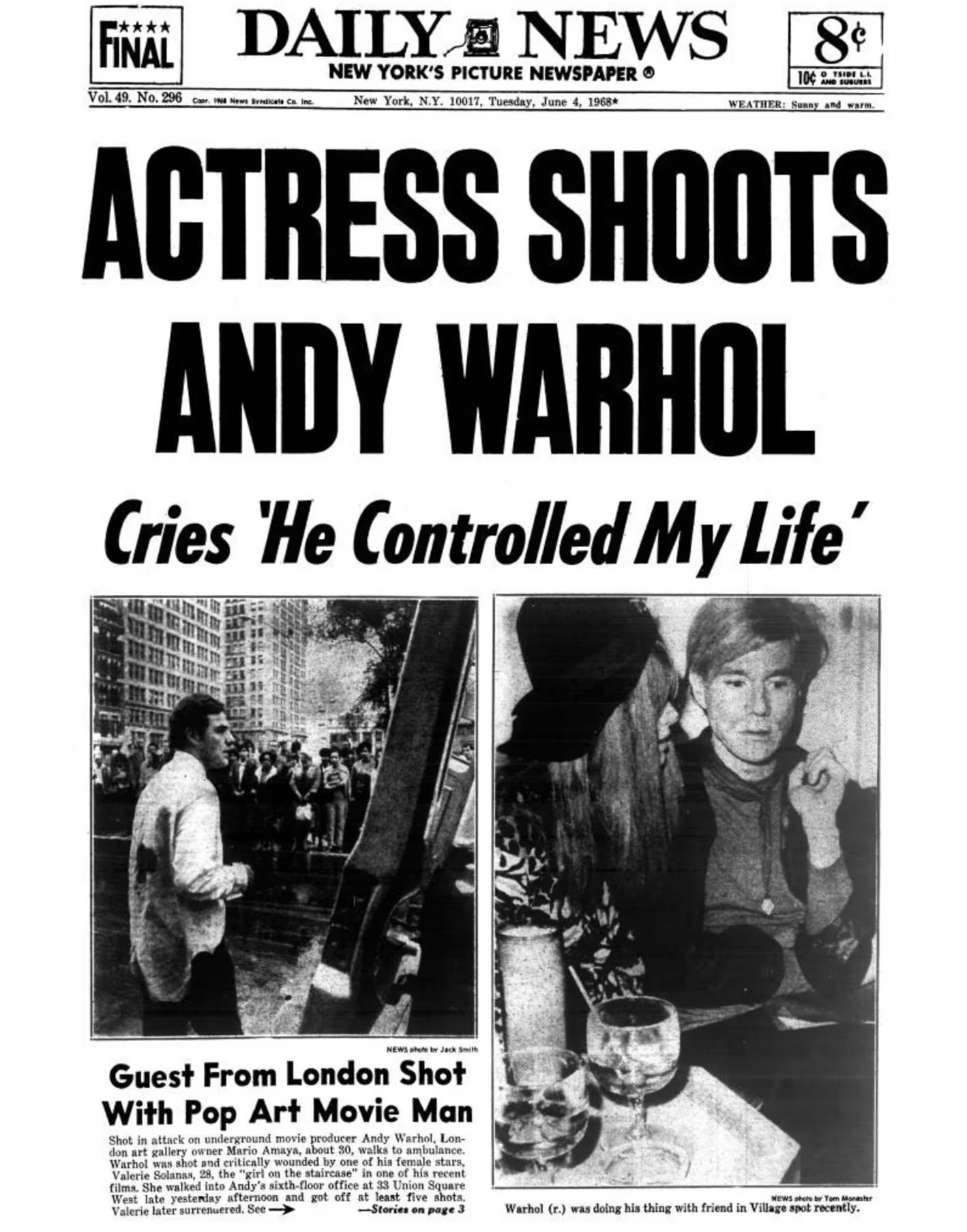
Solanas turned herself in to the police a few hours after the attack and claimed that Warhol “had too much control over my life.” She was subsequently diagnosed with paranoid schizophrenia and eventually sentenced to three years in prison for the assassination attempt.
The assassination attempt had a profound effect on Warhol’s life & art. Complications from a second operation to repair the damage in 1969 left Warhol’s abdominal muscles improperly repaired, requiring him to wear a surgical corset for the rest of his life to prevent his stomach from distending when he ate. Another effect of the shooting was that access to the The Factory became significantly more regulated, and Warhol changed its focus, aiming to make it a structured business enterprise.
Warhol Books and Films
In the 1970s, Warhol continued to explore other forms of media. He published such books as The Philosophy of Andy Warhol (From A to B and Back Again)and Exposures. Warhol also experimented extensively with video art, producing more than 60 films during his career. Some of his most famous films include Sleep, which depicts poet John Giorno sleeping for six hours, and Eat, which shows a man eating a mushroom for 45 minutes.
Warhol also worked in sculpture and photography, and in the 1980s, he moved into television, hosting Andy Warhol’s TV and Andy Warhol’s Fifteen Minutes on MTV.
Warhol’s Death
In his later life, Warhol suffered from chronic issues with his gallbladder. On February 20, 1987, he was admitted to New York Hospital where his gallbladder was successfully removed and he seemed to be recovering. However, days later he suffered complications that resulted in sudden cardiac arrest and he died on February 22, 1987, at the age of 58. Thousands of people attended a memorial for the artist at St. Patrick’s Cathedral in New York City.
Prior to his surgery, doctors expected Warhol to survive, though a re-evaluation of his case about thirty years after his death showed many indications that Warhol’s surgery was in fact riskier than originally thought. It was widely reported at the time that Warhol had died of a “routine” surgery, though when considering factors such as his age, a family history of gallbladder problems, his previous gunshot wound, and his medical state in the weeks leading up to the procedure, the potential risk of death from cardiac arrest following the surgery appeared to have been significant.
Legacy
Warhol’s enigmatic personal life has been the subject of much debate. He is widely believed to have been a gay man, and his art was often infused with homoerotic imagery and motifs. However, he claimed that he remained a virgin for his entire life.
Warhol’s life and work simultaneously satirized and celebrated materiality and celebrity. On the one hand, his paintings of distorted brand images and celebrity faces could be read as a critique of what he viewed as a culture obsessed with money and celebrity. On the other hand, Warhol’s focus on consumer goods and pop-culture icons, as well as his own taste for money and fame, suggests a life in celebration of the very aspects of American culture that his work criticized. Warhol spoke to this apparent contradiction between his life and work in his book The Philosophy of Andy Warhol, writing that “making money is art and working is art, and good business is the best art.”
To Mr. Warhol, we raise a glass in tribute, with today’s Drink Of The Day, an Andy Warhol Cocktail
Ingredients
Here’s what you’re going to need for this drink:
