
DOTD For Wednesday, March 11, 2026
A Salute To Those Who Never Stop Fighting For Freedom!
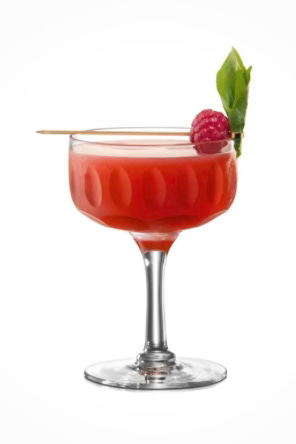
Today’s DOTD - Drink Of The Day - is a Lithuanian Daiquiri (available in cocktail or mocktail form), inspired by Lithuania becoming the first Soviet republic to officially declare its independence, from the USSR, which happened on March 11, 1990, the day when Lithuanians passed the “Act of the Re-Establishment of the State of Lithuania” – or as it’s known in Lithuania, Independence Restoration Day!
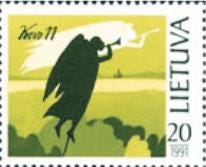
The “Act of Re-Establishment” proclaimed the restoration of a sovereign Lithuania - and invalidated the often hated Soviet-imposed laws. It also set off a chain of events that still echoes to this day.
Lithuania was the first of the 15 Soviet republics to declare independence, with the rest following over the next 21 months, concluding with Kazakhstan’s independence in 1991. These events - part of the broader process dubbed the “parade of sovereignties” - led to the complete dissolution of the Soviet Union in December 1991.
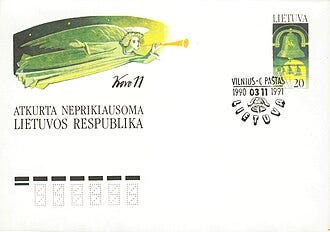
Historical context
In the centuries prior to the end of World War II, Europe was a continent that was often divided by wars. Since being conquered in the 1700s, Lithuania had been part of the Russian Empire. However, in the aftermath of the Russian Revolution of 1917, the Council of Lithuania proclaimed Lithuanian Independence, on February 16, 1918. After that, Lithuanians enjoyed the independence of their own sovereign nation for just over two decades.
On August 23, 1939, the Soviet Union and Nazi Germany signed the Molotov–Ribbentrop Pact, a non-aggression pact which divided Eastern Europe into spheres of influence. The Baltic states – Lithuania, Latvia, and Estonia - were all assigned to the Soviet sphere of influence, and subsequently were occupied and converted into Soviet socialist republics by the Soviet Union, starting on June 15, 1940.
As the frontline shifted throughout World War II, Lithuania changed hands, being occupied by Nazi Germany, only to fall back into the USSR’s hands in 1944, when the Allies won the war. After that, Lithuanians began seeking to get their independence back in multiple ways, through armed guerrilla strife on the home front and with diplomatic measures among the diaspora.
The Lithuanian partisans were armed guerrilla fighters who fought against the Soviet Union’s occupation of their nation from 1944 to 1953, when Joseph Stalin died. An estimated total of 30,000 Lithuanian partisans and their supporters were killed during that time, and approximately 130,000 Lithuanians, dubbed “enemies of the people”, were deported to Siberia.
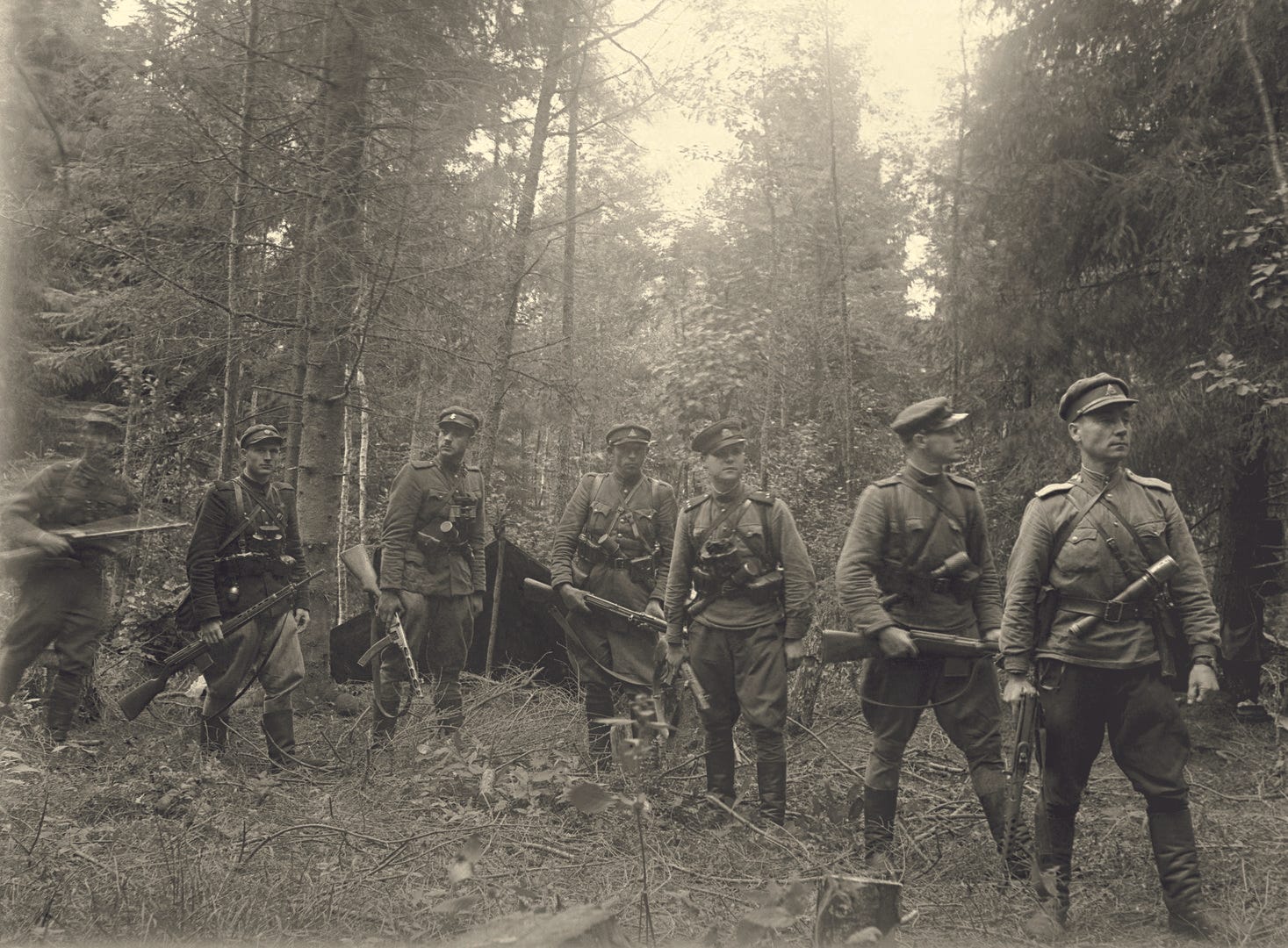
Nonviolent resistance also continued both in Lithuania and among the Lithuanian diaspora during this time. These movements were usually secret, always illegal, and often more focused on social issues, human rights, and cultural affairs rather than political demands.
In the late 1980s, as Russian Leader Mikhail Gorbachev attempted to revive the economy of the Soviet Union, he introduced the governing concepts of glasnost (openness) and perestroika (restructuring). For the Soviet Lithuanian dissidents and activists, this was a golden opportunity to bring their movements from underground into the public life.
On August 23, 1987 - the 48th anniversary of the Molotov–Ribbentrop Pact - the Lithuanian Liberty League organized the first public protest rally since World War II that didn’t result in arrests. Encouraged by the non-arrests from the government, by June 1988, a group of 35 intellectuals organized the Sąjūdis Reform Movement of Lithuania (the RML). The RML’s original goals were supporting, discussing, and implementing Gorbachev’s reforms. However, Sąjūdis RML grew in popularity - and the people wanted more.
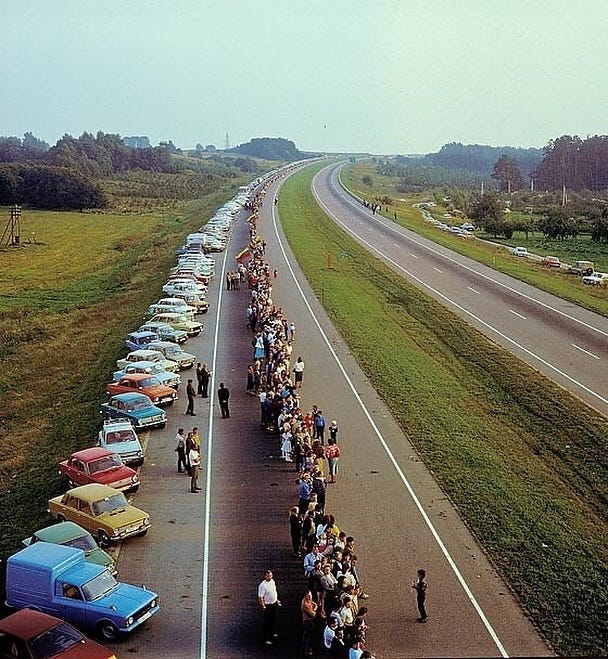
A little over a year later, on August 23, 1989 – the 50th anniversary of the Molotov-Ribbentrop pact – the Sąjūdis RML helped to create ‘The Baltic Way’ a massive peaceful political demonstration. Approximately two million people joined their hands to form a human chain spanning 419 miles across the three Baltic states of Estonia, Latvia, and Lithuania. On that same day, the Sąjūdis RML declared that Lithuania’s annexation to the USSR had been committed illegally and without any legal power.
That declaration, and the actions that followed, led to the first free and democratic elections in Lithuania since 1926. the Parliamentary elections of February 1990. It was during these elections, the voters overwhelmingly voted for the candidates endorsed by Sąjūdis RML, even though the movement did not run as a political party. The result was the first post-war non-communist government, which was set to meet in March, 1990.
Declaration of the Restoration of Independence
The first meeting of the Supreme Council of the Lithuanian SSR kicked off on March 10, 1990 at night. It was broadcast live on radio and television throughout Lithuania. The meeting elected and approved the Vote-Counting Panel, the Mandate Panel, the Secretariat of the Inaugural Session, and spent a lot of time debating the procedures of the election of the President of the Supreme Council. The meeting was adjourned at 11 p.m.
The next day, March 11 1990, the Supreme Soviet Council of the Lithuanian SSR elected Vytautas Landsbergis as its Chairman and restored Lithuania’s prewar name of the Republic of Lithuania. They adopted a set of five governing documents, then changed their name to the Supreme Council of the Republic of Lithuania, and finally formally declared the re-establishment of Lithuanian independence. The act was approved at 10:44 pm by 124 members of the council while six abstained. There were no votes cast against it.
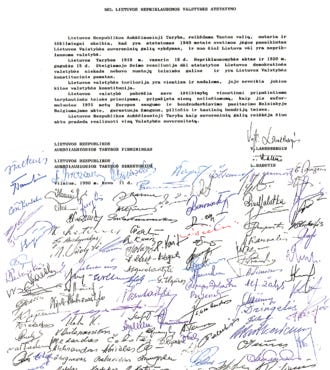
The deputies that came to attend the first meeting as members of the Supreme Council of the Lithuanian SSR left the third meeting as members of the democratic parliament of the Republic of Lithuania.
The USSR had no intention of recognizing Lithuania’s independence. On April 18, 1990, they enforced an economic blockade against Lithuania, cutting or grievously restricting the supplies of raw materials. The escalating tensions peaked in January 1991, when the Soviet Union deployed its paratrooper units to the Baltic states, with armored troops appearing on the streets of Vilnius on January 12.
The Lithuanians were not about to give in. Crowds of people gathered at the Press House, the TV tower, the Radio and Television building, and the House of Parliament, intent to defend their independence, peacefully. Unarmed civilian Lithuanians confronted Soviet soldiers in massive protests. Fourteen people were killed and seven hundred injured in what became known in Lithuania as ‘The January Events.’
Eventually, the Russian Federation recognized Lithuania’s full and complete independence on July 29, 1991 by signing an agreement for cross-border relations with Lithuania.
How Lithuanians Celebrate
Beginning with 1991, the Day of Restoration of Independence is marked with a solemn parliamentary meeting that usually takes place at the historical Hall of the Act of March 11th.
Since 1996, March 11th has been an official Lithuanian state holiday under the Law on Holidays. It’s the day when the country hosts a lot of public celebration events and pays respect to the signatories of the Act. The events include parades, concerts, and exhibitions of patriotic artwork. During the annual parliamentary meeting, young researchers are presented with the State Independence Scholarship, for research significant to the strengthening of Lithuania’s statehood.
While we don’t have any scholarships to present, we do have the Drink Of The Day, the very celebratory Lithuanian Daiquiri!
Ingredients
Here’s what you’re going to need for this drink:
