DOTD For Friday, May 1, 2026
Whether You're Honoring Work Or Celebrating Play, Today's Your Day
Today’s DOTD - Drink Of The Day - is a Mayflower Martini inspired by the many different May Day holidays, whether you celebrate the day as a workers’ holiday or as a pagan holiday.
Of course, you may also be celebrating the May Day Strong actions today, which we salute as well. Because for much of the world, May Day is about workers.
The Bloody Origins Of The Workers’ Day Of Action
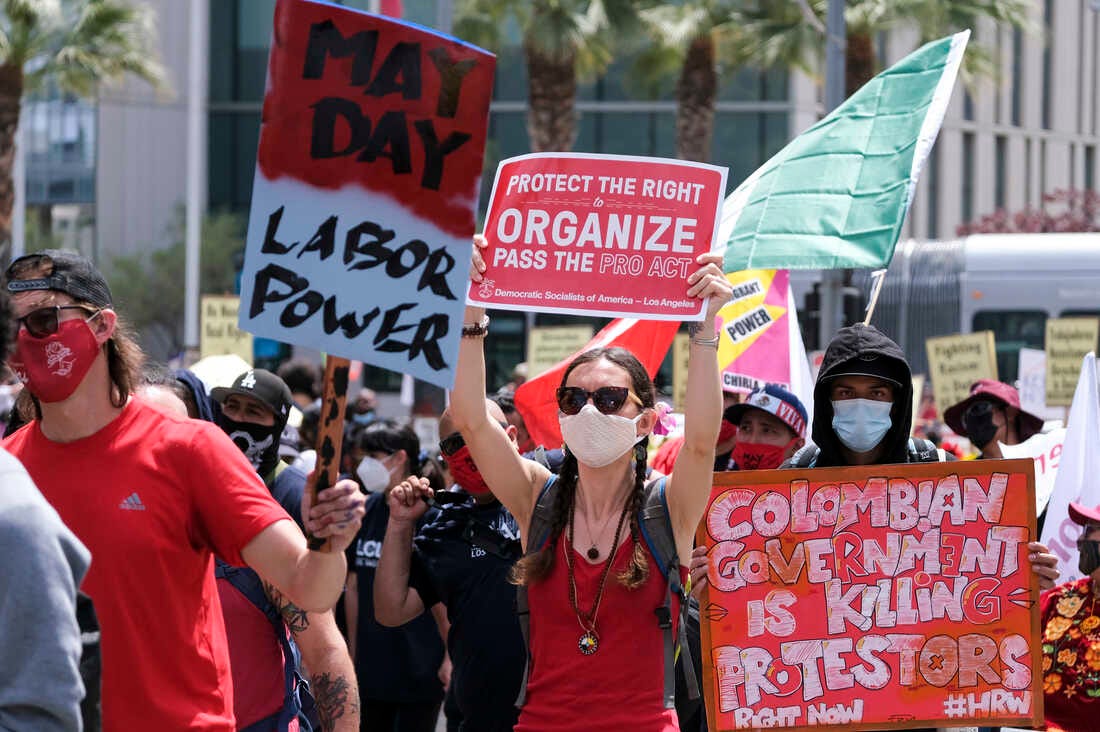
For workers across the globe, May Day is celebrated as International Labor Day, also known as International Workers’ Day, every year on May 1. But if you’re in the U.S., you’ll be forgiven if that’s news to you. We’ll explain why in a minute.
International Workers’ Day was born out of the 8-hour workday movement in 19th-century Chicago. At the time, as the corporatist system had gained a foothold in industrial-era America, working-class conditions had worsened. A 16-hour shift wasn’t unusual for workers at the time.
The organization now known as the American Federation of Labor, was working hard to get employers to accept sane limits on working, decades before the 8-hour work-day would become the law of the land. As part of their efforts, the AFL set May 1, 1886, as the date that workers nationwide should go on strike to demand the 8-hour workday.
The workers followed through. On May 1, 1886, anti-corporatists & labor activists in Chicago began a multi-day strike in what became known as the Haymarket Square attacks of 1886. By May 3, the protests turned violent when police attacked workers demonstrating near the McCormick Reaper plant in West Chicago.
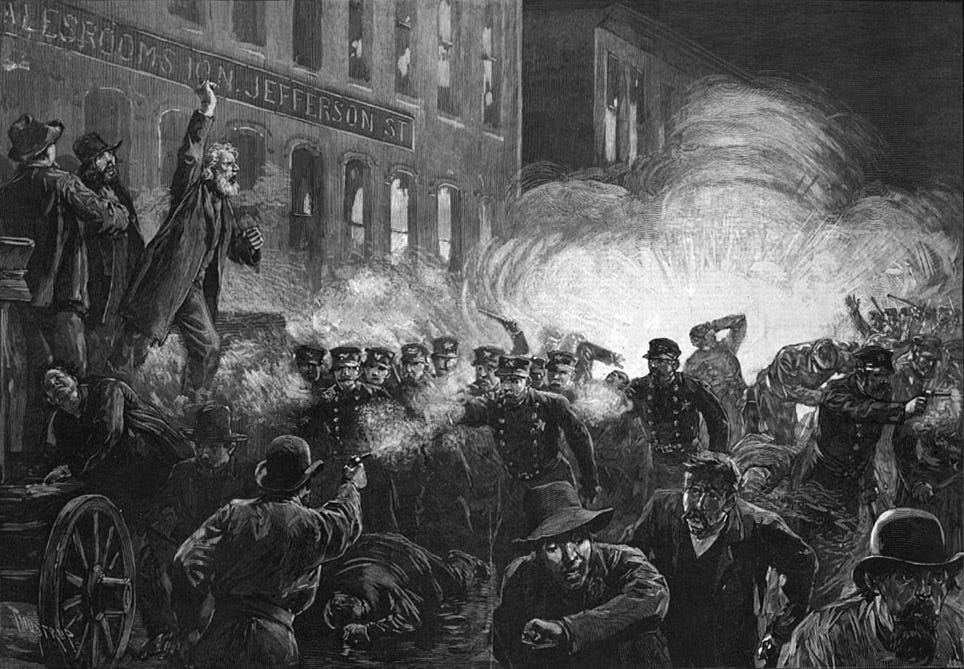
The following day, May 4, near the end of a peaceful pro-labor rally, after the guest speakers were finished, an unknown person threw a dynamite bomb at the police as they acted to break up the event. The bomb blast & ensuing retaliatory gunfire by the cops caused the deaths of seven police officers and at least four civilians, while dozens of others were also wounded.
Eight protestors were wrongfully charged, and seven of them were sentenced to death. Hundreds of labor leaders and sympathizers were rounded-up a brief time later and four were executed by hanging, after a trial that was seen as a miscarriage of justice. Efforts to commemorate those killed in the incident were moved to May 1 in the following years, a day that labor leaders of many kinds were already settling on for a day of action.
Why Labor Day Is In The Fall In The U.S.
May 1 isn’t the only day important to the labor movement. There was also a second date, in the fall - the first Monday in September - pushed by the pro-worker Knights of Labor group that was supposed to be more of a day of rest holiday for laborers.
During the 1894 Pullman Strike - a nationwide strike of railroad workers - the conservative, pro-corporatist, anti-labor President Grover Cleveland decided to make a conciliatory gesture to the labor movement, as part of his attempt to settle the strike. Cleveland also wanted to separate this new official U.S. holiday to celebrate workers from the labour unions’ May Day day of action. So Pres. Cleveland set the national holiday to celebrate workers on the fall day pushed by the Knights of Labor, thus taking much of the energy out of International Workers Day.
May Day’s Weird and Wonderful Pagan Roots
If you instead associate May Day with baskets of flowers, dancing around maypoles, or simply, the start of summer, those May Day celebrations recall the holiday’s much earlier origins. Before May Day was adopted as a day to champion workers, its roots belonged to the pagan traditions of Europe.
May 1st is the date marking an ancient Northern Hemisphere festival, now known as ‘May Day’, which traditionally marked the return of summer. It is believed that the celebrations originated in agricultural rituals intended to ensure fertility for crops, held by the ancient Egyptians, Greeks, and Romans. Later developments included the Celtic festival of Beltane and the Germanic festival of Walpurgis Night. Today, many customs still mark this ancient festival, including the gathering of wildflowers and the setting up of a decorated May tree or Maypole, around which people dance.
The Festival of Flora: May Day For Romans
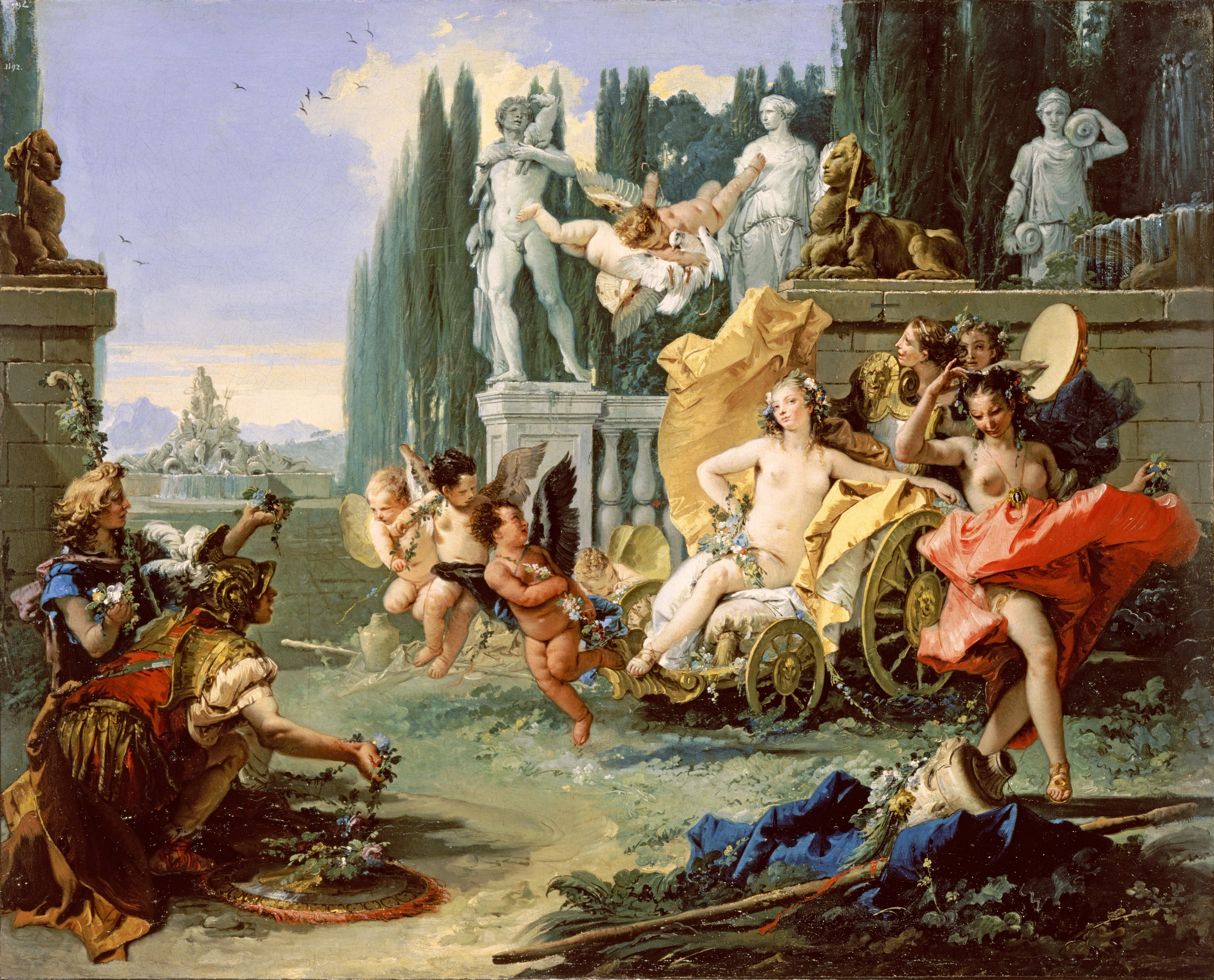
The Romans marked the occasion over two millennia ago with the Floralia, or Festival of Flora, a five-day ceremony to honor the Roman goddess of flowers. Flora was regarded as one of the most ancient goddesses of Roman religion, and was one of 15 deities to have her own state-supported high priest, the flamen Florialis. A goddess of flowers, vegetation, and fertility, she received sacrifices in the sacred grove of the Arval Brothers, an archaic priesthood.
This pagan holiday began in Rome in 240 or 238 BC with the hopes of pleasing the goddess Flora into protecting flowers – probably with a focus on the blossoms of fruit-bearing plants. Floralia was forgotten for a time, but re-instated in 173 BC when bad weather threatened, and the Roman Senate believed it was necessary to please Flora and request her protection once again.
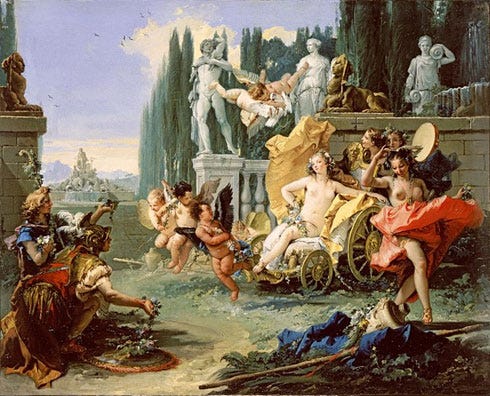
The Floralia festival was marked by dancing, the gathering of flowers, and the setting aside of white togas in favor of more colorful garments. It was also a time for the Ludi Florales (six days of games), which was paid for by fines collected when public lands were encroached upon.
The festival was eventually declared a Roman holiday by Julius Caesar and holiday revelers are said to have worn garlands of fresh flowers while scattering seeds to promote agricultural bounty. One way the Floralia has lived on is with the wreaths people continue to wear in May Day celebrations.
May Day: The Celtic Holiday Of Beltane
Beltane - which means “the return of the sun” - is the Gaelic May Day festival. Historically, it was widely observed throughout Ireland, Scotland, and the Isle of Man. Its festivities began on the night before May 1st. It fell out of practice in most areas around the 19th century, but was resurrected in 1988 at one of the most popular Beltane celebrations, the annual fire festival which takes place in Edinburgh, Scotland.
The ancient Celts believed the sun was held prisoner during winter months only to be released each spring to rule the summer sky. They celebrated this mythic release with fire ceremonies and a huge feast to mark the occasion. In this Celtic take on May Day, rituals were performed to protect the cattle, crops, and people, and to encourage growth. Beltane was a time to rejoice in the return of the land’s fertility. It was also the time when livestock would be out to pasture. It was a key moment in the Pagan Wheel of the Year.
Beltane, which roughly translates as ‘bright fire’, was traditionally a time when special bonfires were kindled, and their flames, smoke, and ashes were deemed to have protective powers. People and their cattle would walk around the bonfire and sometimes leap over flames or embers.
As Europe became Christianized, pagan holidays lost their religious character and either changed into popular secular celebrations, as with May Day, or were merged with or replaced by new Christian holidays. The only significant Christianization of May Day is localized to Germany, where it is one of many historic days that were used to celebrate St. Walpurga - the saint credited with bringing Christianity to Germany.
Walpurgis Night: A Germanic Christian May Day
In Germany, Walpurgis Night (Walpurgisnacht), the night from 30 April to 1 May, is when witches are reputed to hold a large celebration on the Brocken and await the arrival of spring. The night is so called because it is the eve of the feast day of Saint Walpurga, an 8th-century abbess in Germany.
The only relation Saint Walpurga has to the date is that May 1 was the day when her remains were transferred to the Church of the Holy Cross at Eichstätt around 870 AD. Even though the holiday got its name from the saint, it is better described as a spring celebration with striking similarities to Halloween.
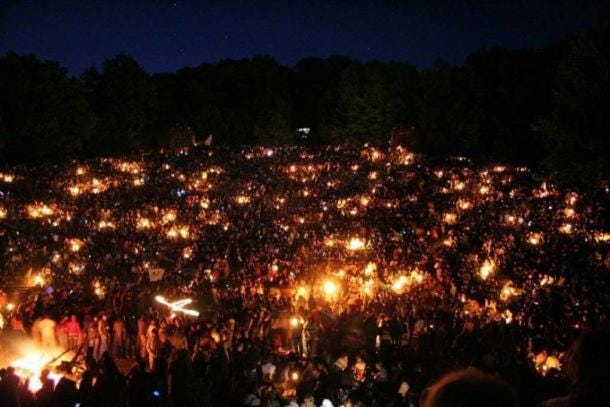
Some common events associated with the day are dressing up in costumes and making loud noises – activities people used to do to try to keep witches away. Other methods used to ward off the evil forces out on that night were hanging blessed sprigs of foliage from houses or barns, or leaving offerings of bread with butter and honey (known as ‘ankenschnitt’) for phantom hounds . Bonfires are also traditional to Walpurgis Night and were believed to serve a similar purpose, though they harken back to the pagan practices of light returning around the Spring Equinox as well.
Although Saint Walpurga is unique to Germany, local variants of Walpurgis Night spread from that country and are observed across Europe in the Netherlands, the Czech Republic, Sweden, Lithuania, Latvia, Finland, and Estonia.
In Finland, for example, Walpurgis Night is known also as Vappu, and it is one of the country’s most important holidays. Although it was initially celebrated by the upper class, during the late 19th century it became popular amongst university students. Today, Walpurgis Night is celebrated by all segments of both Finnish and Swedish societies.
The Maypole: A Traditional May Day Symbol
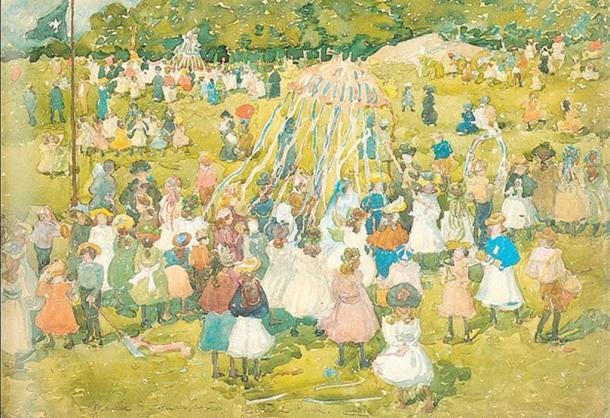
Maypole dancing continues to be one of the most popular May Day customs in Europe. No one can say for certain how Maypoles came to be, but they may have been inspired by Norse beliefs in the world tree, Yggdrasil, or Germanic pagan reverence for trees. There is also the less-popular suggestion that Maypoles are adopted as phallic symbols. Either way, the practice became especially popular in the British Isles around 1350-1400 AD and can be seen in some celebrations on May Day, Pentecost, or Midsummer.
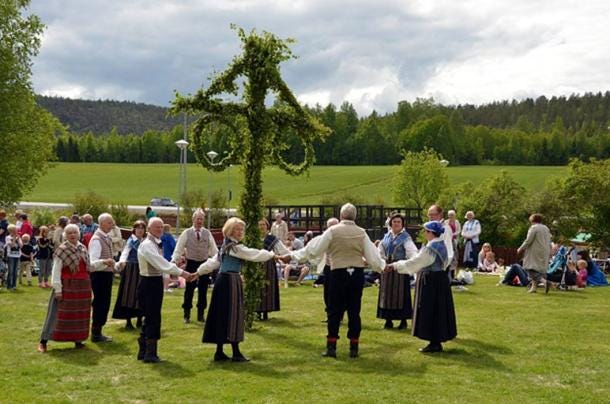
Traditionally, participants dance around a wooden Maypole while holding colorful ribbons that become decoratively intertwined. The dancers then change direction and repeat the steps in reverse, causing the ribbons to unwind. This is said to symbolize the lengthening of the days as summer begins.

Whether your favorite May 1 holiday is the Roman Festival of Flora, or the Celtic Beltane; whether it’s the German Walpurgis Nacht, or the noble and honorable International Workers’ Day, at the end of the day, no matter how you celebrate it, May Day remains a time meant to celebrate the power of light over darkness, and the power of people working together to make life better for all.
That’s something we think everyone can raise a glass to! So here’s today’s Drink Of The Day, a Mayflower Martini!
Ingredients
Here’s what you’re going to need for this drink: