
DOTD For Monday, June 8, 2026
A Drink To Celebrate Hollywood - By Way Of Chicago, New Jersey, & Oshkosh
Today’s DOTD - Drink Of The Day - is a Californian Martini inspired by the birth of Universal Pictures, which was first incorporated on June 8, 1912 - in New York City, not California, and certainly not in Universal City.
That may seem confusing, but as with so many Hollywood stories, there’s the main story, and the back story - so let’s start with the main backstory, before we head to California.
We start in Oshkosh, Wisconsin, where German immigrant Carl Laemmle was then living with his wife. Laemmle had arrived in the United States in 1884 at the age of 17, and by early 1906 had become the manager of the Continental Clothing Company, a prominent retail men’s clothing store in Oshkosh. Laemmle was well-known as a shrewd businessman with a penchant for successful advertising and marketing - but he wasn’t making much money. In short, he was a big fish in a small pond.
Laemmle faced the realization that his work selling clothing would never bring him a fortune - and he wanted more for his life. So Carl Laemmle convinced his wife to take their savings and move to Chicago in search of a new opportunity, and she agreed.
According to film scholar Prof. Leslie Kreiner Wilson of Pepperdine University, when Laemmle got to Chicago, he thought he would enter the five and dime store business. But after observing the foot traffic into a nickelodeon - the very first type of indoor, permanent movie theaters - and talking with the proprietor, Laemmle decided it would be far more lucrative to go into the film & movie distribution business.
Most nickelodeons were simply converted storefronts that showed early silent films for a nickel - but Laemmle knew it wasn’t just about the nickels. As Prof. Kreiner Wilson noted, Laemmle did a great deal of math, and talked with a number of people, including Robert H. Cochrane owner of the Cochrane Advertising Agency in Chicago, before he made his investment.
Laemmle and Cochrane decided to team up to invest their modest nest eggs in a single nickelodeon, and their initial partnership quickly expanded. Recognizing the business potential in the motion picture industry, they soon formed the Laemmle Film Service in Chicago, for their growing stable of nickelodeons, which also allowed them to rent prints to other exhibitors.
Laemmle and Cochrane had big dreams for their growing business, but they began to run into a major monopoly problem - Thomas Edison & his Motion Picture Patents Company, better known to many as “The Edison Trust.” Hollywood historian, and grandniece of Carl Laemmle, Anotnia Carlotta, has the next chapter of the story…
Even as Laemmle and the Cochrane Brothers tangled with Edison’s greedy monopoly, they were growing their film business. Both men having moved to the New York City area, like many early movie companies, they set up a studio in Fort Lee, NJ.
The wily and impish Laemmle formed Independent Moving Pictures Company ( or IMP) in 1909 to produce his own movies, outside of the Edison monopoly system. The company began gaining legitimacy with actors in 1910 when they began paying actors more, & featuring the names of lead actors on screen during the openings of their films. They singed rising star Mary Pickford to an exclusive contract, who we wrote about recently in another DOTD, which further cemented their power, and helped to break the Edison monopoly. What Laemmle began to create with Pickford would later be called the “star system” for major motion picture actors, which had it’s benefits over the previous system, but as we noted in the Pickford DOTD, had it’s own problems.
To further blow up Edison’s monopoly, on June 8, 1912, budding moguls Laemmle and Cochrane formed the Universal Moving Picture Company, merging IMP with five other major New York area movie companies: Pat Power’s Picture Plays Studios, David Horsley’s Nestor Film Company, Adam Kessel and Charles Bauman’s New York Motion Picture Company, Champion Film Company, and the Rex Motion Picture Masterpiece Company.
While several of Universal’s member companies shot out of studios in Fort Lee, New Jersey, some already operated out of the Los Angeles area. The NYMPC produced its Bison westerns at an Edendale California Studio, and Nestor Films shot some of their pictures outside a converted tavern at Sunset and Gower. To save money, Laemmle decided to consolidate the studios’ many different divisions in California.
In August 1912, Laemmle’s Universal leased the Providencia–Oak Crest Ranch at what is now Forest Lawn Hollywood Hills as a production facility, building outdoor sets, stages and an Indian village, as well as permanent housing for 65 families. That December, the company invited local and state politicians, rival photoplayers and the general public to celebrate its opening..
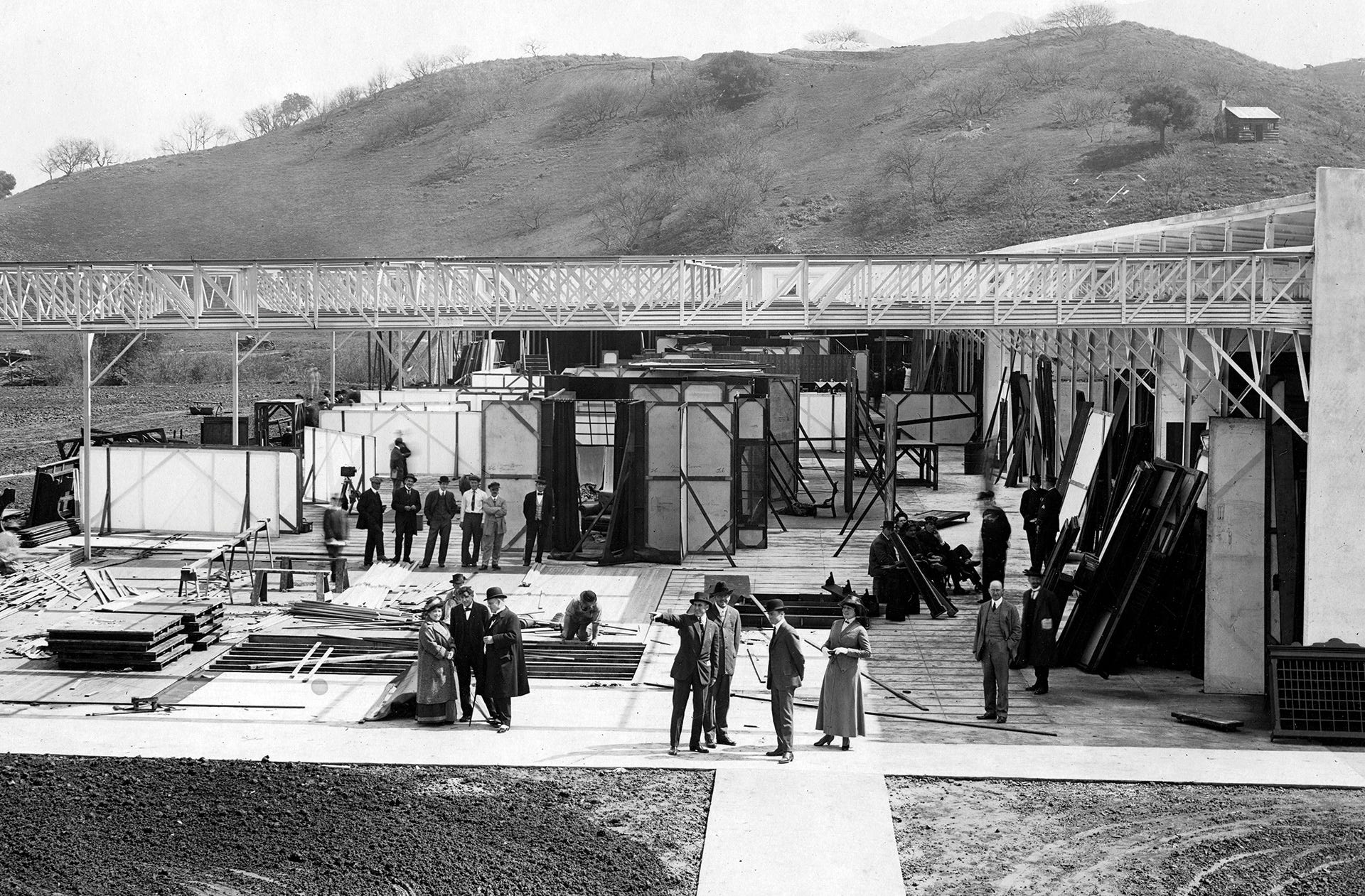
The studio executives worked out a deal with Los Angeles County to create a quasi-legal community named “Universal City” at the ranch on July 10, 1913, which they described as the “Most Unusual City in the World” in trade ads. A 1913 Motion Picture Story magazine article reported, “Cucumbers, tomatoes, green peas, asparagus, strawberries, and films are some of the crops of Universal City.” In September 1913, Universal offered its first studio tour, organizing bus excursions from Los Angeles.
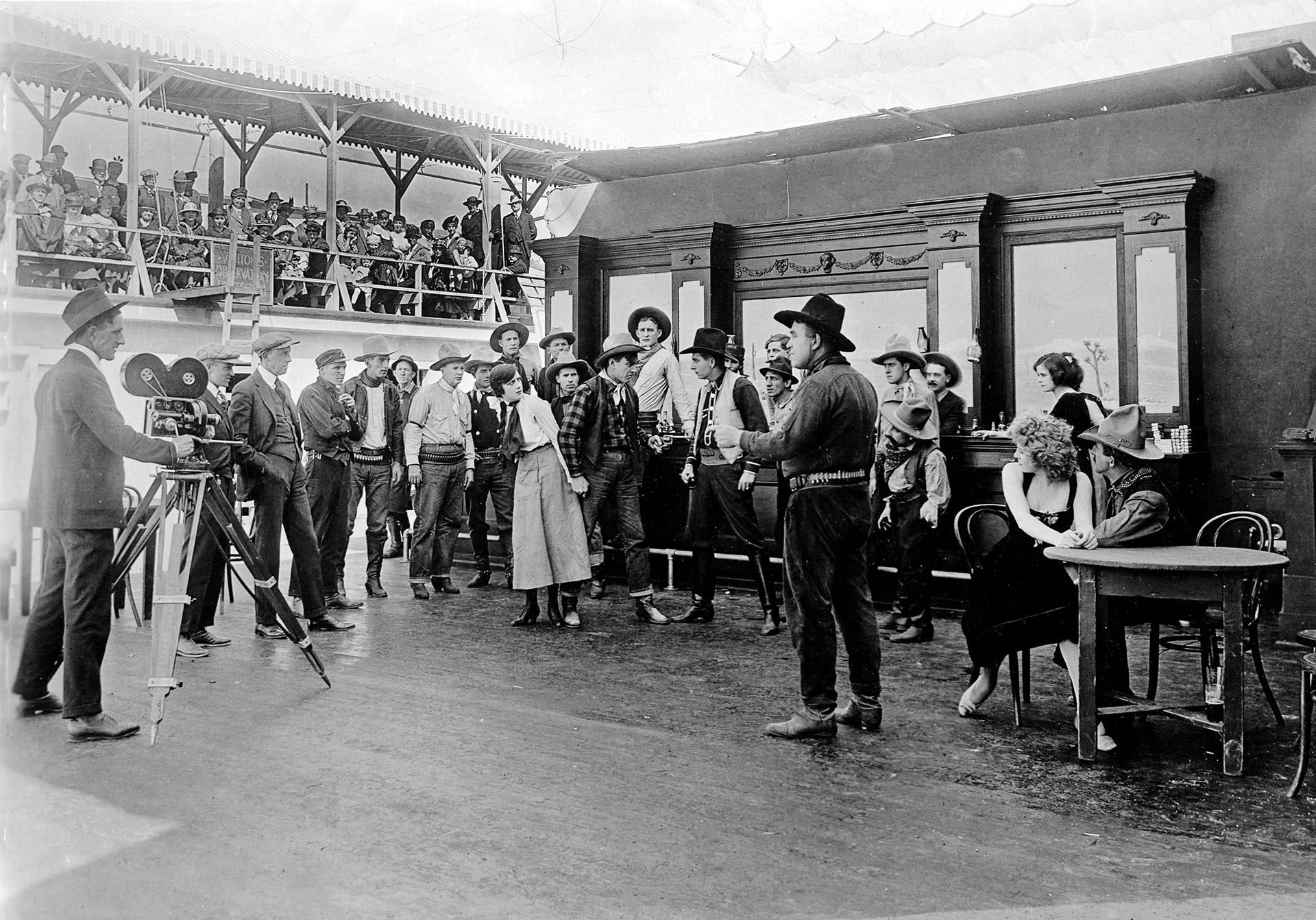
Intending to build the world’s most elaborate film studio, Universal attempted to buy out the entire Providencia Ranch but found itself rebuffed. Laemmle bought a full-page advertisement in the February 19, 1914, Los Angeles Times, noting the company spent $1 million annually to produce films and offered employment to hundreds, asking what inducements cities would offer in exchange for studio construction. The ad further stated, “We want a ranch of 600 to 1,200 acres on which to produce moving pictures.”
Motion Picture News reported on March 7, 1914, that Universal spent $160,000 to purchase the Taylor, Boag, Hershey, and Davis ranches located within 200 feet of the streetcar line and adjacent to the Los Angeles River, across the road from the Campo de Cahuenga, where the peace treaty with Mexico that paved the way for California and the West to become part of the U.S. had been signed in 1847.
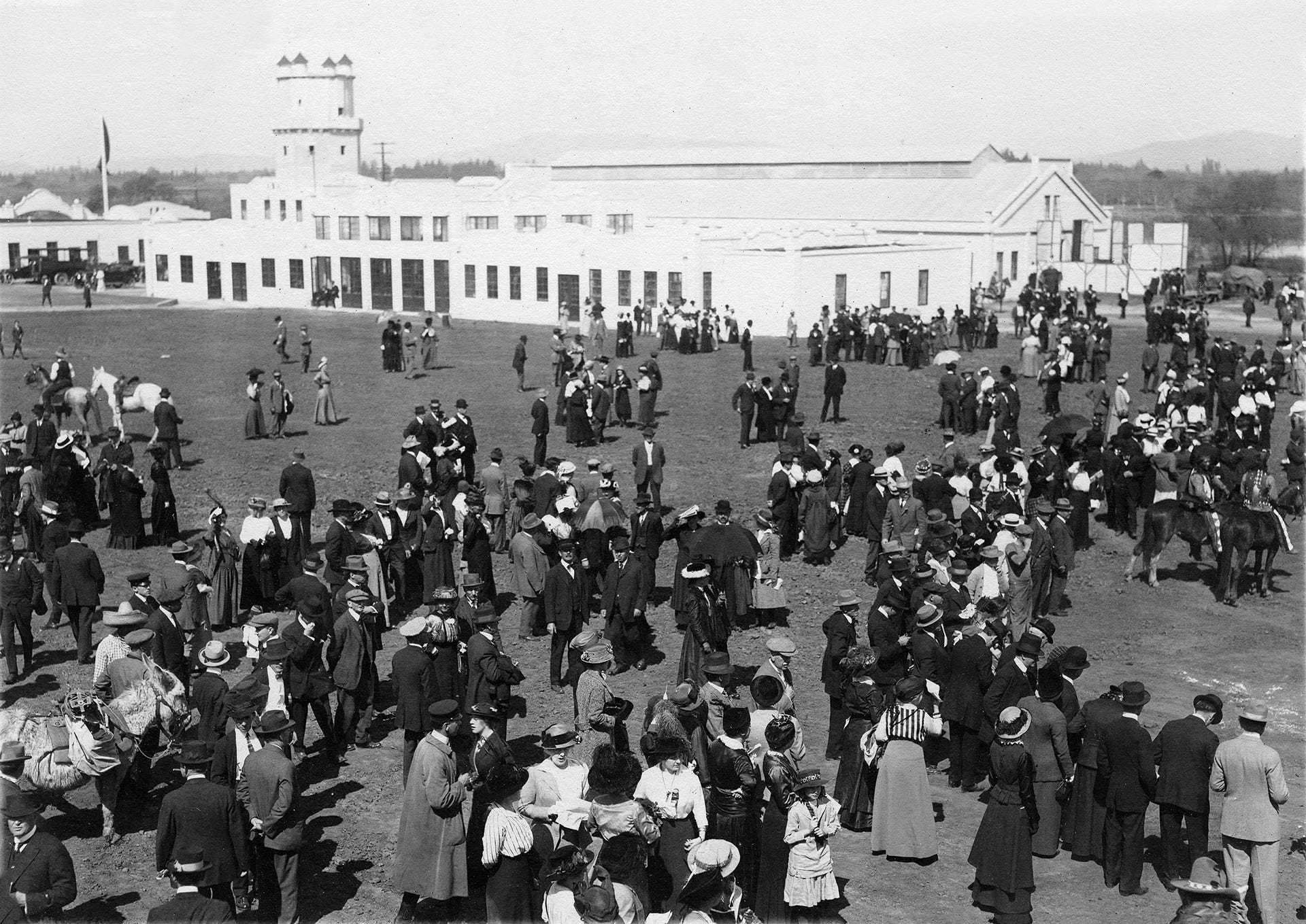
Architects S. Tilden Norton and Frederick Wallach designed the massive project, with construction beginning on June 18, 1914, for a power plant, water supply, sanitation, hospital and infirmary, zoo, bungalows and other facilities, including a gigantic open stage that could accommodate eight film productions shooting simultaneously. Other buildings soon followed: a $25,000 laboratory, $30,000 administration building, dressing rooms, wardrobe building, shops, cafeteria, Indian village and 30 bungalows for employees. The Spanish Colonial administration building even included a stained glass window in the shape of the Universal logo over the front entrance, designed by Louis Comfort Tiffany - yes, that Tiffany, of Tiffany Glass.
Universal lavishly promoted the studio’s grand opening by purchasing full-page ads in trade magazines and newspapers, urging Americans to attend the celebration for the “Eighth Wonder of the World.” The studio organized an exclusive Chicago-to-Los-Angeles “Universal Special” train trip to attend the celebrations.
The opening extravaganza kicked off at 10 a.m. on Monday, March 15, 1915, with Laemmle presenting a gold key valued at $1,255 to open Universal City’s gate before the studio band played “The Star-Spangled Banner” as United States and Universal flags soared up the flagpoles. City officials welcomed the 10,000 guests. Visitors witnessed stunt shows, a rodeo, an aerial flyover, filming and the flooding of a Western town that swept away sets and reached guest areas.
For everyone else around the country, the company created the one-reel behind-the-scenes film A Tour of Universal City, showing its striking new property and film stars. After opening day, studio visitors paid 25 cents to tour the property, watch filming and eat a boxed lunch.
The growing company blossomed, with the January 1, 1916, Los Angeles Times reporting that Universal City employed 2,000 people and spent $4,000 a day in operating expenses. Unlike most other film studios, the progressive company even featured 11 women as directors, including superstar Lois Weber, considered one of the top three directors in the industry along with Cecil B. DeMille and D.W. Griffith.
By the 1920s, however, Universal lagged behind most major film studios in revenue because it failed to purchase a theater chain. Though Universal released prestigious pictures like the Erich von Stroheim film Foolish Wivesand the horror classics The Hunchback of Notre Dame and The Phantom of the Opera starring Lon Chaney, the company mostly focused on producing westerns and more middle-of-the-road product for rural audiences. Universal staved off bankruptcy after the stock market crashed in 1929, barely hanging on. With the advent of sound, the studio discontinued its tours (though they would return in the future).
Universal’s well-received horror films of the 1930s, like Dracula, Frankenstein, The Invisible Man and The Mummy, helped keep it afloat for a time before Laemmle was forced to borrow $750,000 in 1935 from Standard Capital to stay in business, giving a purchase option on his personal stock as collateral. In 1936, the company exercised its option, purchasing Laemmle’s shares and forcing him out. It signed teenage singing sensation Deanna Durbin to a contract in March, and the revenues from her films put it back on sound financial footing. The studio once again offered occasional tours to special groups.
Universal changed hands a few times from the late 1940s through the early 1960s, due to technological advances and the Paramount decree breaking up distribution practices. Owners like Decca Records began focusing more on genre pictures and television production. Talent agency Music Corporation of America (MCA), which began diversifying across the entertainment field in the late 1940s, eventually purchased the Universal lot in 1958 to host its massive television production under the name Revue Studios. In 1962, Decca and MCA merged, with the agency gaining control of the new Universal Studios.
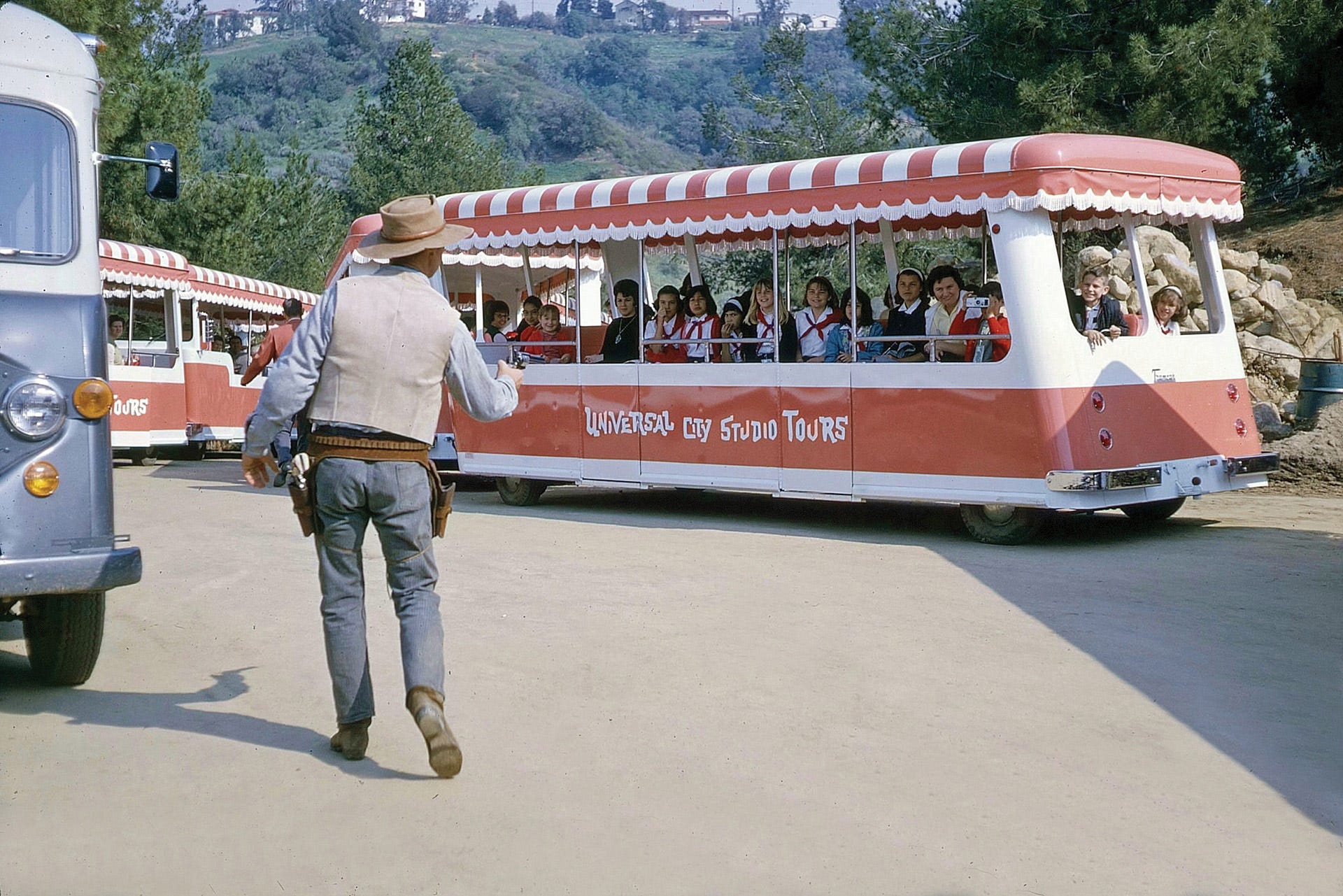
In 1961, studio president Albert Dorskind reintroduced formal studio tours to boost profits to the studio commissary, turning over organization and details to Gray Line Tours. Once Dorskind recognized its profitability, however, Universal regained control. Executives realized the value of making it a destination for tourists, allowing them behind-the-scenes access to the studio and giving Universal the opportunity to cross-promote its product and sell souvenirs.
After the loss of the MCA talent agency business and its huge profits in 1964 due to antitrust laws, the new Universal Studio Tour premiered on July 15, 1964, to bring in additional revenue, with a 90-minute tour of the backlot costing $2.50 on colorful open-air trams. Sets from Psycho, The Hunchback of Notre Dame, Phantom of the Opera and Frankenstein greeted early guests, who relished the chance to tour an actual movie studio.
To keep tourists and their steady stream of income coming back, the studio upgraded what came to be known as Universal Studios Hollywood, adding a stunt show, animal attraction, the chance to watch actual production and special-effect “surprises” along its route. Eventually Universal introduced characters from its films — such as Bruce the shark from Jaws — to help sell consumer products and studio blockbuster movies, attracting more guests. Enthusiastic fans quickly made it California’s third most popular theme park.
Keeping it fresh to remain competitive and to add value, Univeral continually replaces rides and attractions based on older products with those highighting newer properties, switching out rides based on E.T., Back to the Future, Jurassic Park, Terminator, Shrek, The Fast and the Furious and Despicable Me as new blockbusters grab the popular imagination. Just a few years ago, Universal licensed rights to the Simpsons characters and the Harry Potter series, creating elaborate lands celebrating their entertainment universe.
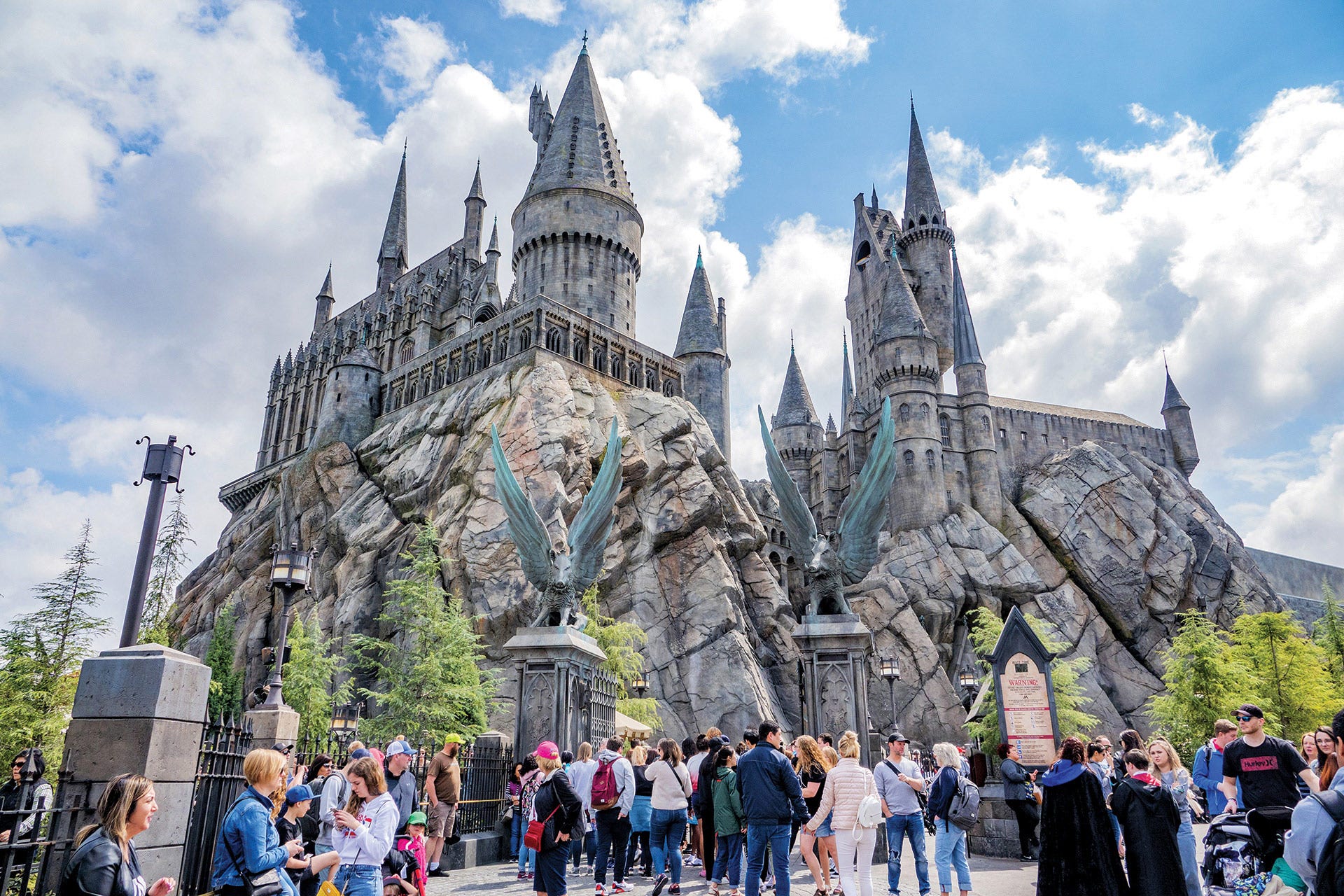
Hoping to make the park more of a destination hub, Universal constructed hotels, followed in 1993 by developing CityWalk, an outdoor mall of stores, restaurants and movie theaters. Besides attracting tourists, the area serves as a magnet for local residents drawn by its goods and services.
Always diversifying, upgrading and refreshing, Universal Studios has survived for more than a century as one of the region’s largest employers, offering diverse forms of entertainment for residents and visitors alike.

Universal City has grown and expanded from a simple moving-picture studio into what the company now calls “the entertainment capital of L.A.”
As Universal City celebrates its 111th anniversary this year, it remains one of the San Fernando Valley’s largest employers and one of California’s most popular tourist attractions.
So today, we raise a toast with our Drink Of The Day, a Californian Martini inspired by the birth of Universal Pictures.
Ingredients
Here’s what you’re going to need for this drink:
