
DOTD For Tuesday, June 9, 2026
Without This Musician, Lovers of Blended Drinks Would Be Singing A Different Tune
Today’s DOTD - Drink Of The Day - is The Papa Doble cocktail and mocktail inspired by the birthday of entertainer & entrepreneurial investor Fred Waring, who was born on this date, June 9, 1900 - and without whom, blended drinks around the world would not be the same.
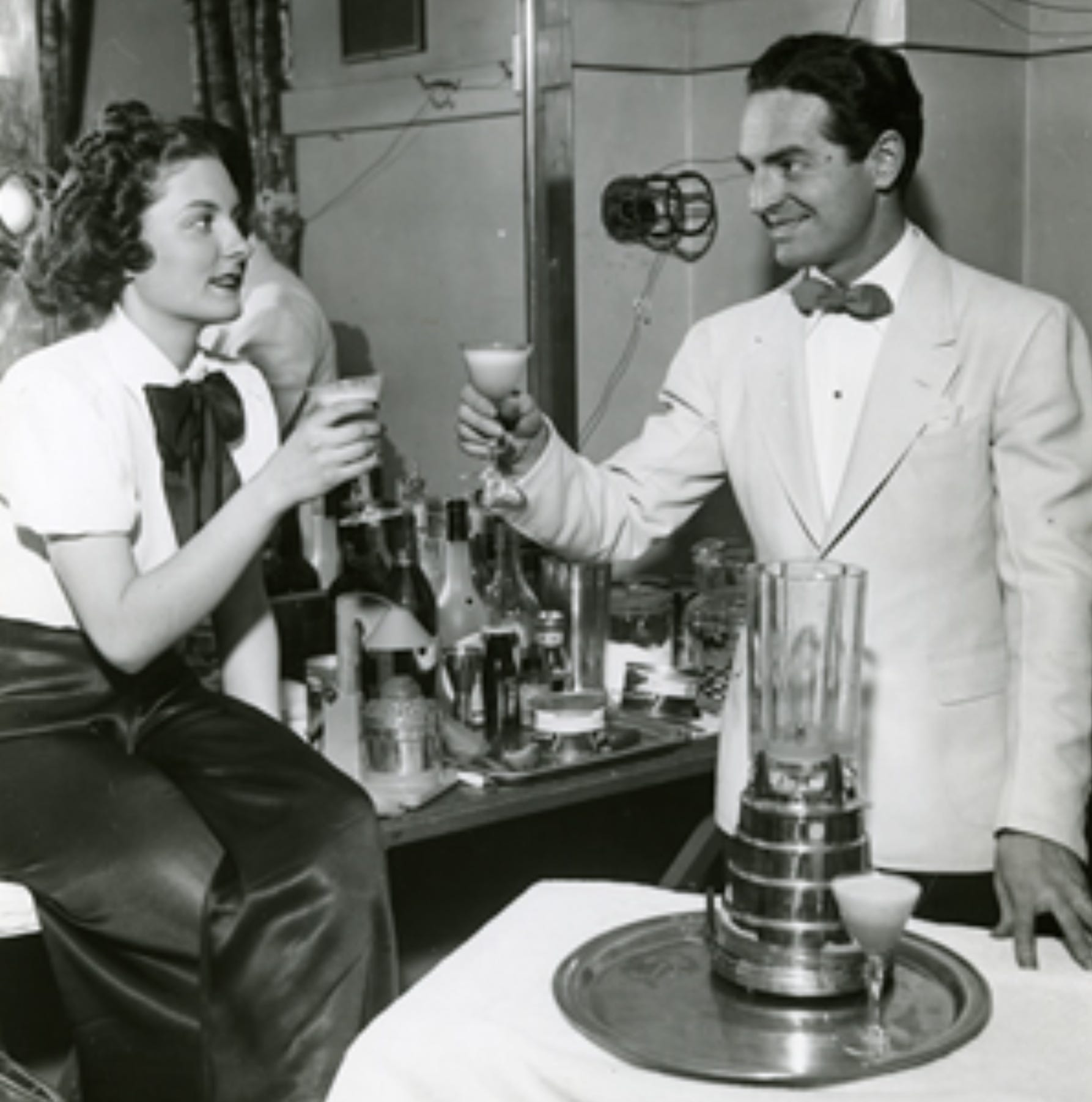
Fred Waring was once known to many Americans as “The Man Who Taught America How to Sing” for his nearly 70 year career as a choral conductor and showman. Beginning in 1922, and for almost seven decades, Fred Waring and His Pennsylvanians entertained audiences throughout the world on stage, radio, records, television, in motion pictures, and live on tour in America and other countries. Later in his career, Waring became an expert in choral music as well, teaching his unique techniques to tens of thousands of singers & music teachers over four decades.
But music was not the only interest of Fred Waring —he was also a dreamer with an extremely active mind and a deep interest in mechanical gadgets, since he was a kid. He studied Architectural Engineering at Penn State, and engineering continued to play a role throughout the rest of his life. He created many devices for stage and television throughout his career that utilized his engineering talents. He also invested in the devices of others, specifically the legendary blender that still bares his name.
Contrary to popular belief, Fred Waring did not invent the Waring Blendor, though he did help develop and promote it – and in a marketing twist, put the “o” in the word “Blendor” for his unique version of this machine. But before we get mixed up in that part of the story, it’s important to know where we started.
The Invention Of The Blender
This part of the tale starts in 1904 with four men: Fred Osius, George Schmidt, Louis Hamilton, and Chester Beach. Osius was a prolific inventor & engineer, and Schmidt an engineer & businessman. The two men went into business together creating the Arnold Electric Company in Racine, Wisconsin, to make household appliances at the beginning of the 1900s. This was a time known to electrical engineers & historians as the era of the ‘War of the Currents.’ We talked about this a bit when we published our DOTD on Nikola Tesla back in February 2026.

This was a time when cities all over the U.S. were still debating between which of the two major types of power delivery systems their city should invest in: Thomas Edison and his DC (Direct Current) system, or George Westinghouse and his AC (Alternating Current) system. It was an especially difficult time to be an electrical inventor like Fred Osius: Which system should his new company develop products for?
Thankfully, Osius & Schmidt made some wise hires: Chester Beach, an inventor & electrical engineer, and Louis Hamilton, an advertising & sales manager. In 1905, Beach invented a lightweight “universal” motor, that could operate on either AC or DC power. Hamilton reportedly suggested the name for their new company that would produce household appliances that used this motor: “Hamilton Beach.” It was a company name that, like Beach’s motor, would be universal. Having no “ethnic” ties, the name was likely to be accepted by more people, and would be far easier to market products under. As neither Osius & Schmidt liked their names, the new company’s name was born.
The Hamilton Beach company was officially registered in 1910 and began to produce electric motor-driven appliances. In 1919, Polish-American engineer Stephen Poplawski, owner of the Stevens Electric Company, designed the very first countertop blender, specifically for mixing malted milk drinks at soda fountains. Poplawski developed his blender under contract with the Arnold Electric Company, which was still owned by Fred Osius & George Schmidt. Poplawski’s blender was a huge step forward in household appliances, though it was somewhat underpowered, and only really designed for limited applications.
In other words, it couldn’t have made a daiquiri very well, if at all.
Fred Waring’s “Blendor”
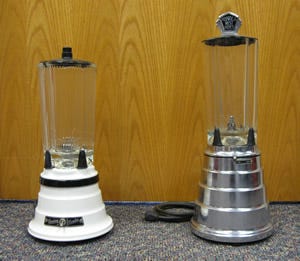
In 1936, Fred Osius - an avid fan of Fred Waring - brought a new design for the blender to Waring, looking for investment in his company. Reportedly, Osius talked his way into Waring’s dressing room after a radio broadcast and told him of the new design of the blender, having heard that Waring liked frozen daiquiris. Osius insisted this new version could handle the needs of bartenders better than the poor blenders they were then using. Osius had even secured a patent for the new design in 1933. Unfortunately, as they were all in the middle of the Great Depression, Osius had yet to find investors willing to put their money behind this new design. Waring was intrigued and decided to help Osius with ideas, money, and marketing.
Over the next few months, Waring analyzed and studied Osius’ prototype. He decided it needed sealed ball bearings for the bottom drive, propeller-like blades, and a cloverleaf-shaped jar to throw the contents back down. A buddy at the Chrysler Corporation secretly helped Waring solve the ball-bearing problem. Waring also had input from another engineering friend, who’d suggested the new design should use reinforced Pyrex glass for its bell container. Finally the Waring Mixer, as it was then called, was ready to be presented to the world. Fred Osius unfortunately didn’t live to see public acceptance of this new appliance, though he’d made a royalty arrangement, inherited in trust by his widow, and already had made his own mark in history with the Hamilton Beach Company.
Selling the public on the idea that this new blender was worth shelling out money for was a major hurdle, especially since sophisticated marketing techniques were still years in the future. Fred became the machine’s biggest promoter — making the machine as visible as possible and persuading everyone to sample its products.
The members of the Pennsylvanians, who played the role of collective guinea pigs for Fred’s concoctions, referred to the newly named “Waring Blendor” as the “thing.” It traveled with them in its own converted wardrobe trunk filled with lemon squeezer, can opener, cutting utensils, glasses, ice, strainers and measurers. It was accompanied by another trunk containing canned goods ranging from sauerkraut to mangoes.
Waring not only involved the Pennsylvanians in tasting his creations but in promoting them as well. His musicians would demonstrate the device in department stores across the country, like Macy’s, Gimbel’s, or Bloomingdale’s, and tell everybody how wonderful it would be to make fresh vegetable and fruit drinks. The popular singer, actor, and bandleader Rudy Vallee also became a big promoter of the Blendor. Once Waring showed Valley how fast and easy it was to make a frozen daiquiri with the Blendor, he became the device’s best salesmen — trying to sell it to every bartender in the United States.
Indeed, bartenders became some of the biggest evangelists of the Waring Blendor, because it was a durable machine. Because of the heat-resistant borosilicate Pyrex glass, bartenders could easily and safely blend both steaming hot and freezing cold ingredients without the container cracking, a major selling point at the time. Because of the blades, high-powered motor, and smooth bearings, the Waring Blendor could crush ice & blend ice cream into drinks of almost any type. The design also made it able to be washed quickly, so that other blended drinks could be made rapidly, in succession.
The impact of the Waring Blendor reached far beyond everyday kitchen use for food and drink. Years before antibiotics were in common use, Waring was asked to produce a sealed, stainless steel container for scientific laboratories. Also, a special Waring Aseptic Dispersal Blendor was used by Dr. Jonas Salk to prepare culture media used in developing the polio vaccine.
Today, the Waring Blender, as it is now called, is still manufactured at a plant in McConnellsburg, PA and the Waring Company remains one of today’s leading manufacturers of professional appliances for the foodservice and laboratory industries, though the Waring family no longer owns the company.
So if you like blended drinks of any kind, like today’s Drink Of The Day, the Papa Doble cocktail & mocktail - also known as the Hemingway Daiquiri - you have entertainer & entrepreneurial investor Fred Waring to thank for it.
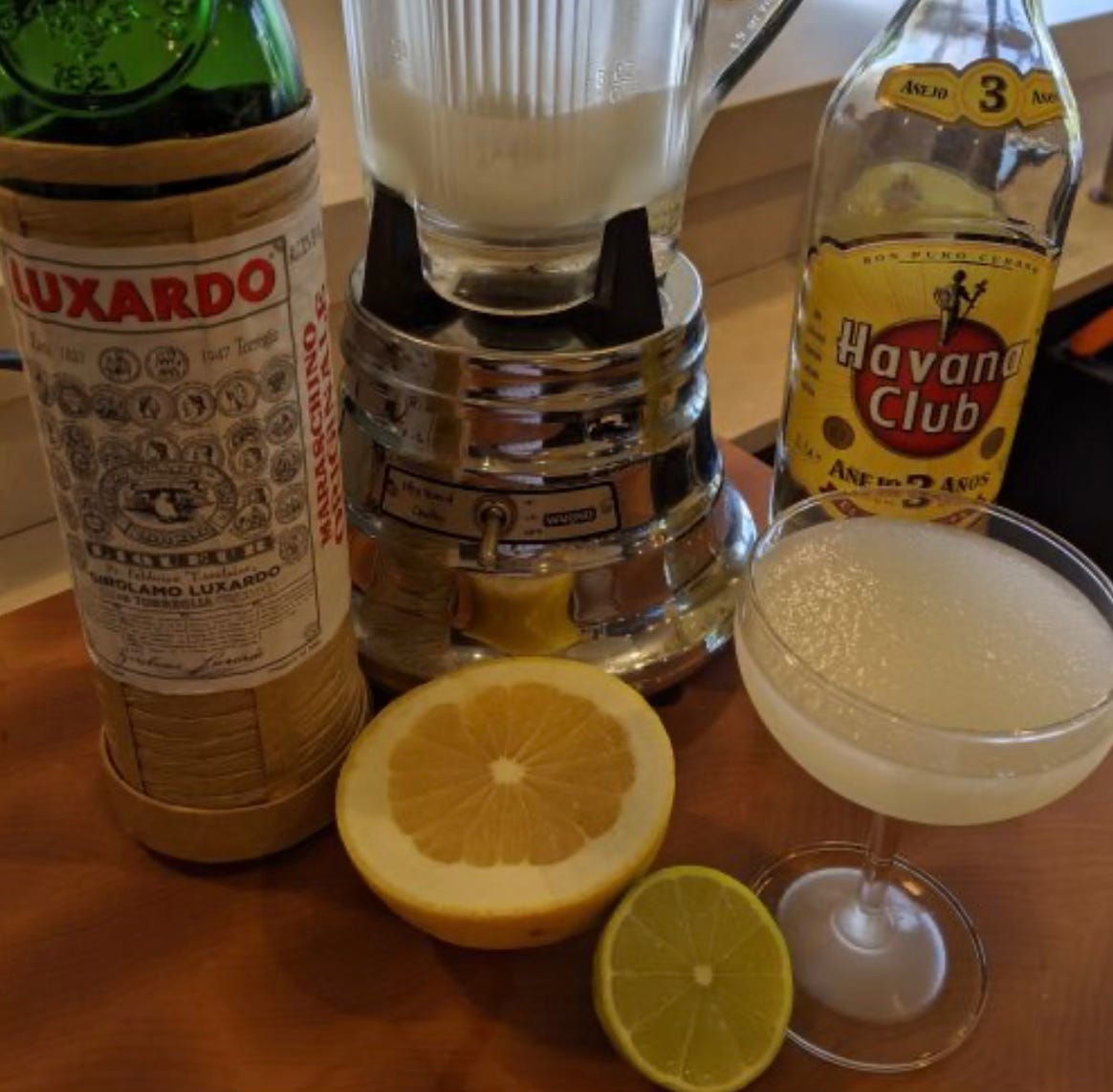
Ingredients
Here’s what you’re going to need for this drink:
